

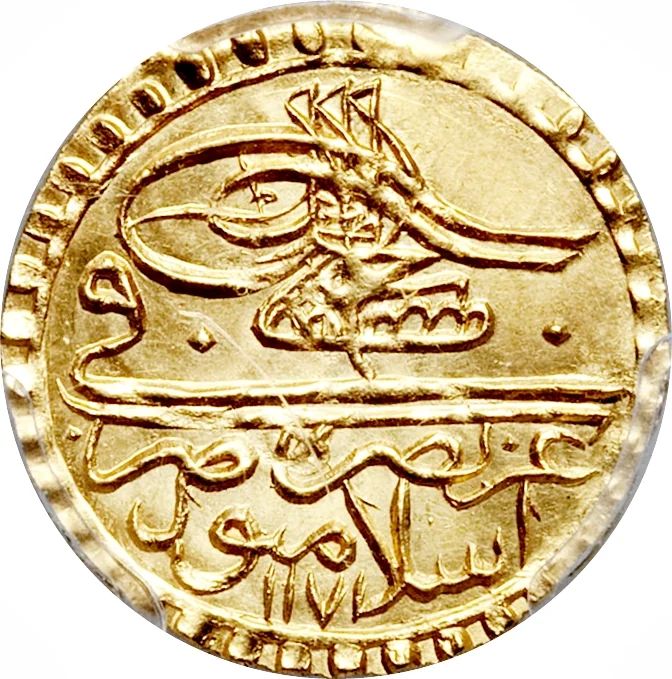
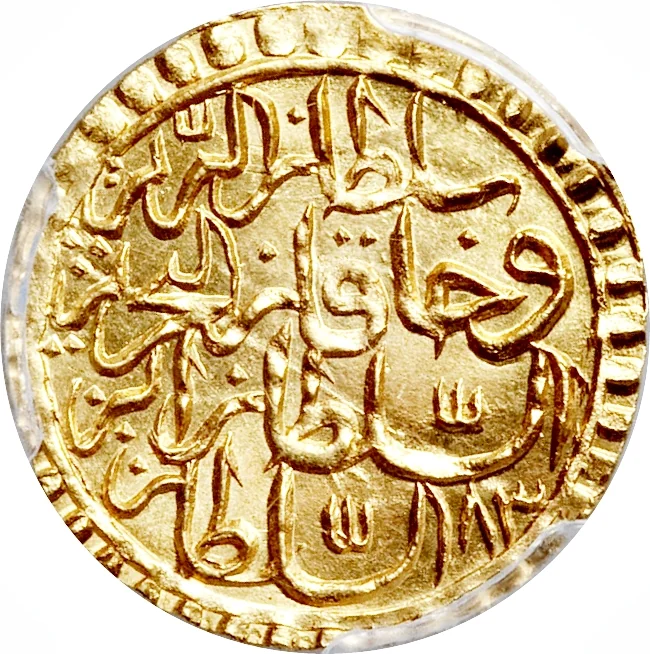
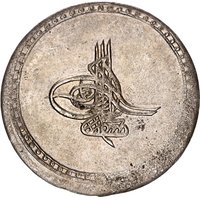
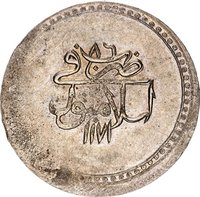
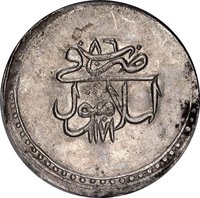
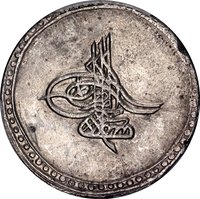
½ Zeri Mahbub – Ottoman Empire
Turkey
Context
Years: 1766–1774
Islamic (Hijri) Year: 1171
Country: Turkey 
Issuer: Ottoman Empire
Ruler: Mustafa III
Currency:
(1688—1844)
Demonetized: Yes
Material
References
KM: #Click to copy to clipboard328
Numista: #62674
Value
Bullion value: $217.15
Mints
| Name | Mark |
|---|---|
| Constantinople | — |
Mintings
| Year | Mint Mark | Mintage | Quality | Collection |
|---|---|---|---|---|
| 1766 | — | — | ||
| 1767 | — | — | ||
| 1768 | — | — | ||
| 1769 | — | — | ||
| 1770 | — | — | ||
| 1771 | — | — | ||
| 1772 | — | — | ||
| 1773 | — | — | ||
| 1774 | — | — |
Historical background
In 1766, the Ottoman Empire’s currency system was in a state of profound crisis, a culmination of decades of fiscal mismanagement and military overextension. The empire operated on a bimetallic system, with the gold altın and the silver kuruş (piastre) as the primary units. However, a chronic shortage of precious metals, exacerbated by a negative balance of trade with Europe and India, led to repeated and severe debasements. Sultans, facing immense budgetary pressures from costly wars (particularly the disastrous 1768-1774 war with Russia was imminent) and the need to pay the Janissary corps, frequently ordered the minting of new coins with reduced silver or gold content. This created a chaotic monetary environment where the intrinsic value of coins fell sharply, while their nominal value was artificially maintained for tax payments.
The consequences were destabilizing and pervasive. The frequent debasements triggered Gresham’s Law, where "bad money drives out good," as merchants and the public hoarded older, purer coins, further disrupting commerce. This led to price inflation, social unrest, and a loss of confidence in the central authority’s financial integrity. The problem was compounded by the widespread circulation of a vast array of foreign coins—especially Spanish dollars and Dutch lion thalers—which were often preferred for their reliable metal content. The state’s attempts to fix exchange rates between these foreign currencies and the debased Ottoman coins were largely ineffective in the bustling markets of Istanbul and port cities.
Ultimately, the currency chaos of 1766 was a symptom of the empire’s deeper structural decline. It reflected the weakening of central control over the economy, the growing power of provincial magnates who often minted their own irregular coins, and the empire’s increasing integration into a European-dominated global economy on unfavorable terms. The monetary instability eroded government revenue in real terms, creating a vicious cycle of deficit, debasement, and devaluation that would plague the Ottomans for the next century, underscoring the difficult transition from a medieval, land-based empire to a state operating within a modernizing financial world.
The consequences were destabilizing and pervasive. The frequent debasements triggered Gresham’s Law, where "bad money drives out good," as merchants and the public hoarded older, purer coins, further disrupting commerce. This led to price inflation, social unrest, and a loss of confidence in the central authority’s financial integrity. The problem was compounded by the widespread circulation of a vast array of foreign coins—especially Spanish dollars and Dutch lion thalers—which were often preferred for their reliable metal content. The state’s attempts to fix exchange rates between these foreign currencies and the debased Ottoman coins were largely ineffective in the bustling markets of Istanbul and port cities.
Ultimately, the currency chaos of 1766 was a symptom of the empire’s deeper structural decline. It reflected the weakening of central control over the economy, the growing power of provincial magnates who often minted their own irregular coins, and the empire’s increasing integration into a European-dominated global economy on unfavorable terms. The monetary instability eroded government revenue in real terms, creating a vicious cycle of deficit, debasement, and devaluation that would plague the Ottomans for the next century, underscoring the difficult transition from a medieval, land-based empire to a state operating within a modernizing financial world.
✨ Legendary