

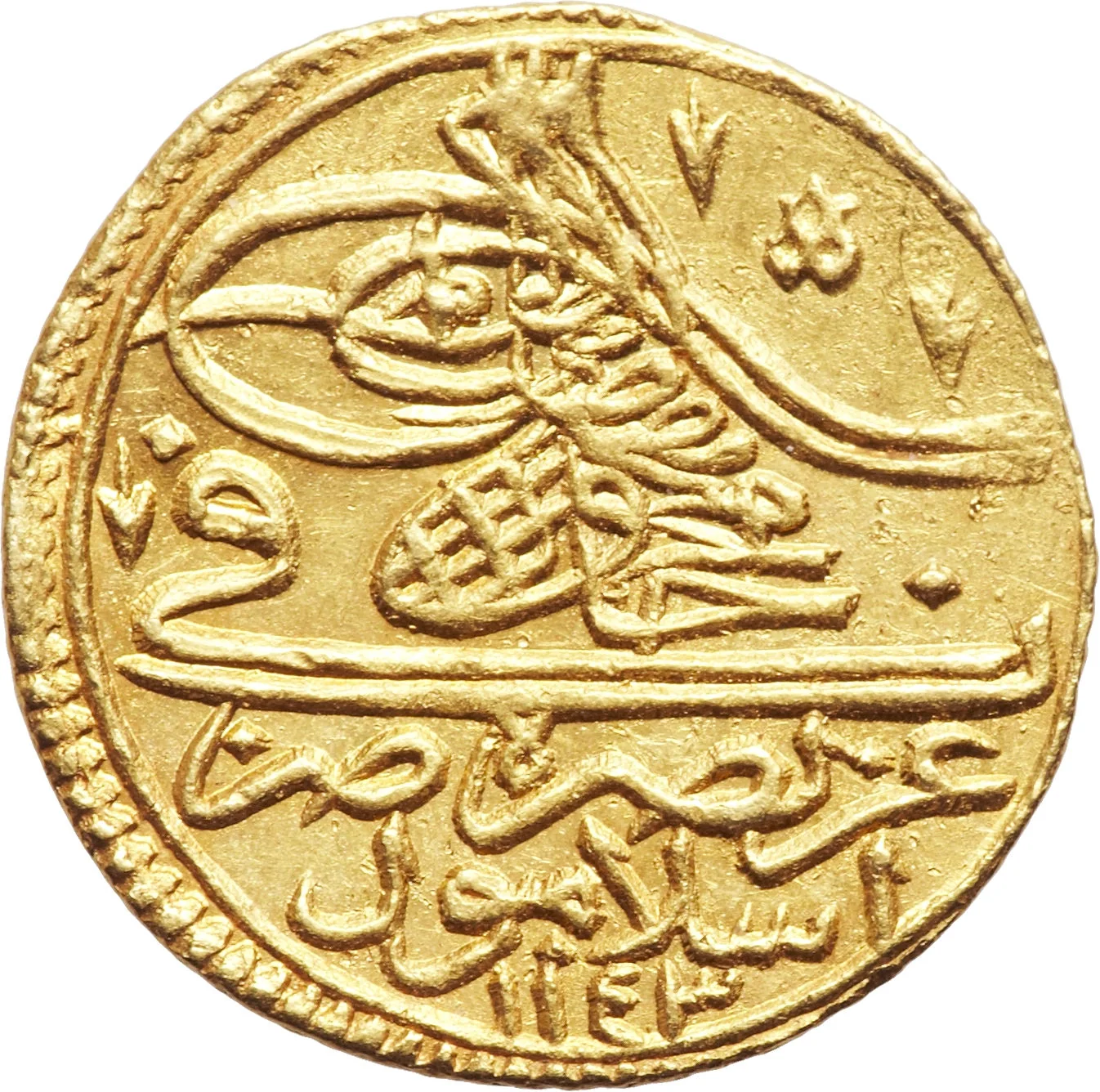
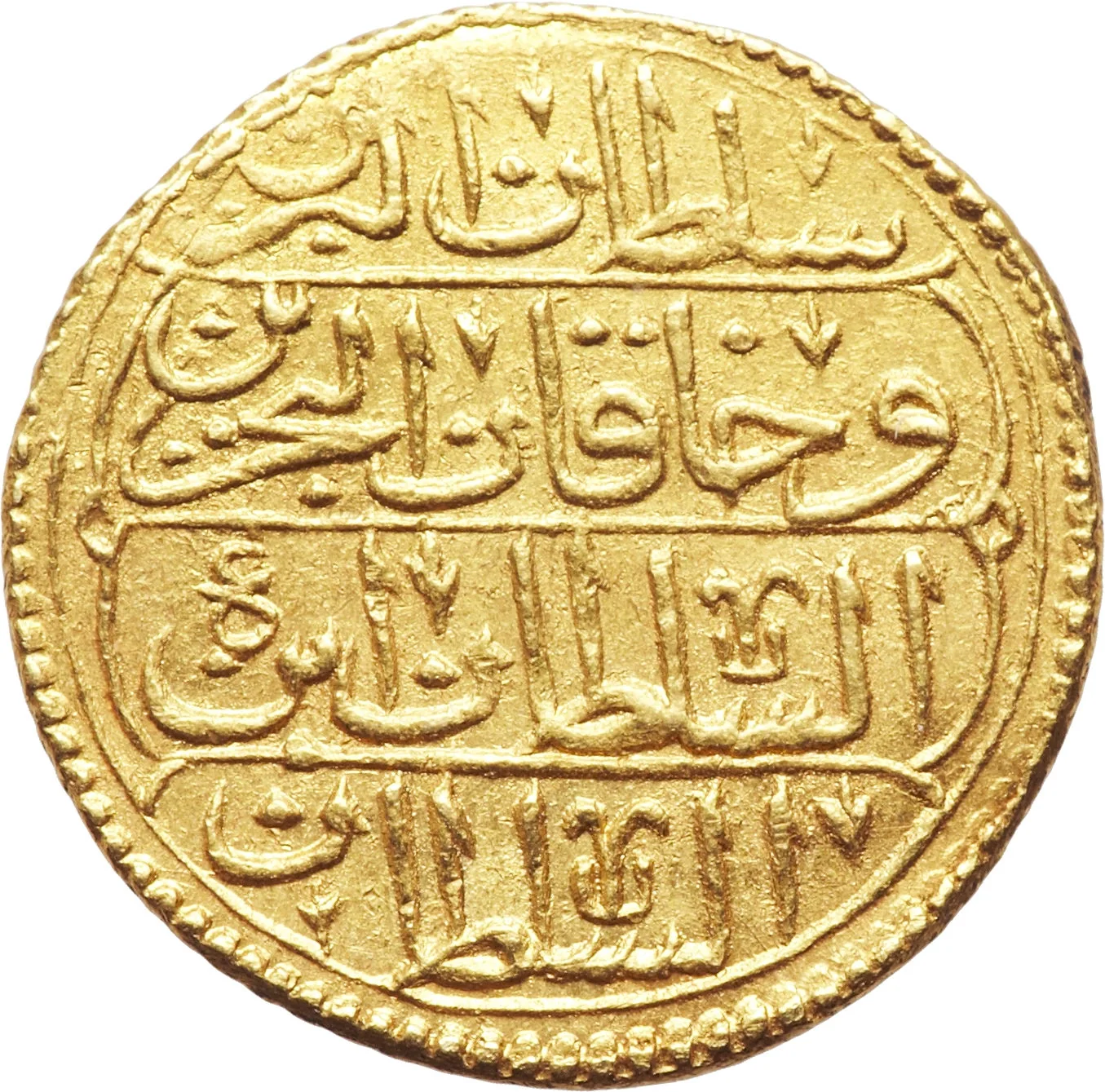
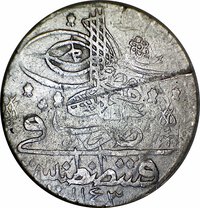
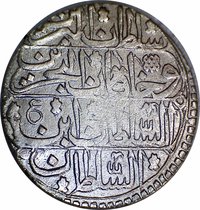
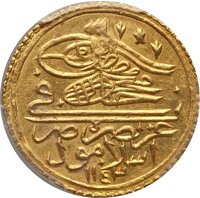
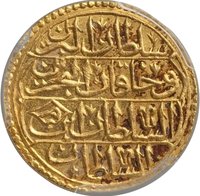
1 Zeri Mahbub – Ottoman Empire
Turkey
Context
Years: 1730–1754
Country: Turkey 
Issuer: Ottoman Empire
Ruler: Mahmud I
Currency:
(1688—1844)
Demonetized: Yes
Material
References
KM: #Click to copy to clipboard221
Numista: #62670
Value
Bullion value: $431.04
Mints
| Name | Mark |
|---|---|
| Constantinople | — |
Mintings
| Year | Mint Mark | Mintage | Quality | Collection |
|---|---|---|---|---|
| — | 12 | — |
Historical background
By 1730, the Ottoman Empire was grappling with a severe and systemic currency crisis, primarily driven by decades of debasement. The state, perennially short of specie to fund its military campaigns and central administration, repeatedly reduced the silver content of the primary silver coin, the akçe, and later the kuruş. This practice, while providing immediate fiscal relief, triggered rampant inflation, a loss of public confidence in the coinage, and economic instability. The problem was exacerbated by a chronic trade imbalance, as imports from Europe and India drained precious metals—especially silver—out of the empire, leaving the mint with insufficient bullion to strike full-weight coins.
The crisis came to a head during the Patrona Halil Rebellion of 1730, which was as much an economic uprising as a political one. The rebellion, which overthrew Sultan Ahmed III, was fueled in part by the anger of artisans, soldiers, and the urban poor whose livelihoods were devastated by the skyrocketing prices and the worthless coinage in their hands. The Janissaries, whose fixed salaries were eroded by inflation, were central to the revolt. Thus, the currency devaluation directly translated into social unrest, demonstrating the intimate link between the empire’s fiscal mismanagement and its political stability.
In the aftermath, the new Sultan, Mahmud I, and his grand vizier sought to restore monetary order. They implemented a significant recoinage in 1731-32, introducing a new, standardized kuruş with a fixed silver content in an attempt to restore confidence. However, these measures offered only temporary relief. The structural issues—including persistent budget deficits, the outflow of silver, and the lack of a modern fiscal bureaucracy—remained unresolved. Consequently, the cycle of debasement, inflation, and crisis would recur throughout the remainder of the 18th century, reflecting the empire’s deepening financial and economic challenges.
The crisis came to a head during the Patrona Halil Rebellion of 1730, which was as much an economic uprising as a political one. The rebellion, which overthrew Sultan Ahmed III, was fueled in part by the anger of artisans, soldiers, and the urban poor whose livelihoods were devastated by the skyrocketing prices and the worthless coinage in their hands. The Janissaries, whose fixed salaries were eroded by inflation, were central to the revolt. Thus, the currency devaluation directly translated into social unrest, demonstrating the intimate link between the empire’s fiscal mismanagement and its political stability.
In the aftermath, the new Sultan, Mahmud I, and his grand vizier sought to restore monetary order. They implemented a significant recoinage in 1731-32, introducing a new, standardized kuruş with a fixed silver content in an attempt to restore confidence. However, these measures offered only temporary relief. The structural issues—including persistent budget deficits, the outflow of silver, and the lack of a modern fiscal bureaucracy—remained unresolved. Consequently, the cycle of debasement, inflation, and crisis would recur throughout the remainder of the 18th century, reflecting the empire’s deepening financial and economic challenges.
✨ Legendary