

1 Shahi – Iran
Iran
Context
Year: 1747
Islamic (Hijri) Year: 1160
Issuer: Iran 
Ruler: Adil Shah
Currency:
(1501—1798)
Demonetized: Yes
Material
Weight: 1.15 g
Silver weight: 1.15 g
Shape: Irregular round
Composition: Silver
Magnetic: No
Technique: Hammered
Alignment: Coin alignment
flip
References
KM: #Click to copy to clipboard401.2
Numista: #62310
Value
Bullion value: $3.33
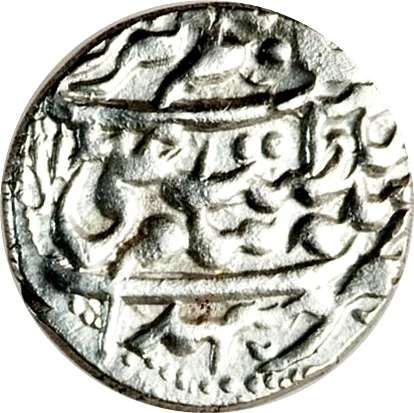
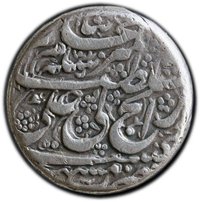
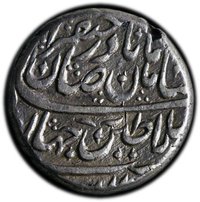
Obverse
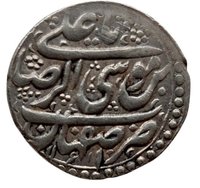
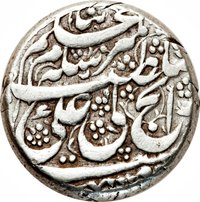
Inscription:
گشت رایج بحکم لم یزلی
سکه سلطنت بنام علی
ضرب مشهد
سکه سلطنت بنام علی
ضرب مشهد
Script: Persian (nastaliq)
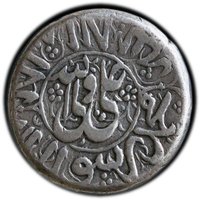
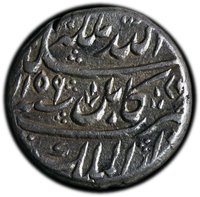
Reverse
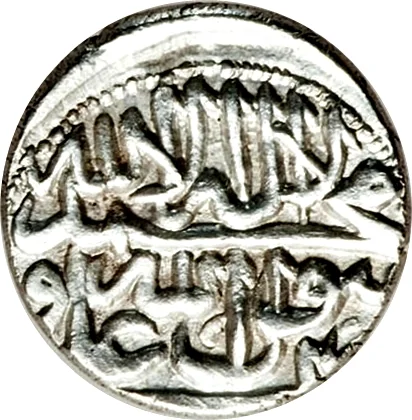
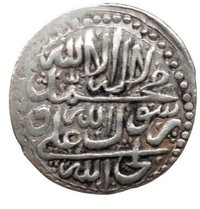
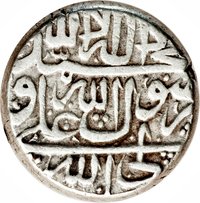
Inscription:
لا اله الا الله
محمد رسول الله
علی ولی الله
محمد رسول الله
علی ولی الله
Script: Arabic (thuluth)
Edge
Plain
Mints
| Name | Mark |
|---|---|
| Mashhad Muqaddas | مشهد |
Mintings
| Year | Mint Mark | Mintage | Quality | Collection |
|---|---|---|---|---|
| 1747 | — | — |
Historical background
In 1747, the currency situation in Iran was one of profound instability and fragmentation, a direct consequence of the collapse of the Safavid Empire in 1722. The subsequent decades of foreign invasion, civil war, and tribal conflict had shattered the unified monetary system that once facilitated trade across the empire. Regional warlords and nascent dynasties, most notably Nader Shah Afshar (r. 1736-1747), minted their own coins, but without the centralized authority and economic strength to enforce a standard, the value and purity of currency varied wildly from region to region.
The year 1747 itself was a critical juncture, marked by the assassination of Nader Shah in June. His ambitious and costly military campaigns, though initially successful in plundering vast treasures from India and re-establishing Iranian control, had drained the state's coffers and devastated the agricultural economy. To fund his armies, Nader Shah had resorted to debasing the coinage and imposing crushing taxes, which led to widespread inflation and economic hardship. His death triggered a renewed and even more chaotic power struggle, causing what little monetary order he had imposed to disintegrate completely.
Therefore, by the end of 1747, Iran lacked a national currency. The circulating medium was a chaotic mix of old Safavid coins, various Afsharid issues of uncertain value, and foreign currencies like Ottoman and Mughal rupees. Trust in coinage was low, and barter became increasingly common. This monetary anarchy reflected the broader political reality: Iran was entering a period of extreme decentralization, with rival khans controlling different regions and their mints, a situation that would persist until the rise of the Qajar dynasty at the end of the century.
The year 1747 itself was a critical juncture, marked by the assassination of Nader Shah in June. His ambitious and costly military campaigns, though initially successful in plundering vast treasures from India and re-establishing Iranian control, had drained the state's coffers and devastated the agricultural economy. To fund his armies, Nader Shah had resorted to debasing the coinage and imposing crushing taxes, which led to widespread inflation and economic hardship. His death triggered a renewed and even more chaotic power struggle, causing what little monetary order he had imposed to disintegrate completely.
Therefore, by the end of 1747, Iran lacked a national currency. The circulating medium was a chaotic mix of old Safavid coins, various Afsharid issues of uncertain value, and foreign currencies like Ottoman and Mughal rupees. Trust in coinage was low, and barter became increasingly common. This monetary anarchy reflected the broader political reality: Iran was entering a period of extreme decentralization, with rival khans controlling different regions and their mints, a situation that would persist until the rise of the Qajar dynasty at the end of the century.
Series: 1747 Iran circulation coins
✨ Legendary