

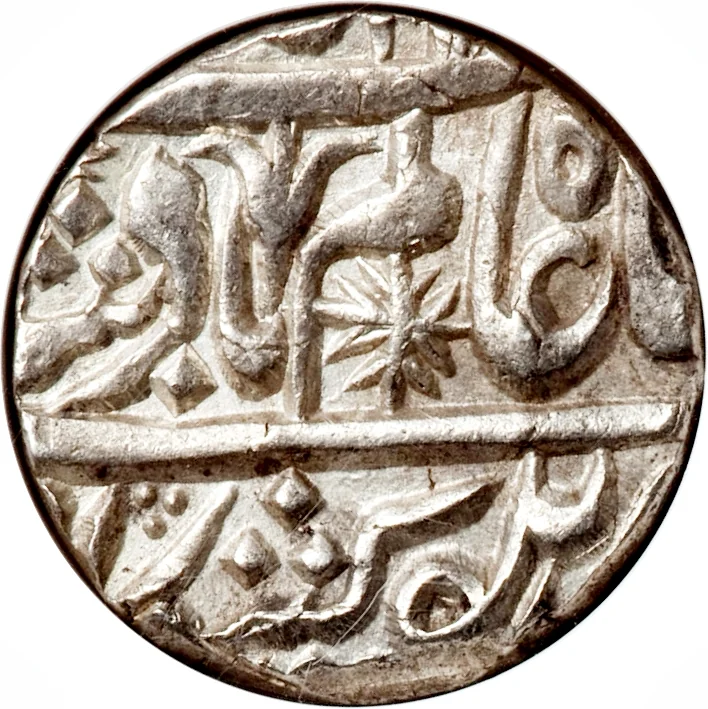

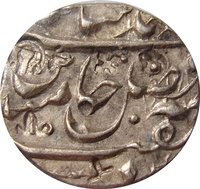
Obverse
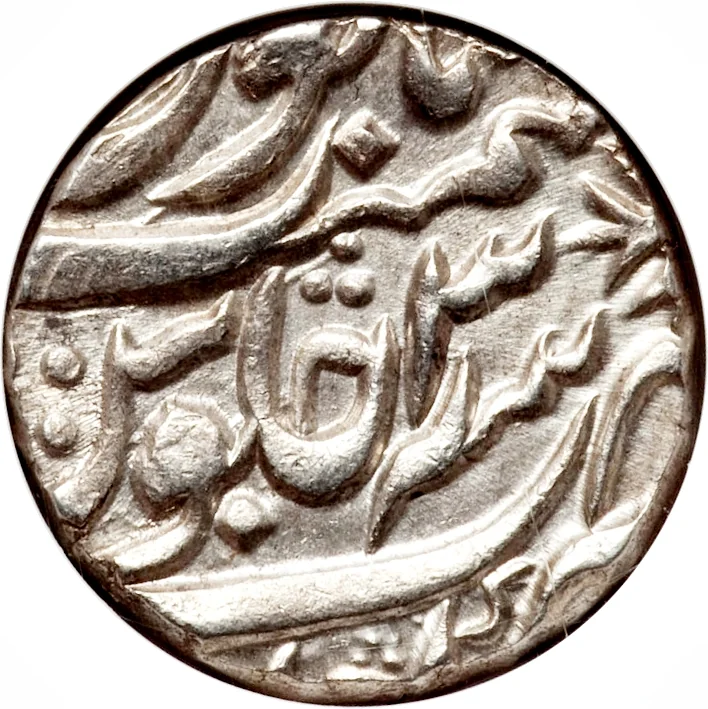
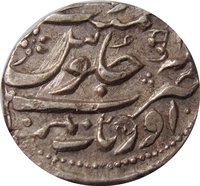
Reverse
Edge
Mintings
| Year | Mint Mark | Mintage | Quality | Collection |
|---|---|---|---|---|
| 1761 | — | — | ||
| 1762 | — | — | ||
| 1763 | — | — |
Historical background
By 1761, the Maratha Empire's currency system reflected both its vast territorial expanse and its decentralized political structure. There was no single, uniform currency issued by a central authority. Instead, the empire operated on a complex mosaic of coins minted by various subordinate chiefs (Sardars), major provincial rulers like the Bhonsles of Nagpur or the Holkars of Indore, and even conquered mints in regions like Malwa and Gujarat. The most widely recognized and prestigious coin was the Hons (or Hun), a gold coin of the southern standard, but the workhorse of the economy was the silver Rupee. These rupees, however, varied in weight, purity, and design depending on their place of minting, leading to a proliferation of types like the Ankushi rupee of Pune or the Chandori rupee.
This monetary fragmentation was underpinned by the Sarf (money-changing) and Sarrafs (bankers) community, who were essential for assessing the value of countless coin varieties, facilitating trade, and providing credit. The system functioned adequately during periods of stability, as the network of trusted bankers could exchange and verify coins across long distances. However, the absence of a central fiscal authority meant the Peshwa's government in Pune had limited direct control over the money supply, relying heavily on tribute and land revenue collected in these heterogeneous coins.
The pivotal Battle of Panipat in 1761 profoundly destabilized this already complex system. The catastrophic defeat resulted in the death of the Peshwa's heir, Vishwasrao, and the weakening of central authority. The immediate financial aftermath saw the treasury drained to fund the massive campaign, while the loss of key personnel disrupted administrative and financial networks. In the following years, the centrifugal forces within the confederacy intensified, with major Sardars asserting greater autonomy, including over their mints. Consequently, the post-1761 period saw the currency situation become even more fragmented, mirroring the empire's political decline and paving the way for the eventual ascendancy of more standardized currencies, notably those of the emerging British East India Company.
This monetary fragmentation was underpinned by the Sarf (money-changing) and Sarrafs (bankers) community, who were essential for assessing the value of countless coin varieties, facilitating trade, and providing credit. The system functioned adequately during periods of stability, as the network of trusted bankers could exchange and verify coins across long distances. However, the absence of a central fiscal authority meant the Peshwa's government in Pune had limited direct control over the money supply, relying heavily on tribute and land revenue collected in these heterogeneous coins.
The pivotal Battle of Panipat in 1761 profoundly destabilized this already complex system. The catastrophic defeat resulted in the death of the Peshwa's heir, Vishwasrao, and the weakening of central authority. The immediate financial aftermath saw the treasury drained to fund the massive campaign, while the loss of key personnel disrupted administrative and financial networks. In the following years, the centrifugal forces within the confederacy intensified, with major Sardars asserting greater autonomy, including over their mints. Consequently, the post-1761 period saw the currency situation become even more fragmented, mirroring the empire's political decline and paving the way for the eventual ascendancy of more standardized currencies, notably those of the emerging British East India Company.
✨ Legendary