Logo Title
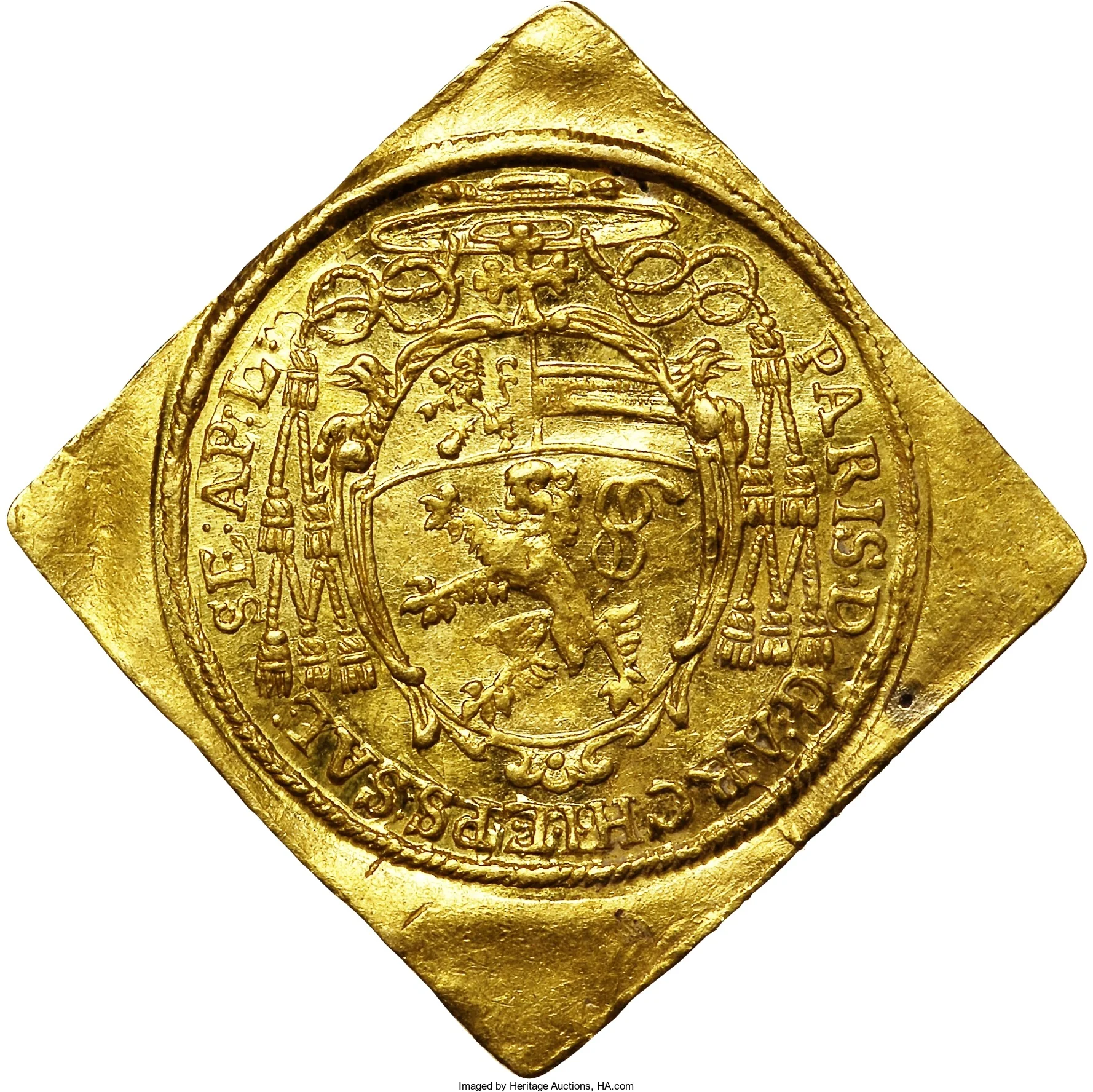
obverse
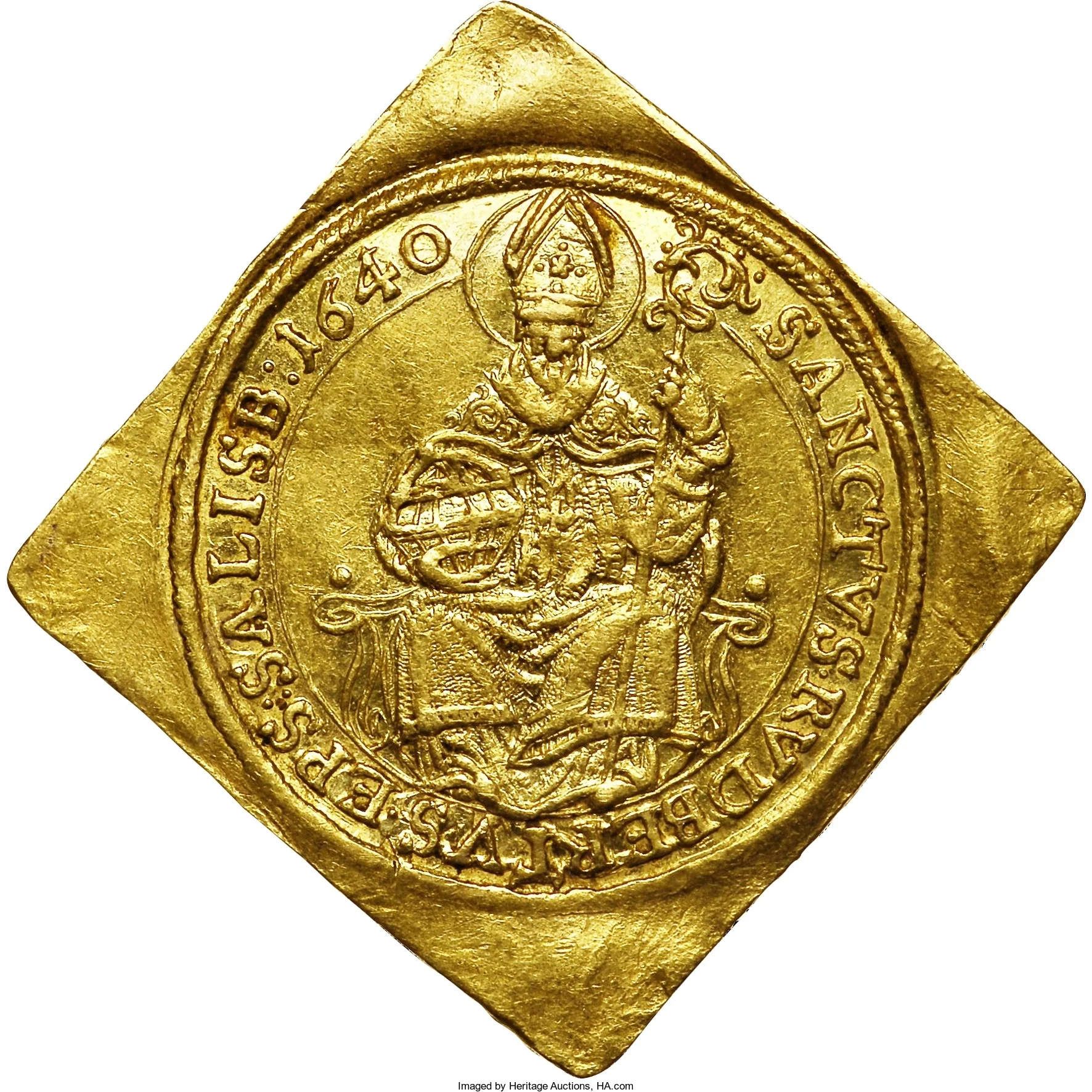
reverse
Heritage Auctions

1 Ducat – Bishopric of Salzburg

Context
Years: 1627–1651
Currency:
Demonetized: Yes
Material
Shape: Klippe
Composition: 98.6% Gold
Magnetic: No
Technique: Klippe
References
KM: #Click to copy to clipboardA165
Numista: #118768

Obverse

Description:
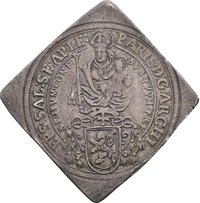
Oval shield under a cross and cardinal's hat. Top: arms of Salzburg. Bottom: archbishop's arms. Legend around, divided below by ornaments.
Inscription:
PARIS D G ARCHI EPS SAL SE AP L
Script: Latin

Reverse

Description:
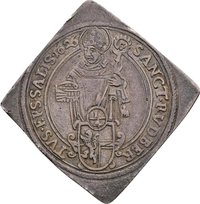
St. Rupert with crozier and salt barrel. Circular legend (begins at 1 o'clock).
Inscription:
SANCTVS RVDBERTVS EPS SALISB 1640
Script: Latin

Edge

Mintings

YearMint MarkMintageQualityCollection
1627
1628
1631
1632
1634
1636
1637
1638
1639
1640
1641
1642
1643
1644
1645
1646
1647
1648
1649
1650
1651

Historical background

In 1627, the Prince-Archbishopric of Salzburg was navigating a period of significant economic strain and monetary instability, common across the Holy Roman Empire in the early 17th century. The region was deeply affected by the ongoing Thirty Years' War (1618-1648), which disrupted trade, increased military expenditures, and placed heavy fiscal burdens on the territory. Furthermore, the widespread practice of currency debasement by neighboring states and principalities created a crisis of confidence, as inferior coins flooded the market, driving out Salzburg's better-quality money—a phenomenon described by Gresham's Law.

Internally, the monetary system was complex and fragmented. Salzburg itself minted its own coins, notably the Gulden (florin), Kreuzer, and Pfennig, but its currency circulated alongside a plethora of foreign coins from other German states and the Habsburg Empire. This lack of uniformity made trade cumbersome and facilitated fraud. Prince-Archbishop Paris von Lodron (r. 1619-1653), a skilled diplomat who kept Salzburg largely neutral and defended during the war, faced the difficult task of maintaining the principality's financial solvency and the intrinsic value of its currency amidst these inflationary pressures.

Consequently, the year 1627 likely saw the Salzburg mint actively engaged in efforts to manage this crisis, potentially through ordinances to regulate the acceptance and value of various coins in circulation. The primary goal was to stabilize the local economy, ensure the prince-archbishopric could meet its financial obligations, and protect its revenue from the deleterious effects of debased foreign coinage. This monetary situation was a critical aspect of von Lodron's broader strategy to preserve Salzburg's independence and economic integrity during a tumultuous period in European history.
Legendary