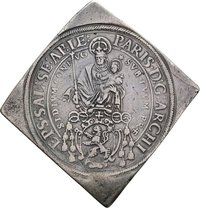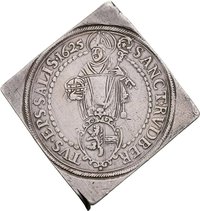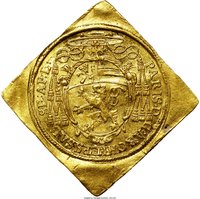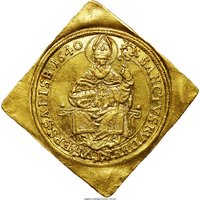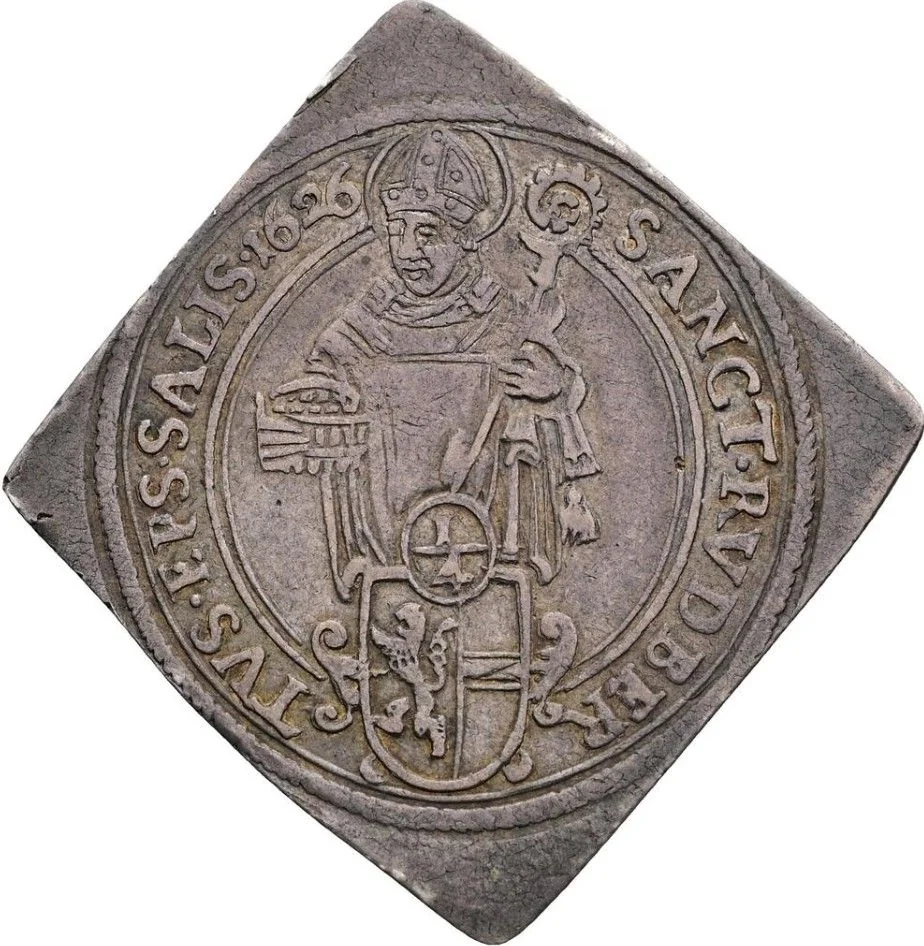
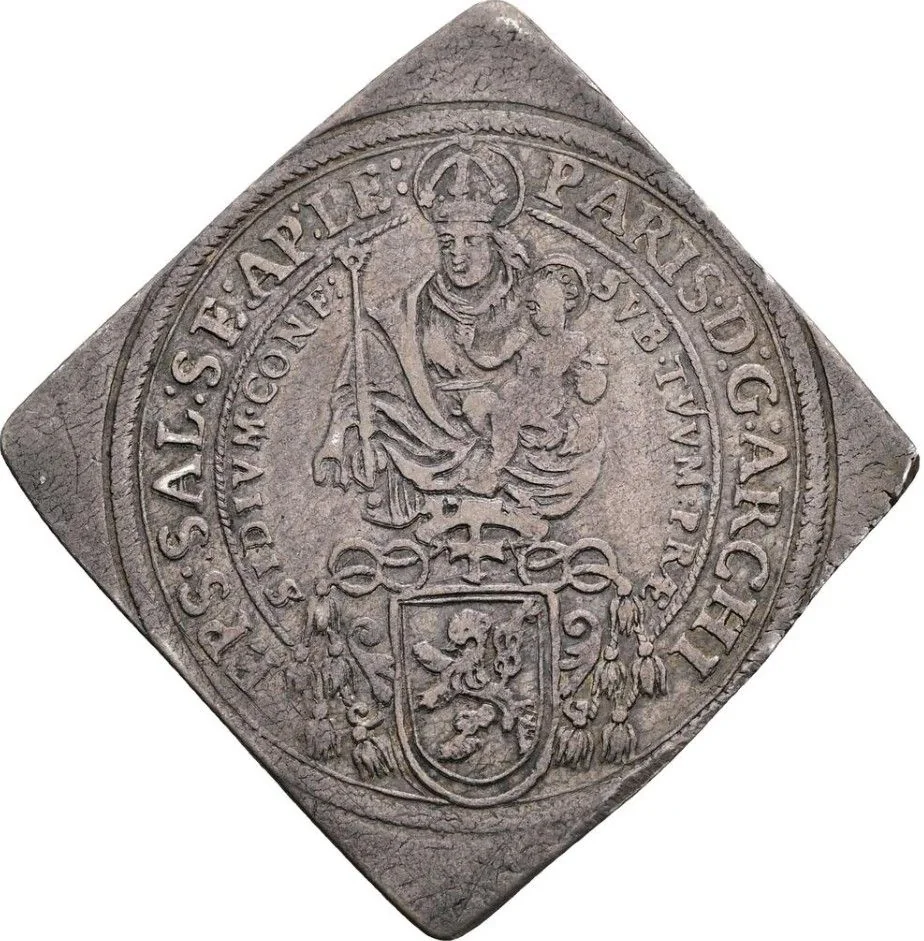
In 1626, the Bishopric of Salzburg, a wealthy and independent ecclesiastical principality within the Holy Roman Empire, was grappling with significant monetary instability, a common crisis across Germany during the early stages of the Thirty Years' War. The primary issue was the proliferation of debased coinage. Prince-Archbishop Paris von Lodron, facing immense financial pressures from the need to fortify the city (most notably the Hohensalzburg Fortress) and maintain a defensive military, authorized the minting of inferior coins, notably the
Kipper and
Wipper pennies. These coins contained far less silver than their official face value, creating artificial short-term revenue for the state but devastating the local economy.
This deliberate debasement triggered a classic "bad money drives out good" scenario (Gresham's Law). Older, full-value silver coins like talers were hoarded by the populace or taken out of circulation by merchants, leaving only the poor-quality currency for daily transactions. The resulting inflation caused prices for basic goods and food to skyrocket, leading to severe hardship for ordinary citizens and undermining trust in both the currency and the prince-archbishop's financial authority. The crisis was not isolated, as neighboring states engaged in the same predatory practices, flooding the region with even more debased money.
Ultimately, the currency chaos of 1626 was a direct symptom of the wider war's economic toll. While Paris von Lodron's policies successfully funded Salzburg's remarkable military neutrality and defense, they came at a high internal cost. The social discontent fueled by inflation and scarcity added to the underlying tensions within the bishopric, foreshadowing the more dramatic confessional conflicts that would erupt just a few years later with the expulsion of Protestant Salzburgers in the 1730s, though rooted in this earlier period of fiscal strain.