

1 Giulio – Papal States
Vatican City
Context
Years: 1734–1736
Country: Vatican City 
Issuer: Papal States
Ruler: Clement XII
Currency:
(1534—1835)
Demonetized: Yes
Material
References
KM: #Click to copy to clipboard848
Numista: #118447
Value
Bullion value: $5.80
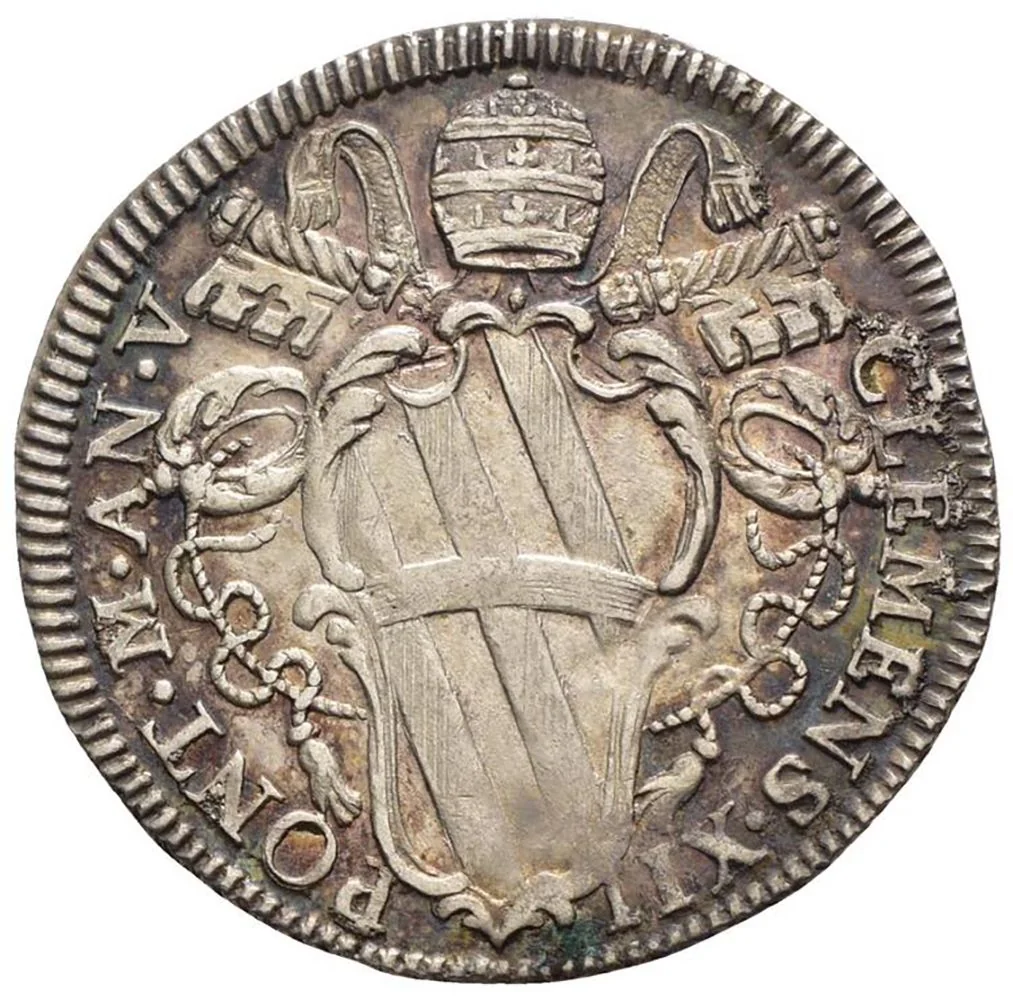
Obverse
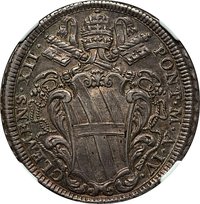
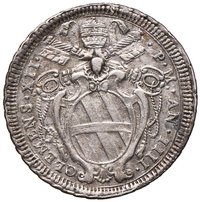
Description:
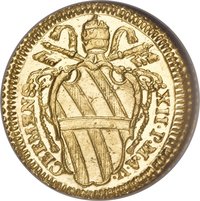
Papal coat of arms with foliage, flanked by a mask above and below. Two bows with corded wrenches, ribbon, and tiara at the base.
Inscription:
CLEM٠XII٠P٠M٠AN٠VI
Script: Latin
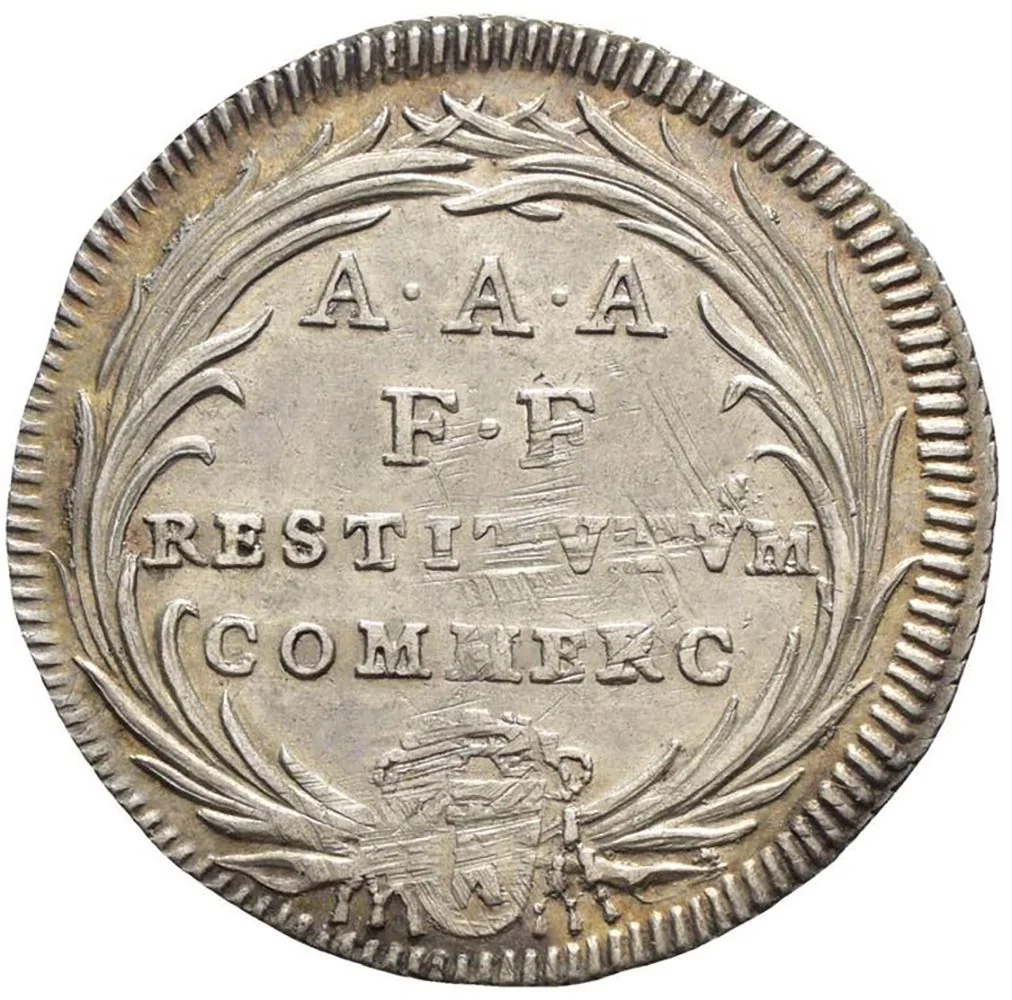
Reverse
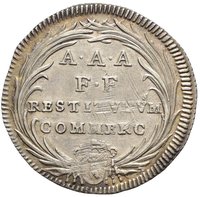
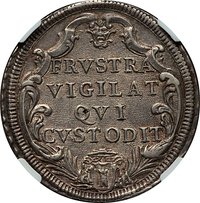
Description:
Inscription between palm branches under Casoni's coat of arms.
Inscription:
A · A · A
F · F
RESTITVTVM
COMMERC
F · F
RESTITVTVM
COMMERC
Script: Latin
Edge
Mints
| Name | Mark |
|---|---|
| Rome | — |
Mintings
| Year | Mint Mark | Mintage | Quality | Collection |
|---|---|---|---|---|
| 1734 | — | — | ||
| 1735 | — | — | ||
| 1736 | — | — |
Historical background
In 1734, the Papal States found themselves in a precarious monetary situation, characterized by chronic instability and devaluation. The primary unit, the scudo (plural: scudi), existed alongside a confusing array of subsidiary coins, including giuli, baiocchi, and quattrini. The root of the problem was persistent fiscal pressure; the Papal government, often funding military campaigns, artistic projects, and administrative costs, regularly resorted to debasing the silver coinage. This meant reducing the precious metal content in coins while maintaining their face value, a short-term measure that eroded public trust and sparked inflation, harming both commerce and the populace.
This year fell within the pontificate of Pope Clement XII (Corsini, 1730-1740), who was acutely aware of the monetary chaos. His predecessor, Benedict XIII, had attempted a minor reform in 1727, but it failed to address systemic issues. The situation was exacerbated by the circulation of foreign coins, particularly Spanish silver, and the widespread practice of clipping and counterfeiting. Consequently, the value of Papal currency was not uniform across the state and was often negotiated in transactions, creating a complex and inefficient market.
Recognizing the crisis, Clement XII initiated a significant monetary reform in 1735, the planning for which was undoubtedly underway in 1734. His reform aimed to standardize and restore the silver scudo and its subdivisions, introducing new, clearly marked coins from the Roman mint. While this reform provided temporary stability, the underlying fiscal habits of the Papal government meant that debasement and instability would re-emerge in later decades, a cyclical problem that plagued the Papal treasury until its final years. Thus, 1734 represents a pivotal moment of acknowledged crisis immediately preceding a major, though ultimately temporary, papal attempt at monetary restoration.
This year fell within the pontificate of Pope Clement XII (Corsini, 1730-1740), who was acutely aware of the monetary chaos. His predecessor, Benedict XIII, had attempted a minor reform in 1727, but it failed to address systemic issues. The situation was exacerbated by the circulation of foreign coins, particularly Spanish silver, and the widespread practice of clipping and counterfeiting. Consequently, the value of Papal currency was not uniform across the state and was often negotiated in transactions, creating a complex and inefficient market.
Recognizing the crisis, Clement XII initiated a significant monetary reform in 1735, the planning for which was undoubtedly underway in 1734. His reform aimed to standardize and restore the silver scudo and its subdivisions, introducing new, clearly marked coins from the Roman mint. While this reform provided temporary stability, the underlying fiscal habits of the Papal government meant that debasement and instability would re-emerge in later decades, a cyclical problem that plagued the Papal treasury until its final years. Thus, 1734 represents a pivotal moment of acknowledged crisis immediately preceding a major, though ultimately temporary, papal attempt at monetary restoration.
✨ Legendary