

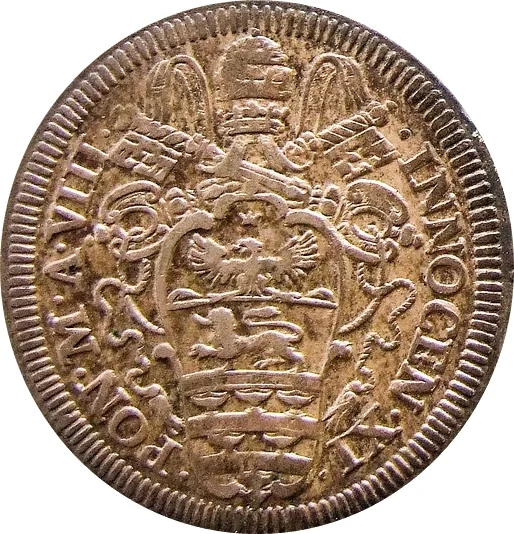
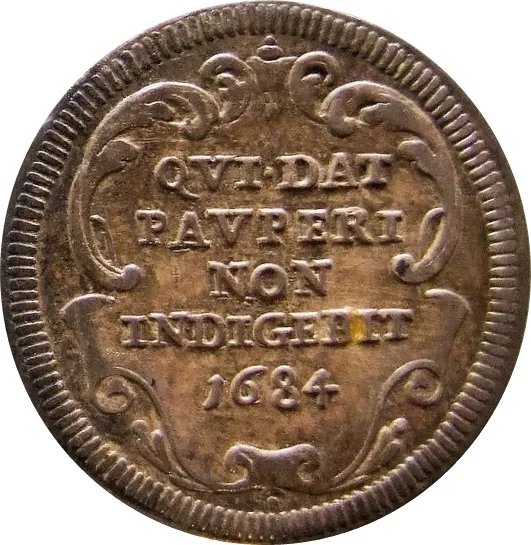
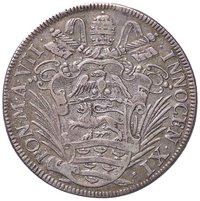
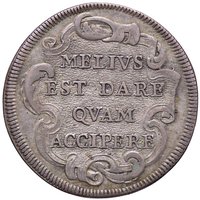
1 giulio – Papal States
Add to wishlist
Vatican City
Context
Year: 1684
Country: Vatican City
Issuer: Papal States
Ruler: Innocent XI
Currency:
(1534—1835)
Demonetized: Yes
Material
References
KM: #
Numista: #117962
Value
Bullion value: $7.04
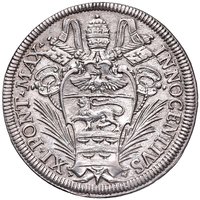
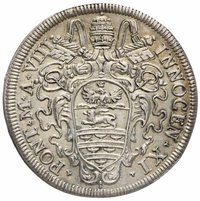
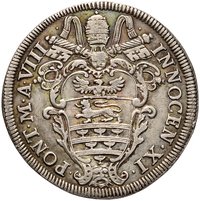
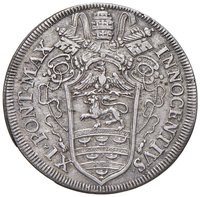
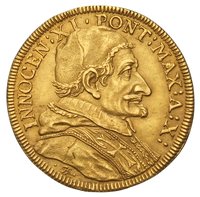
Obverse
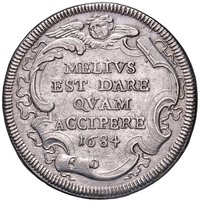
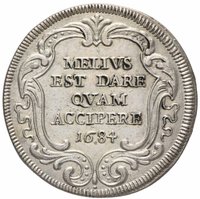
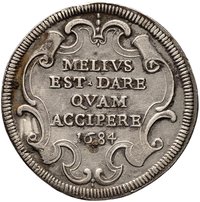
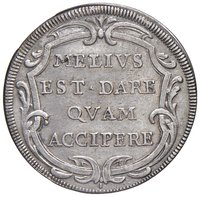
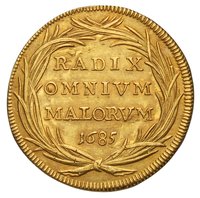
Reverse
Edge
Plain
Categories
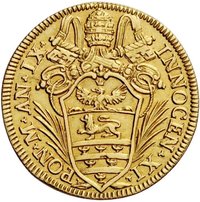
| Symbols> Coat of Arms |
| Symbol> Crown |
Mints
| Name | Mark |
|---|---|
| Rome | — |
Mintings
| Year | Mint Mark | Mintage | Quality | Collection |
|---|---|---|---|---|
| 1684 | — | — |
Historical background
In 1684, the Papal States operated under a complex and often chaotic monetary system, a legacy of its fragmented political history and the Pope’s dual role as spiritual leader and temporal prince. The currency was not unified; instead, a multitude of coins circulated, minted by various papal mints (such as those in Rome, Bologna, and Avignon) and by foreign states. The primary unit of account was the scudo (plural: scudi), which existed in both silver (scudo di moneta) and gold (scudo d’oro) forms. Alongside these circulated subsidiary coins like giuli, baiochi, and quattrini, whose values in relation to the scudo were frequently subject to adjustment and local variation.
This period was marked by significant monetary instability and deliberate debasement. Pope Innocent XI, reigning from 1676 to 1689, was a noted reformer who sought to curb extravagance and address the Papal States' dire finances. However, the fiscal pressures of maintaining infrastructure, administration, and the looming threat of the Ottoman Empire—culminating in the pivotal Battle of Vienna in 1683—strained the treasury. To raise funds, predecessors had often resorted to reducing the silver content in coinage, a practice that led to inflation, confusion in trade, and the circulation of vastly overvalued "crying" coinage (moneta urlante). By 1684, the system was a patchwork of coins of varying intrinsic worth.
Consequently, daily economic life was fraught with difficulty. Merchants and money-changers had to constantly evaluate coins by weight and appearance, and exchange rates fluctuated. The papal government struggled with the competing needs of generating revenue, maintaining the credibility of its currency, and facilitating commerce. Thus, in 1684, the currency situation reflected the broader challenges of early modern statecraft: the Papal States were grappling with the transition from medieval, fragmented fiscal practices toward a more standardized monetary system, a goal that remained elusive amidst persistent financial and political pressures.
This period was marked by significant monetary instability and deliberate debasement. Pope Innocent XI, reigning from 1676 to 1689, was a noted reformer who sought to curb extravagance and address the Papal States' dire finances. However, the fiscal pressures of maintaining infrastructure, administration, and the looming threat of the Ottoman Empire—culminating in the pivotal Battle of Vienna in 1683—strained the treasury. To raise funds, predecessors had often resorted to reducing the silver content in coinage, a practice that led to inflation, confusion in trade, and the circulation of vastly overvalued "crying" coinage (moneta urlante). By 1684, the system was a patchwork of coins of varying intrinsic worth.
Consequently, daily economic life was fraught with difficulty. Merchants and money-changers had to constantly evaluate coins by weight and appearance, and exchange rates fluctuated. The papal government struggled with the competing needs of generating revenue, maintaining the credibility of its currency, and facilitating commerce. Thus, in 1684, the currency situation reflected the broader challenges of early modern statecraft: the Papal States were grappling with the transition from medieval, fragmented fiscal practices toward a more standardized monetary system, a goal that remained elusive amidst persistent financial and political pressures.
✨ Legendary