

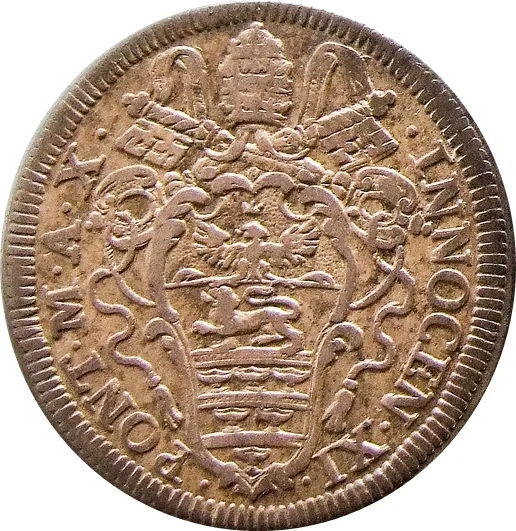
1 Giulio – Papal States
Vatican City
Context
Year: 1685
Country: Vatican City 
Issuer: Papal States
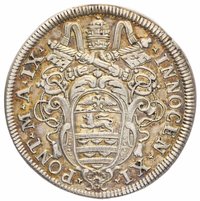
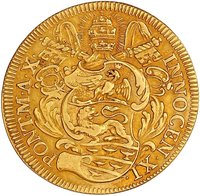
Ruler: Innocent XI
Currency:
(1534—1835)
Demonetized: Yes
Material
Diameter: 25 mm
Weight: 3.05 g
Silver weight: 2.80 g
Shape: Round
Composition: 91.7% Silver
Standard: Gold tenth ounce
Magnetic: No
Alignment: Medal alignment
flip
References
KM: #Click to copy to clipboard432
Numista: #117950
Value
Bullion value: $8.00
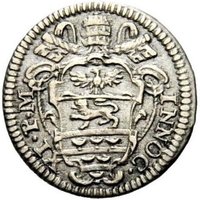
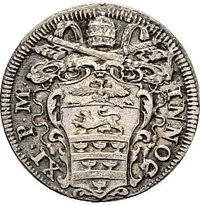
Obverse
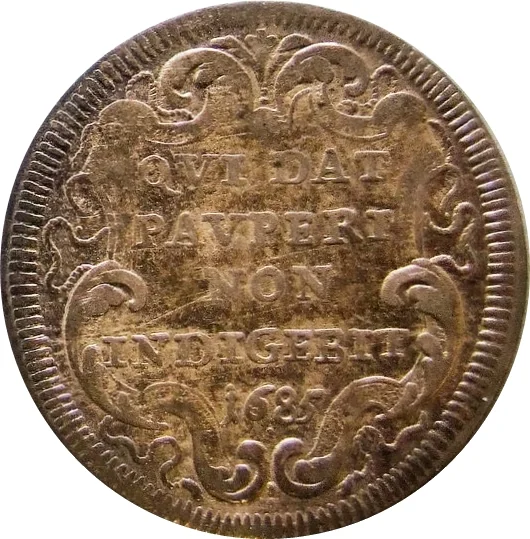
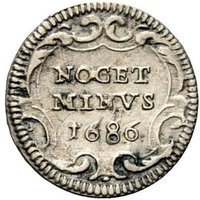
Reverse
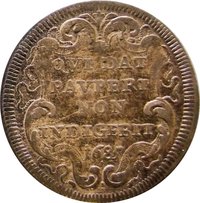
Description:
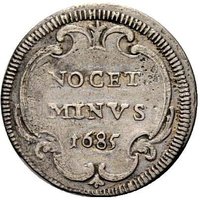
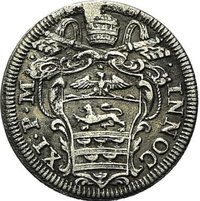
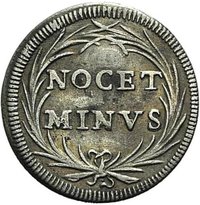
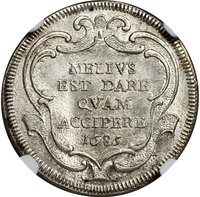
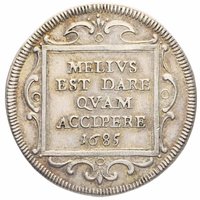
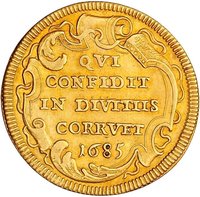
Dated inscription in cartouche.
Inscription:
QVI DAT
PAVPERI
NON
INDIGEBIT
1685
PAVPERI
NON
INDIGEBIT
1685
Script: Latin
Edge
Plain
Categories
| Symbol> Crown |
| Symbols> Coat of Arms |
Mints
| Name | Mark |
|---|---|
| Rome | — |
Mintings
| Year | Mint Mark | Mintage | Quality | Collection |
|---|---|---|---|---|
| 1685 | — | — |
Historical background
In 1685, the Papal States operated under a complex and often chaotic monetary system, typical of pre-modern Italian polities. There was no single, unified Papal currency; instead, a multitude of coins circulated simultaneously. These included issues from the papal mint itself (such as the grosso, the giulio, and the scudo), coins from other Italian states like Genoa and Florence, and even Spanish and French silver pieces. The value of these coins was not strictly tied to their metal content but was often set by official decree, leading to frequent discrepancies between intrinsic and face value.
This system was plagued by chronic instability and debasement. Popes, facing persistent fiscal pressures from military defense, monumental building projects, and administrative costs, frequently resorted to reducing the silver content in their coinage to generate seigniorage revenue. This practice, combined with the influx of increasingly debased foreign coins, led to inflation, confusion in trade, and a loss of public trust. The Roman economy often suffered from a shortage of "good" full-weight coinage, as it was hoarded or exported, leaving poorer-quality money in common circulation.
Administrative efforts to control the situation, such as issuing edicts to fix exchange rates (cours forcé), were largely ineffective. The monetary chaos of 1685 was therefore a symptom of broader structural issues: the Papal States' limited economic base, its dependence on foreign financial networks, and the constant tension between the spiritual authority of the Pope and the practical financial demands of governing a sovereign territory in a competitive European state system.
This system was plagued by chronic instability and debasement. Popes, facing persistent fiscal pressures from military defense, monumental building projects, and administrative costs, frequently resorted to reducing the silver content in their coinage to generate seigniorage revenue. This practice, combined with the influx of increasingly debased foreign coins, led to inflation, confusion in trade, and a loss of public trust. The Roman economy often suffered from a shortage of "good" full-weight coinage, as it was hoarded or exported, leaving poorer-quality money in common circulation.
Administrative efforts to control the situation, such as issuing edicts to fix exchange rates (cours forcé), were largely ineffective. The monetary chaos of 1685 was therefore a symptom of broader structural issues: the Papal States' limited economic base, its dependence on foreign financial networks, and the constant tension between the spiritual authority of the Pope and the practical financial demands of governing a sovereign territory in a competitive European state system.
✨ Legendary