

1 Giulio – Papal States
Vatican City
Context
Year: 1705
Country: Vatican City 
Issuer: Papal States
Ruler: Clement XI
Currency:
(1534—1835)
Demonetized: Yes
Material
References
KM: #Click to copy to clipboard692
Numista: #117936
Value
Bullion value: $7.06
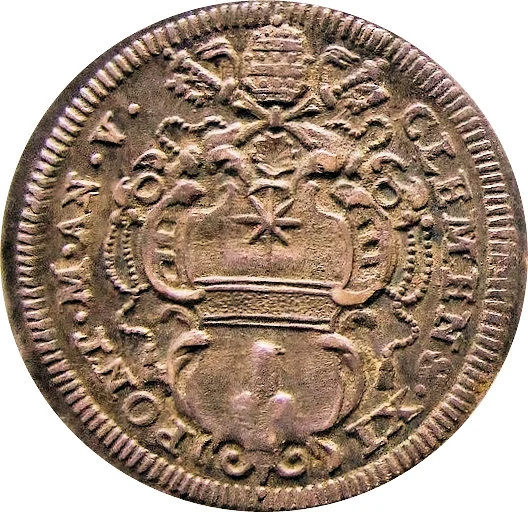
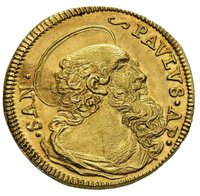
Obverse
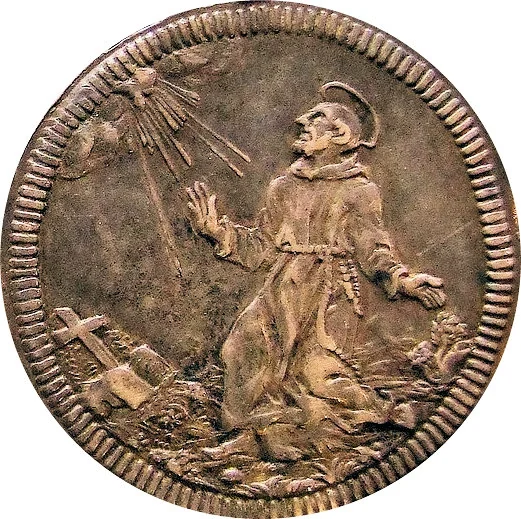
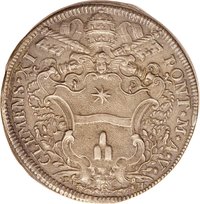
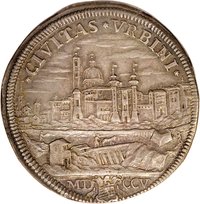
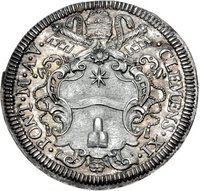
Reverse
Description:
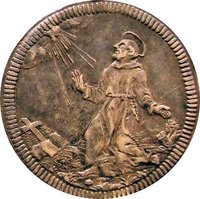
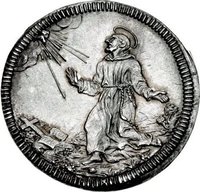
St. Francis kneeling, receiving the stigmata.
Edge
Categories
| Symbol> Cross |
| Person> Religious figure |
| Symbol> Crown |
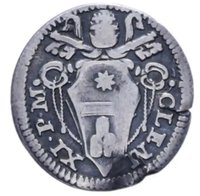
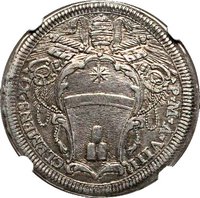
| Symbols> Coat of Arms |
Mints
| Name | Mark |
|---|---|
| Rome | — |
Mintings
| Year | Mint Mark | Mintage | Quality | Collection |
|---|---|---|---|---|
| 1705 | — | — |
Historical background
In 1705, the Papal States under Pope Clement XI faced a persistent and complex monetary crisis, a legacy of the broader European "Price Revolution" and the fiscal strains of the 17th century. The primary issue was the severe debasement and chaotic diversity of coinage in circulation. The state's mint, the Zecca, struggled to maintain the integrity of its silver scudo and copper baiocco coins, while a flood of inferior foreign coins, particularly from neighbouring Italian states, circulated freely. This created a dysfunctional bimetallic system where the official exchange rate between gold and silver coins rarely matched their market value, leading to widespread confusion, arbitrage, and a loss of public trust in the currency.
The financial demands of maintaining the Papal court, bureaucracy, and extensive public works in Rome, coupled with diminished revenues from papal territories, compelled the Camera Apostolica (the treasury) to repeatedly engage in debasement. By lowering the precious metal content in new coins while insisting they had the same nominal value, the government sought short-term seigniorage profit. This practice, however, was self-defeating, as it drove older, purer coins out of circulation (following Gresham's Law, "bad money drives out good") and triggered price inflation, harming the local economy and the poor most acutely.
Pope Clement XI's administration was aware of the problem and attempted reforms, notably with the 1703 monetary edict which aimed to standardise the coinage and fix exchange rates. However, by 1705, these measures had proven largely ineffective against entrenched market forces and the sheer volume of debased coinage. The situation was symptomatic of the Papal States' broader political and economic decline, lacking the centralized fiscal and monetary authority of emerging nation-states. Thus, the currency remained a tangled and unstable medium, reflecting the temporal challenges of a spiritual authority navigating an increasingly mercantile world.
The financial demands of maintaining the Papal court, bureaucracy, and extensive public works in Rome, coupled with diminished revenues from papal territories, compelled the Camera Apostolica (the treasury) to repeatedly engage in debasement. By lowering the precious metal content in new coins while insisting they had the same nominal value, the government sought short-term seigniorage profit. This practice, however, was self-defeating, as it drove older, purer coins out of circulation (following Gresham's Law, "bad money drives out good") and triggered price inflation, harming the local economy and the poor most acutely.
Pope Clement XI's administration was aware of the problem and attempted reforms, notably with the 1703 monetary edict which aimed to standardise the coinage and fix exchange rates. However, by 1705, these measures had proven largely ineffective against entrenched market forces and the sheer volume of debased coinage. The situation was symptomatic of the Papal States' broader political and economic decline, lacking the centralized fiscal and monetary authority of emerging nation-states. Thus, the currency remained a tangled and unstable medium, reflecting the temporal challenges of a spiritual authority navigating an increasingly mercantile world.
✨ Legendary