

1 Poltina – Russian Empire
Russia
Context

Material
References
KM: #Click to copy to clipboardA129
Numista: #101852
Value
Bullion value: $33.73
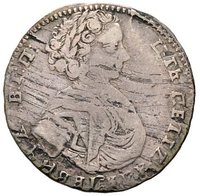
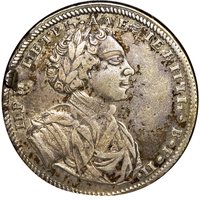
Obverse
Description:
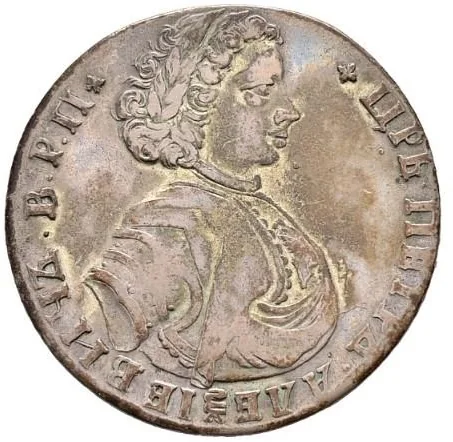
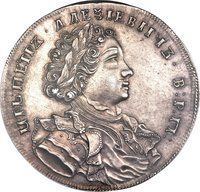
Bust of Peter I facing right, inscribed "ВРП" (Ruler of all Russia).
Inscription:
* ЦРЬ:ПЕТР∙АЛЕѮIЕВИЧЪ: В:Р:П *
Script: Cyrillic
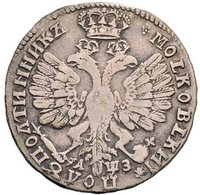
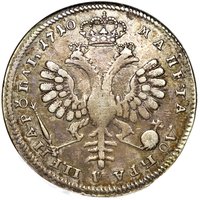
Reverse
Description:
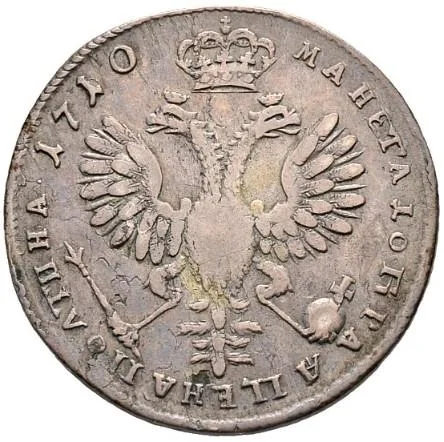
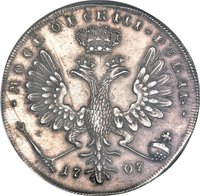
Crowned double-headed eagle, value, date.
Inscription:
МАНЕТА ДОБРАѦ ЦЕНА ПОЛТИНА ∙ 1710
Script: Cyrillic
Edge
Plain
Categories
| Symbol> Double-headed eagle |
Mints
| Name | Mark |
|---|---|
| Kadashevsky Mint | — |
Mintings
| Year | Mint Mark | Mintage | Quality | Collection |
|---|---|---|---|---|
| 1707 | — | — | ||
| 1710 | — | — |
Historical background
In 1707, the Russian Empire was in the midst of the Great Northern War (1700–1721), a conflict that placed immense financial strain on the state of Peter the Great. The war's demands for a modern army and navy, along with sweeping domestic reforms, drained the treasury. To meet these colossal expenses, the government under Peter I resorted to a classic yet destabilizing method: the systematic debasement of the silver coinage. The state mints, primarily in Moscow, began producing kopecks with a significantly reduced silver content, effectively creating inflationary revenue to fund the war effort.
This monetary policy led to a severe financial crisis. The new, lighter silver coins (often referred to as "wire money" due to their manufacturing process) circulated alongside older, full-weight coins, but the public quickly lost trust. Gresham's Law took hold, with good, full-silver coins being hoarded or melted down, while the debased currency flooded the market, causing prices to soar. The situation was exacerbated by a shortage of small change, disrupting everyday trade and creating widespread economic hardship and social discontent among both the peasantry and the soldiery, who found their pay purchasing less.
Peter the Great recognized the unsustainability of this system. The year 1707 itself was part of a transitional period of monetary experimentation, including attempts to introduce copper coinage for small denominations. These chaotic measures laid the groundwork for a more comprehensive reform that would culminate in the major currency overhaul of the 1710s. That later reform would finally abandon the old silver kopeck in favor of a new, decimal-based system featuring the ruble and copper minor coins, aiming to stabilize the economy and centralize state control over the monetary system.
This monetary policy led to a severe financial crisis. The new, lighter silver coins (often referred to as "wire money" due to their manufacturing process) circulated alongside older, full-weight coins, but the public quickly lost trust. Gresham's Law took hold, with good, full-silver coins being hoarded or melted down, while the debased currency flooded the market, causing prices to soar. The situation was exacerbated by a shortage of small change, disrupting everyday trade and creating widespread economic hardship and social discontent among both the peasantry and the soldiery, who found their pay purchasing less.
Peter the Great recognized the unsustainability of this system. The year 1707 itself was part of a transitional period of monetary experimentation, including attempts to introduce copper coinage for small denominations. These chaotic measures laid the groundwork for a more comprehensive reform that would culminate in the major currency overhaul of the 1710s. That later reform would finally abandon the old silver kopeck in favor of a new, decimal-based system featuring the ruble and copper minor coins, aiming to stabilize the economy and centralize state control over the monetary system.
✨ Legendary