

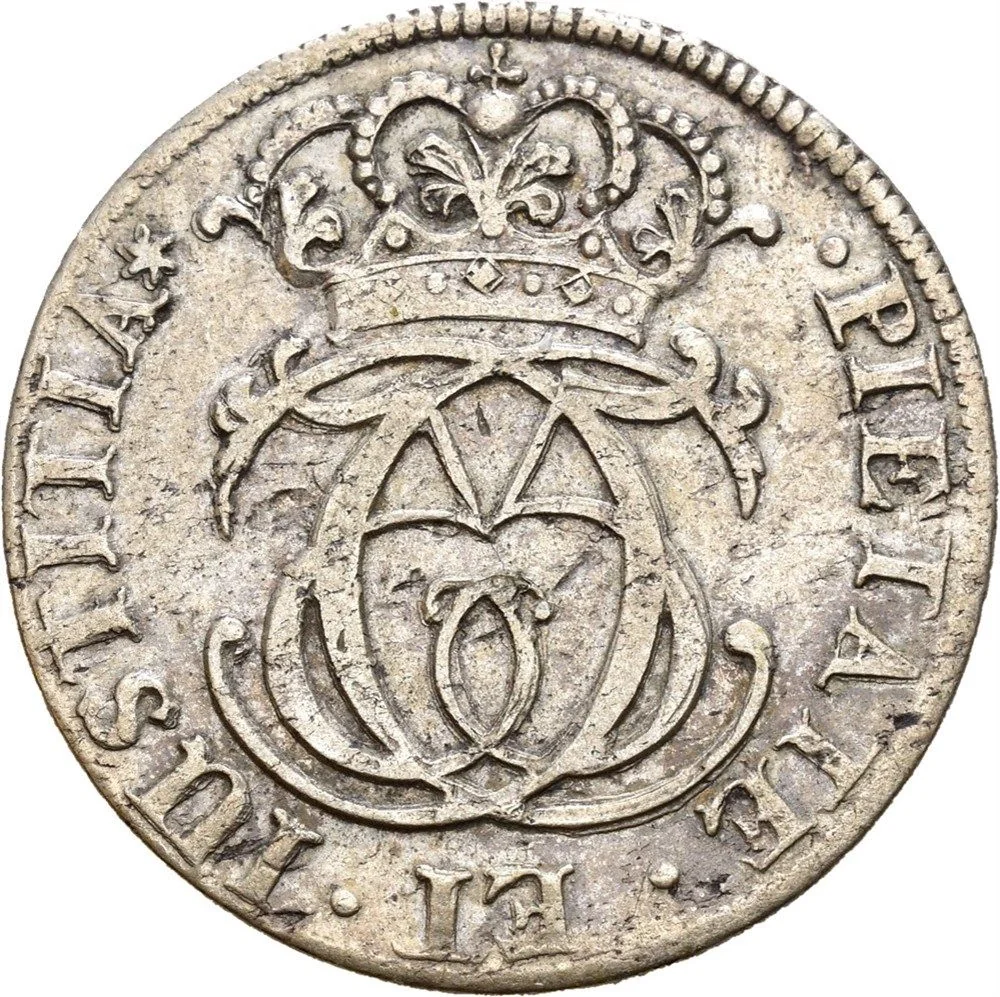
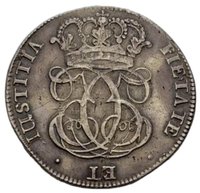
Obverse
Description:
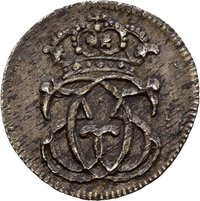
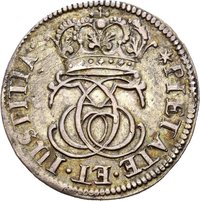
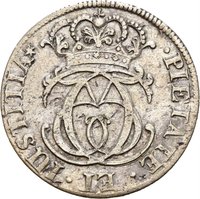
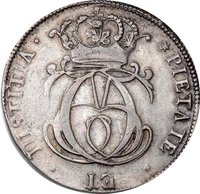
Crowned mirrored monogram of Christian V, encircled by inscription, with a beaded ring on the rim.
Inscription:
C 5
·PIETATE · ET · IUSTITIA ✶
·PIETATE · ET · IUSTITIA ✶
Script: Latin
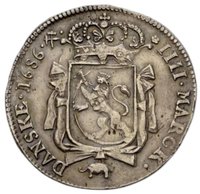
Reverse
Description:
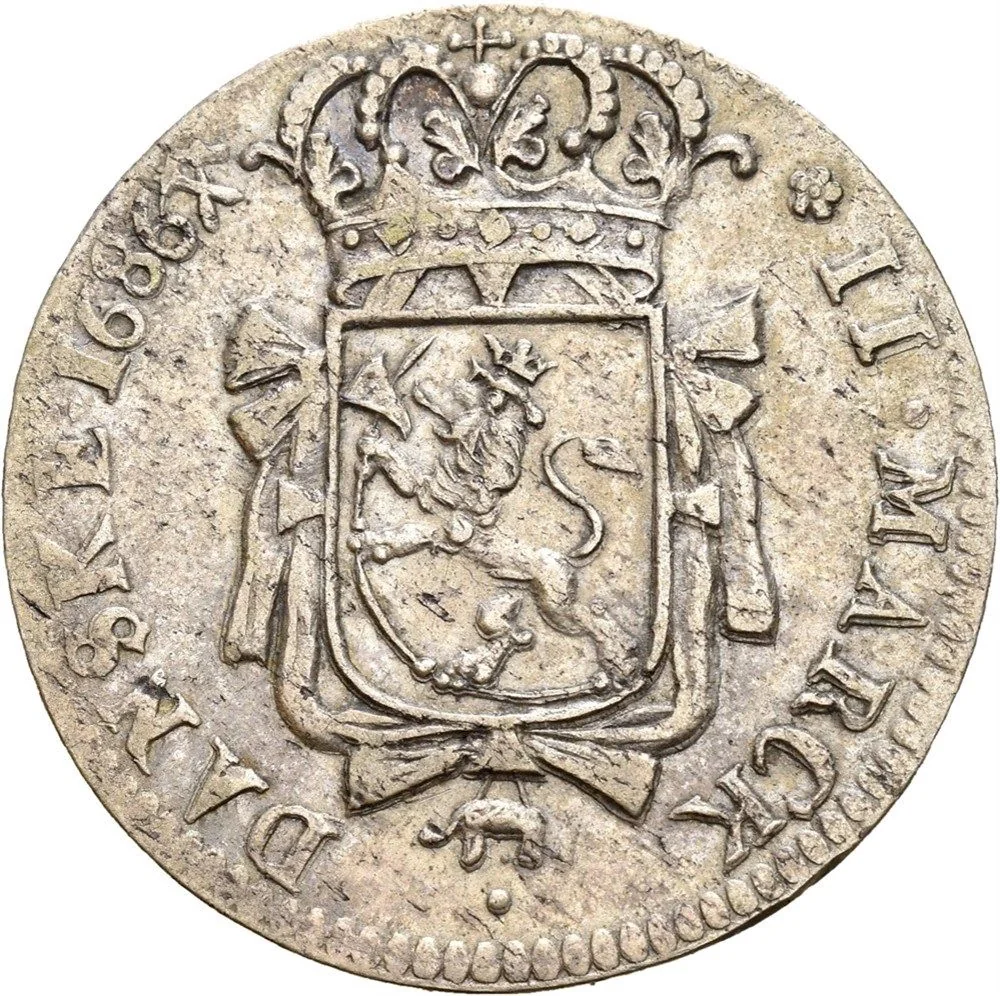
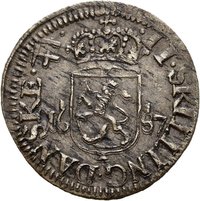
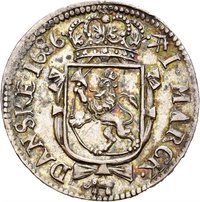
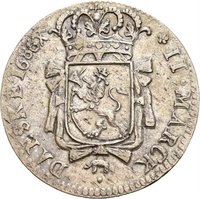
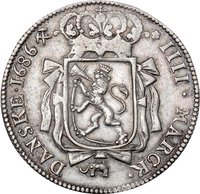
Crowned draped shield with a lion holding an axe, on a cross. Elephant sign below. Inscription around, beaded rim.
Inscription:
✿ II·MARCK · DANSKE·1686⚒
Script: Latin
Edge
Plain
Mints
| Name | Mark |
|---|---|
| Norwegian Mint | — |
Mintings
| Year | Mint Mark | Mintage | Quality | Collection |
|---|---|---|---|---|
| 1686 | — | — |
Historical background
In 1686, Norway was part of the dual monarchy of Denmark-Norway, and its currency system was complex and troubled. The primary circulating coin was the skilling, minted in silver, but the system was officially based on the riksdaler (rix-dollar), a large silver coin used for major transactions and accounting. However, a severe shortage of physical coinage, especially small change for everyday trade, plagued the economy. This scarcity was exacerbated by the export of full-weight Norwegian silver coins to foreign markets where their metal value was higher, leaving the domestic economy starved for reliable currency.
To address the chronic shortage, the state repeatedly resorted to debasement—reducing the silver content in newly minted coins while maintaining their face value. This practice, intended to profit the crown and keep coinage in circulation, led to a confusing multiplicity of coins with varying intrinsic values. Older, purer coins were often hoarded or melted down, leaving the poorer, newer coins in common use. Consequently, merchants and the public operated in a climate of uncertainty, having to constantly assess and negotiate the real value of different coin types, which hampered commerce and fostered inflation.
The monetary situation was further strained by the kingdom's broader economic policies, which were centrally directed from Copenhagen. Norway's role as a supplier of raw materials (like timber and fish) meant its trade balance and currency flows were heavily influenced by foreign markets. In 1686, the authorities were grappling with these systemic flaws, but effective solutions remained elusive. The fundamental issues of shortage, debasement, and public mistrust would persist until more comprehensive monetary reforms were enacted in the following century under the guidance of the Danish Crown.
To address the chronic shortage, the state repeatedly resorted to debasement—reducing the silver content in newly minted coins while maintaining their face value. This practice, intended to profit the crown and keep coinage in circulation, led to a confusing multiplicity of coins with varying intrinsic values. Older, purer coins were often hoarded or melted down, leaving the poorer, newer coins in common use. Consequently, merchants and the public operated in a climate of uncertainty, having to constantly assess and negotiate the real value of different coin types, which hampered commerce and fostered inflation.
The monetary situation was further strained by the kingdom's broader economic policies, which were centrally directed from Copenhagen. Norway's role as a supplier of raw materials (like timber and fish) meant its trade balance and currency flows were heavily influenced by foreign markets. In 1686, the authorities were grappling with these systemic flaws, but effective solutions remained elusive. The fundamental issues of shortage, debasement, and public mistrust would persist until more comprehensive monetary reforms were enacted in the following century under the guidance of the Danish Crown.
Series: 1686 Norway circulation coins

✨ Legendary