

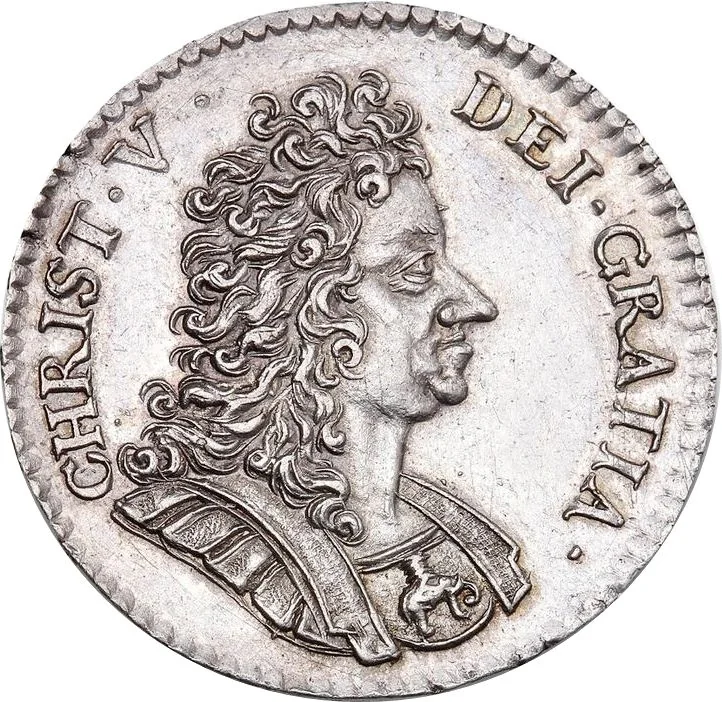
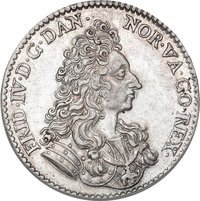
Obverse
Description:
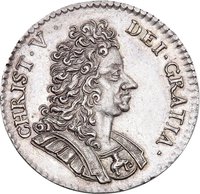
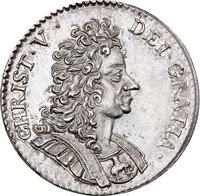
Bust of King Christian V in armor, facing right, with long hair, surrounded by an inscription and a beaded rim.
Inscription:
CHRIST·V· DEI·GRATIA·
Script: Latin
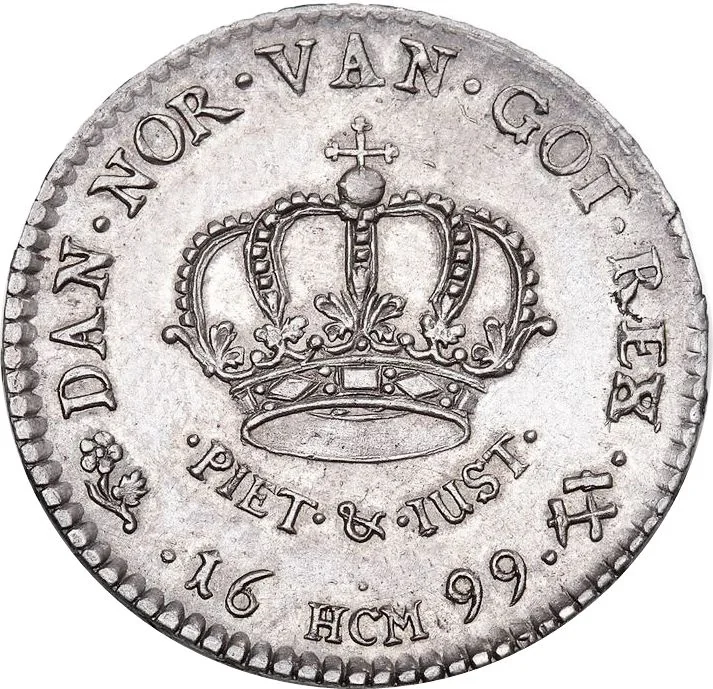
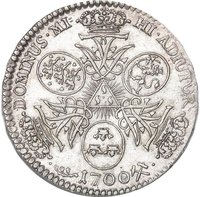
Reverse
Description:
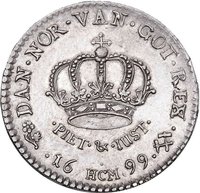
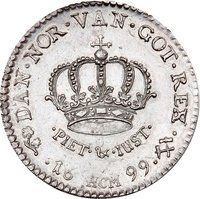
Crown above the king's motto, encircled by an inscription. Date at bottom, flanked by mintmarks and split by mintmaster initials. Beaded rim.
Inscription:
·PIET·&·IUST·
DAN·NOR·VAN·GOT·REX·
(mm) · 16 HCM 99 · ⚒
DAN·NOR·VAN·GOT·REX·
(mm) · 16 HCM 99 · ⚒
Script: Latin
Edge
Inscription or plain.
Legend:
SERVANT ET DECORANT
Mints
| Name | Mark |
|---|---|
| Norwegian Mint | — |
Mintings
| Year | Mint Mark | Mintage | Quality | Collection |
|---|---|---|---|---|
| 1699 | — | — |
Historical background
In 1699, Norway, then in a union with Denmark under the absolute monarchy of King Christian V, operated within a complex and strained monetary system. The official currency was the Danish rigsdaler, divided into marks and skilling, but the reality was one of chronic shortage and debasement. The state treasury was perennially empty due to costly wars, particularly the recent Nine Years' War (1688-1697), leading to repeated devaluations where the silver content of coins was reduced to mint more money from the same bullion. This created a climate of financial instability and public distrust in the coinage.
Compounding this was a severe lack of physical coin, especially small change for everyday transactions, which crippled local trade and wages. To cope, communities often resorted to barter or used unofficial "emergency money" like stamped pieces of lead or copper issued by merchants and town authorities. Furthermore, a bewildering variety of older, foreign, and clipped coins circulated at fluctuating values, making commerce difficult. The monetary chaos was particularly acute in Norway compared to Denmark, as Norway's important export trade brought in foreign silver coins, but these often flowed back to Copenhagen, leaving the kingdom illiquid.
The situation demanded reform, which would arrive shortly after the turn of the century. In 1695, a general currency reform had been attempted but failed to stabilize the system. The death of Christian V in 1699 and the accession of Frederick IV set the stage for more decisive action. The following year, a major monetary reform was enacted, introducing a new silver standard based on the rigsdaler specie and attempting to recall and re-mint all old debased coins. Thus, 1699 represents the final year of a protracted period of monetary disorder, immediately preceding a significant, though not immediately fully successful, effort to restore confidence and order to Norway's currency.
Compounding this was a severe lack of physical coin, especially small change for everyday transactions, which crippled local trade and wages. To cope, communities often resorted to barter or used unofficial "emergency money" like stamped pieces of lead or copper issued by merchants and town authorities. Furthermore, a bewildering variety of older, foreign, and clipped coins circulated at fluctuating values, making commerce difficult. The monetary chaos was particularly acute in Norway compared to Denmark, as Norway's important export trade brought in foreign silver coins, but these often flowed back to Copenhagen, leaving the kingdom illiquid.
The situation demanded reform, which would arrive shortly after the turn of the century. In 1695, a general currency reform had been attempted but failed to stabilize the system. The death of Christian V in 1699 and the accession of Frederick IV set the stage for more decisive action. The following year, a major monetary reform was enacted, introducing a new silver standard based on the rigsdaler specie and attempting to recall and re-mint all old debased coins. Thus, 1699 represents the final year of a protracted period of monetary disorder, immediately preceding a significant, though not immediately fully successful, effort to restore confidence and order to Norway's currency.
✨ Legendary