

Iran
Context
Material
References
KM: #Click to copy to clipboard518.4
Numista: #62040
Value
Bullion value: $458.51
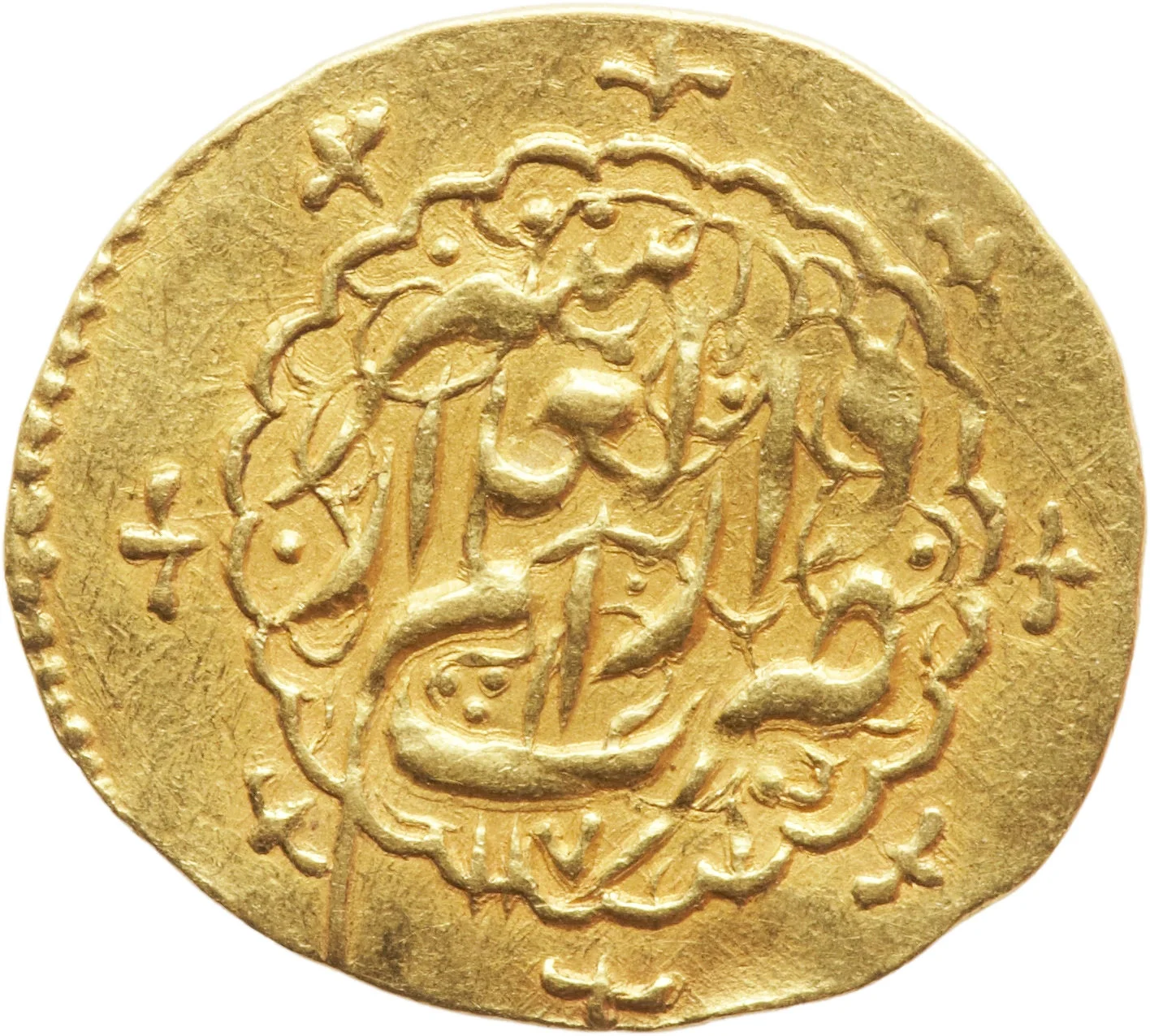
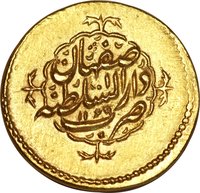
Obverse
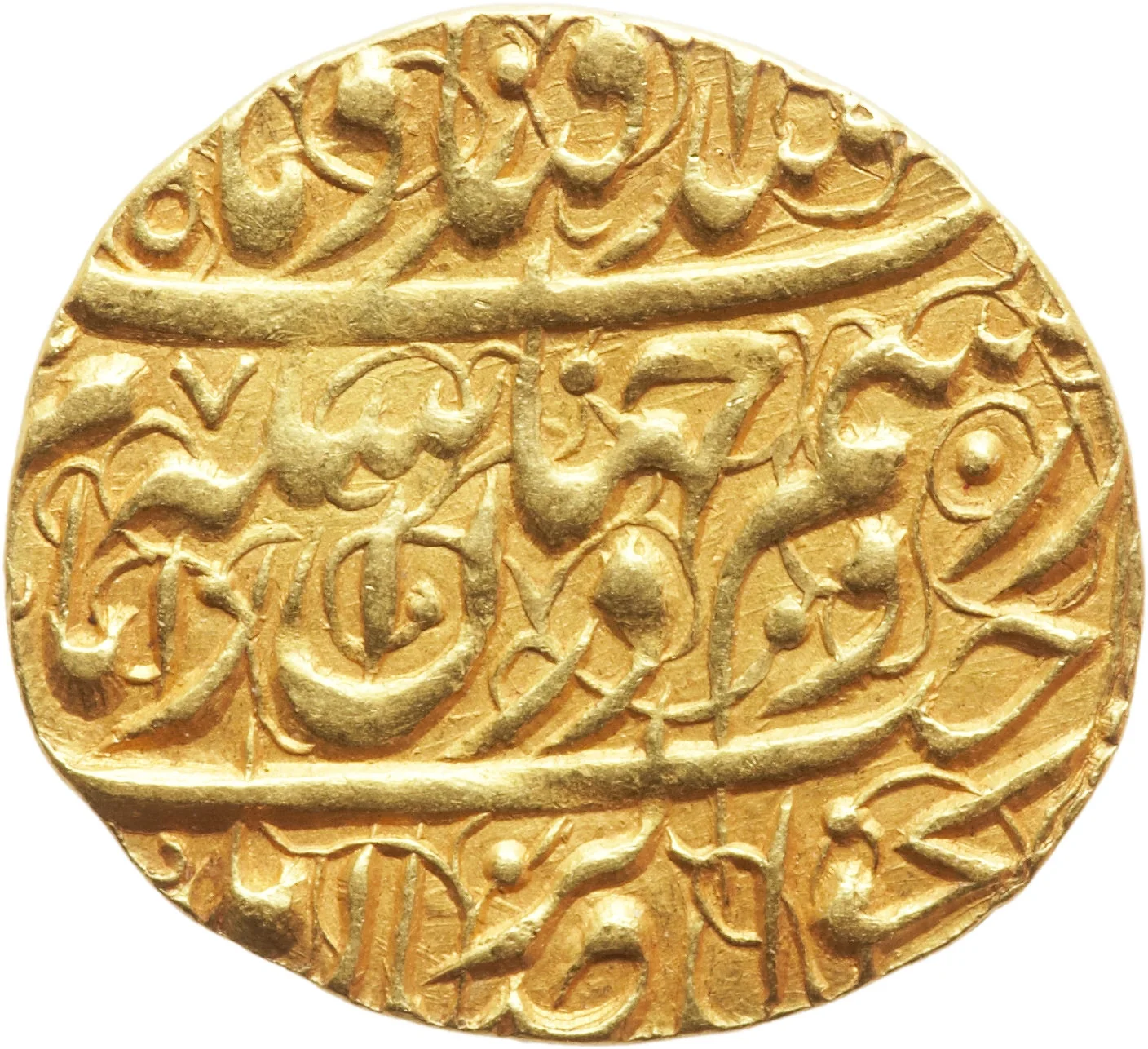
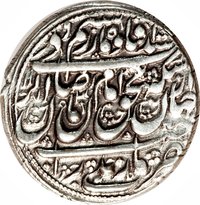
Reverse
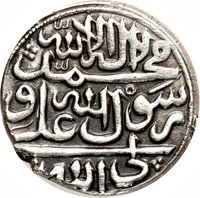
Edge
Mints
| Name | Mark |
|---|---|
| Shiraz | — |
Mintings
| Year | Mint Mark | Mintage | Quality | Collection |
|---|---|---|---|---|
| 1758 | — | — |
Historical background
In 1758, Iran was under the rule of the Zand dynasty, founded by Karim Khan Zand, who had recently established his authority over much of the country from his capital in Shiraz. The period was one of relative stability and recovery following decades of devastating civil war and foreign invasion after the collapse of the Safavid Empire in 1722. Karim Khan, who notably refused to take the title of Shah, instead ruling as Vakil al-Ra'aya (Representative of the People), focused on restoring economic prosperity and just administration. His policies of lowering taxes, promoting agriculture and trade, and fostering security along key routes were crucial first steps in rehabilitating a monetary system that had been severely disrupted.
The currency situation in 1758 reflected this transitional recovery. The primary circulating coin was the silver rial, often referred to in European accounts as the "abbasi" (worth 2 shahis or 200 dinars), though the gold toman (10,000 dinars) served as the main unit of account. The coinage itself was often of inconsistent weight and purity, a legacy of the preceding turbulent decades when various regional warlords and pretenders, including the Afghans, Afsharids under Nader Shah, and Zands themselves, had minted their own coins. Karim Khan worked to standardize the currency, minting silver coins bearing his name and titles in Shiraz and other major mints like Isfahan and Tabriz, which helped restore a degree of confidence and uniformity to the monetary system.
However, the economy and its currency remained fragile and less integrated than during the Safavid zenith. Barter was still common in many regions, and foreign coins, particularly the Dutch ducatoon and the Ottoman qurush, circulated in port cities and border areas due to ongoing trade. Furthermore, Karim Khan’s control was not absolute; rivals like Azad Khan Afghan in the northwest and the Qajar tribes in the north still held power, potentially issuing their own coinage. Thus, while 1758 marked a period of deliberate and positive monetary reform under Karim Khan’s pragmatic rule, the system was still in the process of being rebuilt from the fragmentation of the previous generation.
The currency situation in 1758 reflected this transitional recovery. The primary circulating coin was the silver rial, often referred to in European accounts as the "abbasi" (worth 2 shahis or 200 dinars), though the gold toman (10,000 dinars) served as the main unit of account. The coinage itself was often of inconsistent weight and purity, a legacy of the preceding turbulent decades when various regional warlords and pretenders, including the Afghans, Afsharids under Nader Shah, and Zands themselves, had minted their own coins. Karim Khan worked to standardize the currency, minting silver coins bearing his name and titles in Shiraz and other major mints like Isfahan and Tabriz, which helped restore a degree of confidence and uniformity to the monetary system.
However, the economy and its currency remained fragile and less integrated than during the Safavid zenith. Barter was still common in many regions, and foreign coins, particularly the Dutch ducatoon and the Ottoman qurush, circulated in port cities and border areas due to ongoing trade. Furthermore, Karim Khan’s control was not absolute; rivals like Azad Khan Afghan in the northwest and the Qajar tribes in the north still held power, potentially issuing their own coinage. Thus, while 1758 marked a period of deliberate and positive monetary reform under Karim Khan’s pragmatic rule, the system was still in the process of being rebuilt from the fragmentation of the previous generation.
✨ Legendary