

1 Ashrafi – Hotak dynasty
Iran
Context
Material
References
KM: #Click to copy to clipboard325.1
Numista: #61776
Value
Bullion value: $575.22
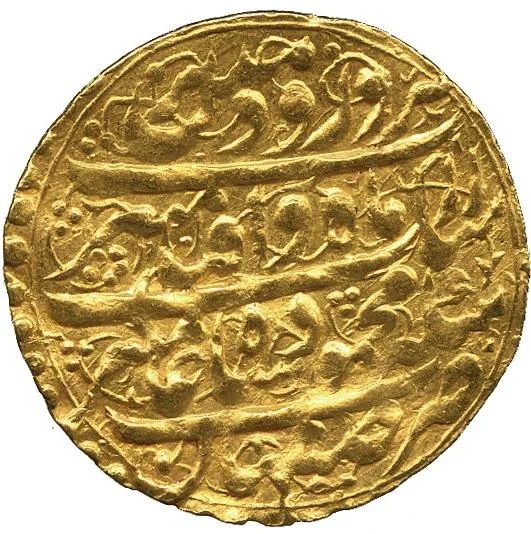
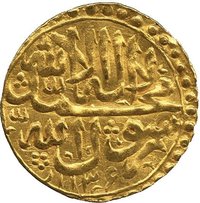
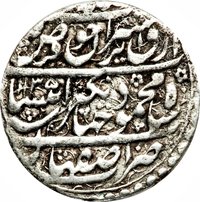
Obverse
Description:
Isfahan mint.
Inscription:
فرو رود بزمین ماه و افتاب منیر
ز رشک سکه محمود شاه عالمگیر
ضرب اصفهان
ز رشک سکه محمود شاه عالمگیر
ضرب اصفهان
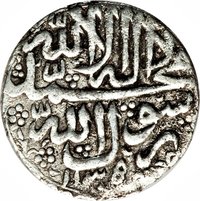
Reverse
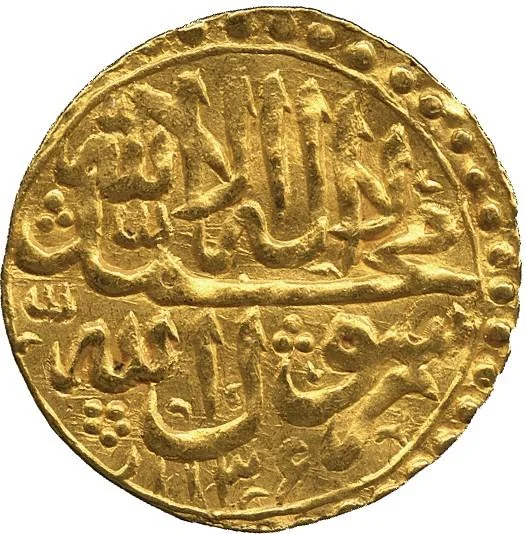
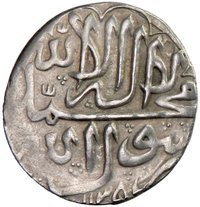
Inscription:
لا اله الا الله
محمد رسول الله
۱۱۳۶
محمد رسول الله
۱۱۳۶
Edge
Plain
Mintings
| Year | Mint Mark | Mintage | Quality | Collection |
|---|---|---|---|---|
| 1723 | — | — | ||
| 1724 | — | — |
Historical background
The Hotak dynasty, ruling from 1722 to 1729, inherited a currency system in severe disarray by 1723. The preceding Safavid Empire had experienced a prolonged monetary crisis, with rampant debasement of the silver coinage, the abbasi. Years of war, economic mismanagement, and a global shortage of silver had led to coins being minted with ever-decreasing precious metal content, causing inflation and a loss of public trust. Furthermore, the Afghan invasion that toppled the Safavids had disrupted trade routes and damaged the agricultural tax base, the state's primary revenue source, leaving the nascent Hotak administration with depleted coffers and a fractured monetary economy.
Faced with this crisis, the Hotak ruler Mahmud Hotak (r. 1722-1725) pursued a pragmatic, though ultimately destabilizing, policy focused on immediate fiscal survival rather than long-term reform. The state continued to mint coins, primarily in Isfahan and Kabul, often simply overstamping or melting down existing Safavid coinage to reissue it under the Hotak name. This practice did not address the core issue of silver content, and the dynasty largely failed to standardize the currency or restore its intrinsic value. Revenue was extracted through direct confiscation and heavy tribute from conquered territories, particularly from the Persian nobility, rather than through a rebuilt and stable monetary-taxation system.
Consequently, the currency situation in 1723 was one of profound uncertainty and regional fragmentation. While Hotak coinage circulated, its value was highly variable and often dictated by local markets and the remaining silver content of individual coins. Barter regained prominence in many areas, and older, trusted Safavid coins sometimes held more credibility than new Hotak issues. This monetary instability reflected the dynasty's broader struggle to transition from conquerors to administrators, undermining economic recovery and contributing to the unrest that would soon lead to their rapid decline.
Faced with this crisis, the Hotak ruler Mahmud Hotak (r. 1722-1725) pursued a pragmatic, though ultimately destabilizing, policy focused on immediate fiscal survival rather than long-term reform. The state continued to mint coins, primarily in Isfahan and Kabul, often simply overstamping or melting down existing Safavid coinage to reissue it under the Hotak name. This practice did not address the core issue of silver content, and the dynasty largely failed to standardize the currency or restore its intrinsic value. Revenue was extracted through direct confiscation and heavy tribute from conquered territories, particularly from the Persian nobility, rather than through a rebuilt and stable monetary-taxation system.
Consequently, the currency situation in 1723 was one of profound uncertainty and regional fragmentation. While Hotak coinage circulated, its value was highly variable and often dictated by local markets and the remaining silver content of individual coins. Barter regained prominence in many areas, and older, trusted Safavid coins sometimes held more credibility than new Hotak issues. This monetary instability reflected the dynasty's broader struggle to transition from conquerors to administrators, undermining economic recovery and contributing to the unrest that would soon lead to their rapid decline.

✨ Legendary