

¼ mohur – Iran
Add to wishlist
Iran
Material
Weight: 2.65 g
Gold Weight:: 2.65 g
Shape: Irregular round
Composition: Gold
Magnetic: No
Alignment: Coin alignment
flip
References
KM: #
Numista: #61771
Value
Bullion value: $412.57
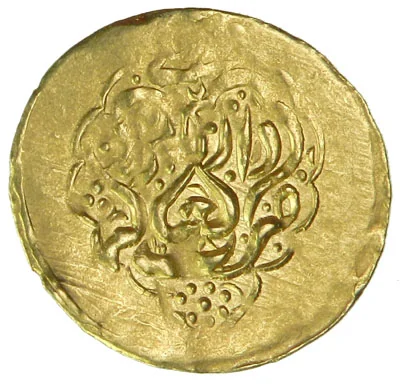
Obverse
Description:
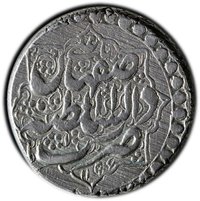
Typical weakness for Ali Murad's ¼ mohurs, due to the Zand decline and Qajar rise after Karim Khan's death.
Inscription:
یا علی
ضرب دارالایمان یزد
۱۱۹۸
ضرب دارالایمان یزد
۱۱۹۸
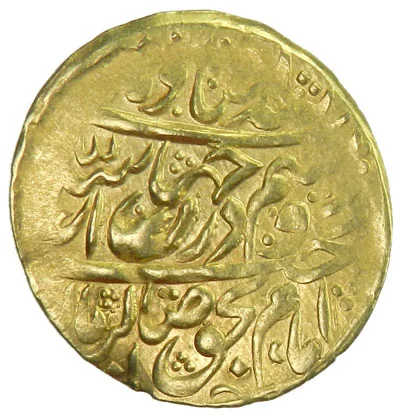
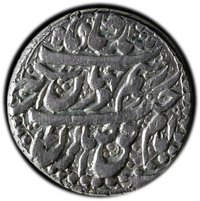
Reverse
Inscription:
شد آفتاب و ماه زر و سیم در جهان
از سکه امام بحق صاحب الزمان
از سکه امام بحق صاحب الزمان
Edge
Plain
Mints
| Name | Mark |
|---|---|
| Yazd | یزد |
Mintings
| Year | Mint Mark | Mintage | Quality | Collection |
|---|---|---|---|---|
| 1782 | — | — | ||
| 1783 | — | — | ||
| 1784 | — | — | ||
| 1785 | — | — |
Historical background
In 1782, Iran was under the rule of the Zand dynasty, with Karim Khan Zand having established a period of relative stability and prosperity from his capital in Shiraz until his death in 1779. However, by 1782, the state was in a precarious position, embroiled in a bitter succession crisis following Karim Khan's death. Various Zand princes were fighting for control, while the Qajar tribe in the north, led by Agha Mohammad Khan, was gathering strength. This political fragmentation and ongoing civil war directly destabilized the monetary system, as central authority over minting and fiscal policy broke down.
The currency situation reflected this political chaos. The primary unit was the silver toman (a unit of account) and the silver rial (a coin). However, the purity and weight of coins varied drastically depending on which regional mint produced them—Shiraz, Isfahan, or Tabriz—leading to a lack of uniform value and widespread confusion in trade. Furthermore, the constant warfare drained state coffers, prompting local rulers and pretenders to debase the coinage (reducing its silver content) to finance their military campaigns. This practice eroded public trust in the currency, as the intrinsic value of coins became unpredictable and often fell below their face value.
Consequently, the economy in 1782 Iran suffered from severe inflation and commercial disruption. Merchants and the general population faced uncertainty in every transaction, often resorting to barter or weighing coins for their bullion value rather than accepting them at nominal rates. The breakdown of a unified, trustworthy currency system mirrored the disintegration of central political authority, crippling long-distance trade and placing a heavy burden on the peasantry and urban poor. This monetary instability was both a symptom and a cause of the broader decline of the Zand dynasty, which would soon be overthrown by the emerging Qajar dynasty.
The currency situation reflected this political chaos. The primary unit was the silver toman (a unit of account) and the silver rial (a coin). However, the purity and weight of coins varied drastically depending on which regional mint produced them—Shiraz, Isfahan, or Tabriz—leading to a lack of uniform value and widespread confusion in trade. Furthermore, the constant warfare drained state coffers, prompting local rulers and pretenders to debase the coinage (reducing its silver content) to finance their military campaigns. This practice eroded public trust in the currency, as the intrinsic value of coins became unpredictable and often fell below their face value.
Consequently, the economy in 1782 Iran suffered from severe inflation and commercial disruption. Merchants and the general population faced uncertainty in every transaction, often resorting to barter or weighing coins for their bullion value rather than accepting them at nominal rates. The breakdown of a unified, trustworthy currency system mirrored the disintegration of central political authority, crippling long-distance trade and placing a heavy burden on the peasantry and urban poor. This monetary instability was both a symptom and a cause of the broader decline of the Zand dynasty, which would soon be overthrown by the emerging Qajar dynasty.
✨ Legendary