


Obverse
Description:
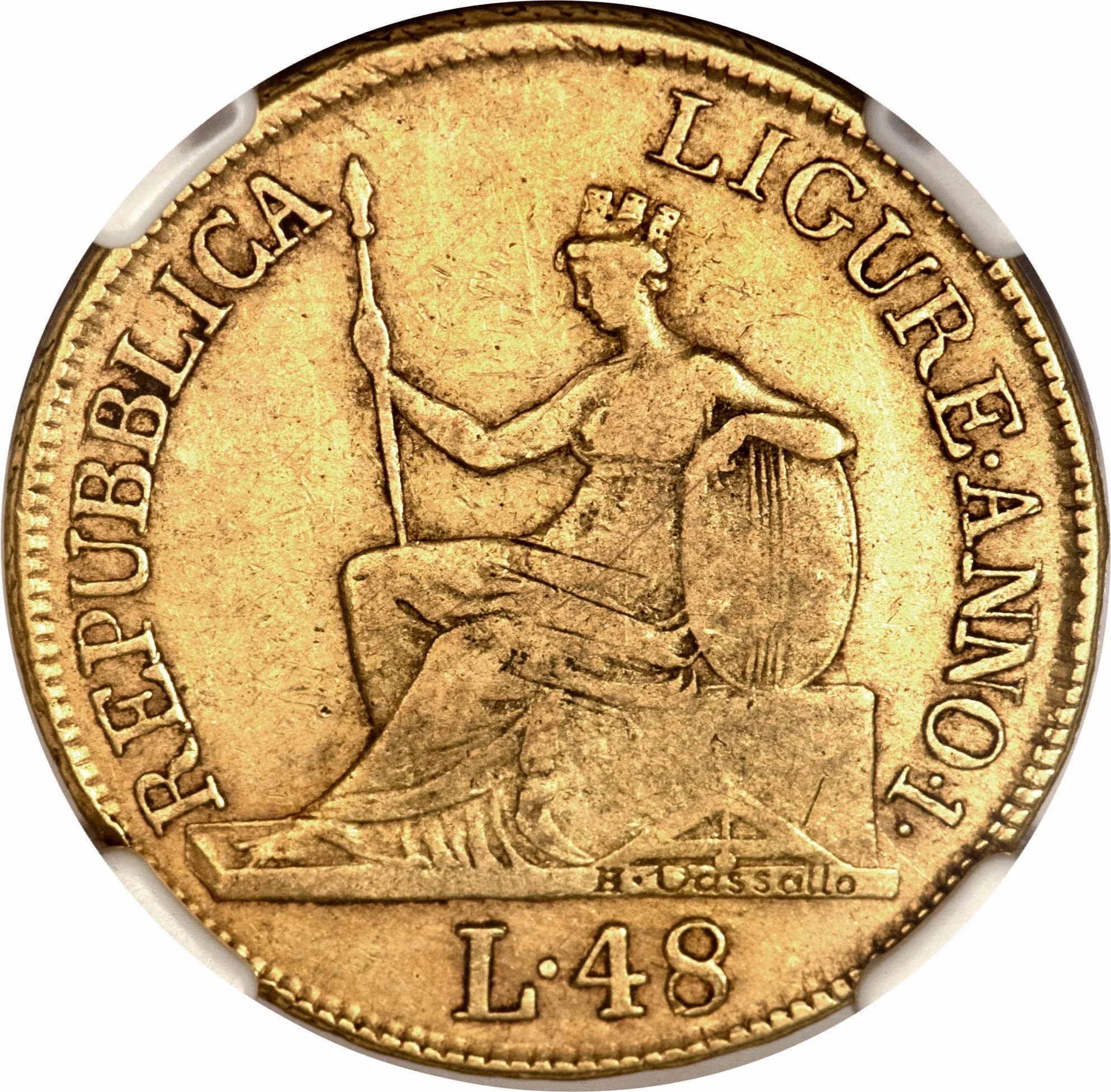
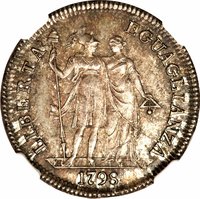
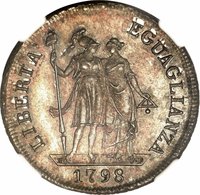
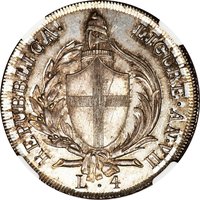
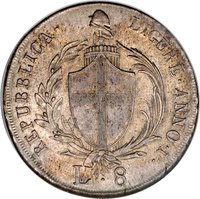
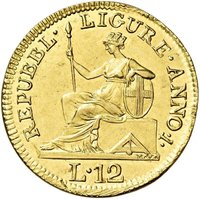
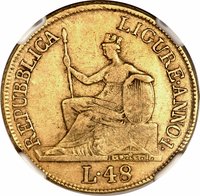
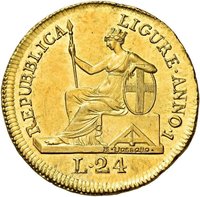
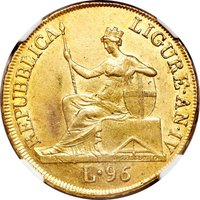
Crowned seated female with shield and spear, value below. Base bears author's name; surrounding motto and year of the Republic.
Inscription:
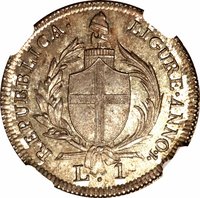
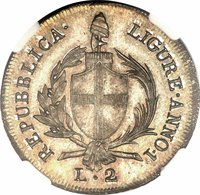
REPUBLICA • LIGURE • AN • I
H. Vassallo
L. 48
H. Vassallo
L. 48
Script: Latin
Engraver: Girolamo Vassallo
Reverse
Description:
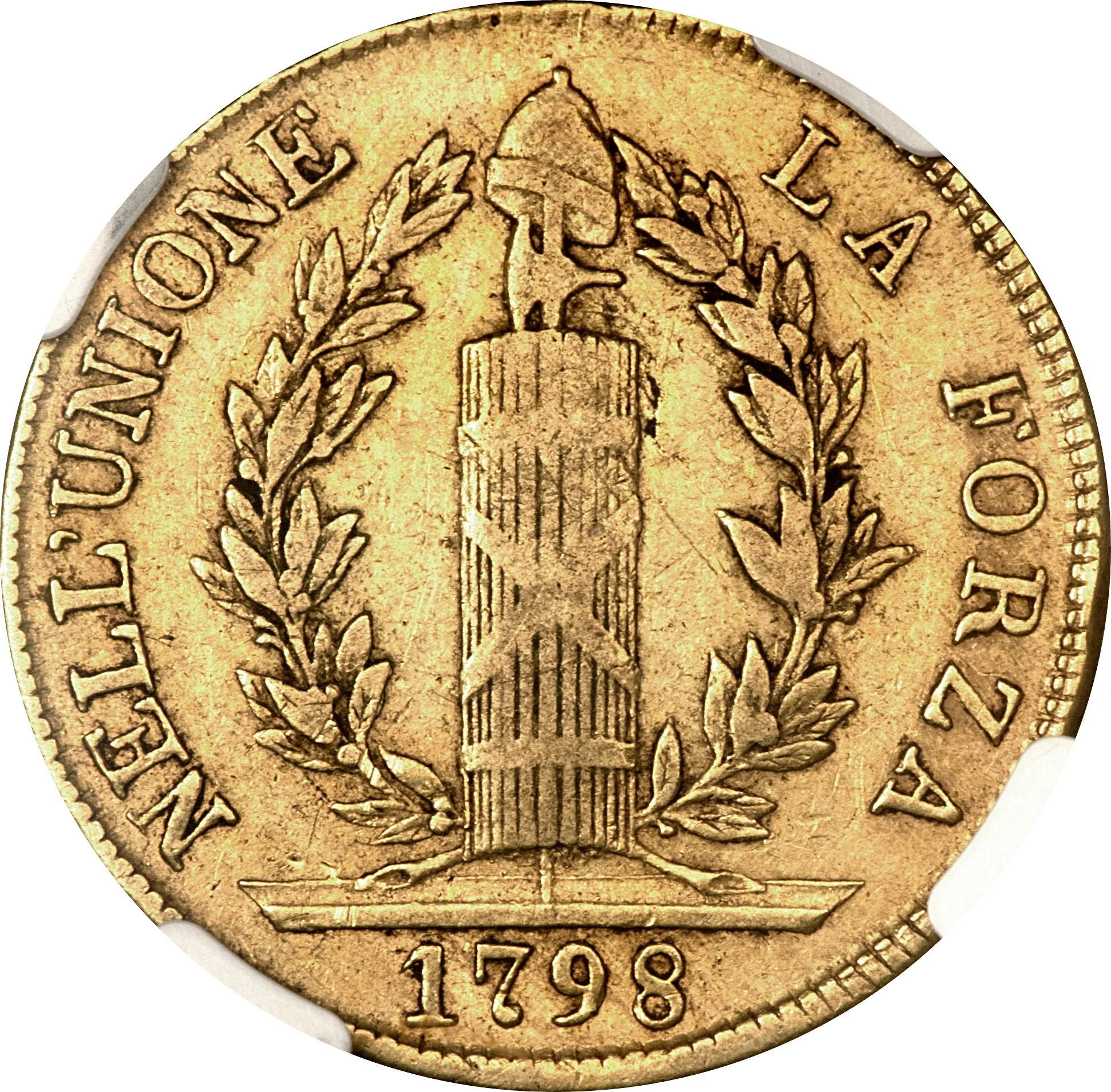
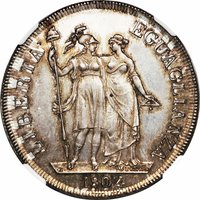
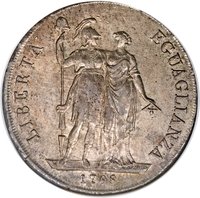
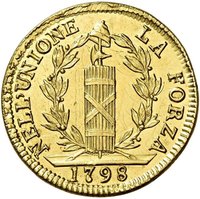
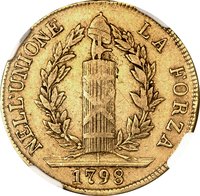
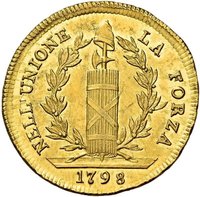
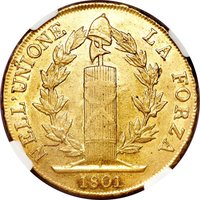
Fasces and liberty cap in wreath, date beneath.
Inscription:
NELL 'UNIONE LA FORZA
1798
1798
Script: Latin
Edge
Leaves in relief.
Mints
| Name | Mark |
|---|---|
| Genoa | — |
Mintings
| Year | Mint Mark | Mintage | Quality | Collection |
|---|---|---|---|---|
| 1798 | — | — | ||
| 1801 | — | — | ||
| 1804 | — | — |
Historical background
The Ligurian Republic, established in June 1797 following Napoleon's imposition of a French-aligned government on the former Republic of Genoa, inherited a complex and precarious monetary situation. The traditional Genoese currency system, historically anchored by the genovino and later the lira, was in a state of disarray due to years of economic strain, wartime deficits, and the inflationary practice of issuing paper money (biglietti di cartulario). By the republic's founding, public debt was enormous, confidence in paper currency was low, and a chaotic mix of old Genoese coins, foreign specie (like Spanish silver pesos), and depreciating paper circulated.
The new Jacobin-inspired government sought to modernize and stabilize the currency as part of its revolutionary reforms. In 1798, it introduced a new decimal currency based on the French franc, officially pegging the Ligurian lira to the French franc at par (1:1). New coins were minted, featuring republican symbols like the bust of Liberty and the inscription "Repubblica Ligure." However, this reform was more aspirational than immediately effective. The state lacked the precious metal reserves to fully replace the old monetary stock, leading to a protracted period of dual circulation where old and new coins, alongside the still-depreciated paper notes, all competed.
Consequently, the currency situation throughout 1798 remained unstable and a source of economic difficulty. The forced parity with the franc did not reflect underlying economic realities, and the chronic shortage of sound metallic currency hampered trade and daily transactions. This monetary instability, compounded by French requisitions and the costs of hosting a French army of occupation, undermined the republic's economic sovereignty and contributed to widespread public discontent, revealing the deep challenges of imposing a new monetary order on a fragile and indebted state.
The new Jacobin-inspired government sought to modernize and stabilize the currency as part of its revolutionary reforms. In 1798, it introduced a new decimal currency based on the French franc, officially pegging the Ligurian lira to the French franc at par (1:1). New coins were minted, featuring republican symbols like the bust of Liberty and the inscription "Repubblica Ligure." However, this reform was more aspirational than immediately effective. The state lacked the precious metal reserves to fully replace the old monetary stock, leading to a protracted period of dual circulation where old and new coins, alongside the still-depreciated paper notes, all competed.
Consequently, the currency situation throughout 1798 remained unstable and a source of economic difficulty. The forced parity with the franc did not reflect underlying economic realities, and the chronic shortage of sound metallic currency hampered trade and daily transactions. This monetary instability, compounded by French requisitions and the costs of hosting a French army of occupation, undermined the republic's economic sovereignty and contributed to widespread public discontent, revealing the deep challenges of imposing a new monetary order on a fragile and indebted state.
✨ Legendary