

1 Patagon – Spanish Netherlands
Netherlands
Context
Years: 1622–1666
Country: Netherlands 
Issuer: Spanish Netherlands
Ruler: Philip IV
Currency:
(1506—1713)
Subdivision: 1 Patagon = 48 Stuivers
Demonetized: Yes
Material
Diameter: 42 mm
Weight: 28.1 g
Silver weight: 24.59 g
Shape: Irregular round
Composition: 87.5% Silver
Magnetic: No
Technique: Hammered
Alignment: Coin alignment
flip
References
KM: #Click to copy to clipboard34
Numista: #61026
Value
Bullion value: $70.14
Obverse
Description:
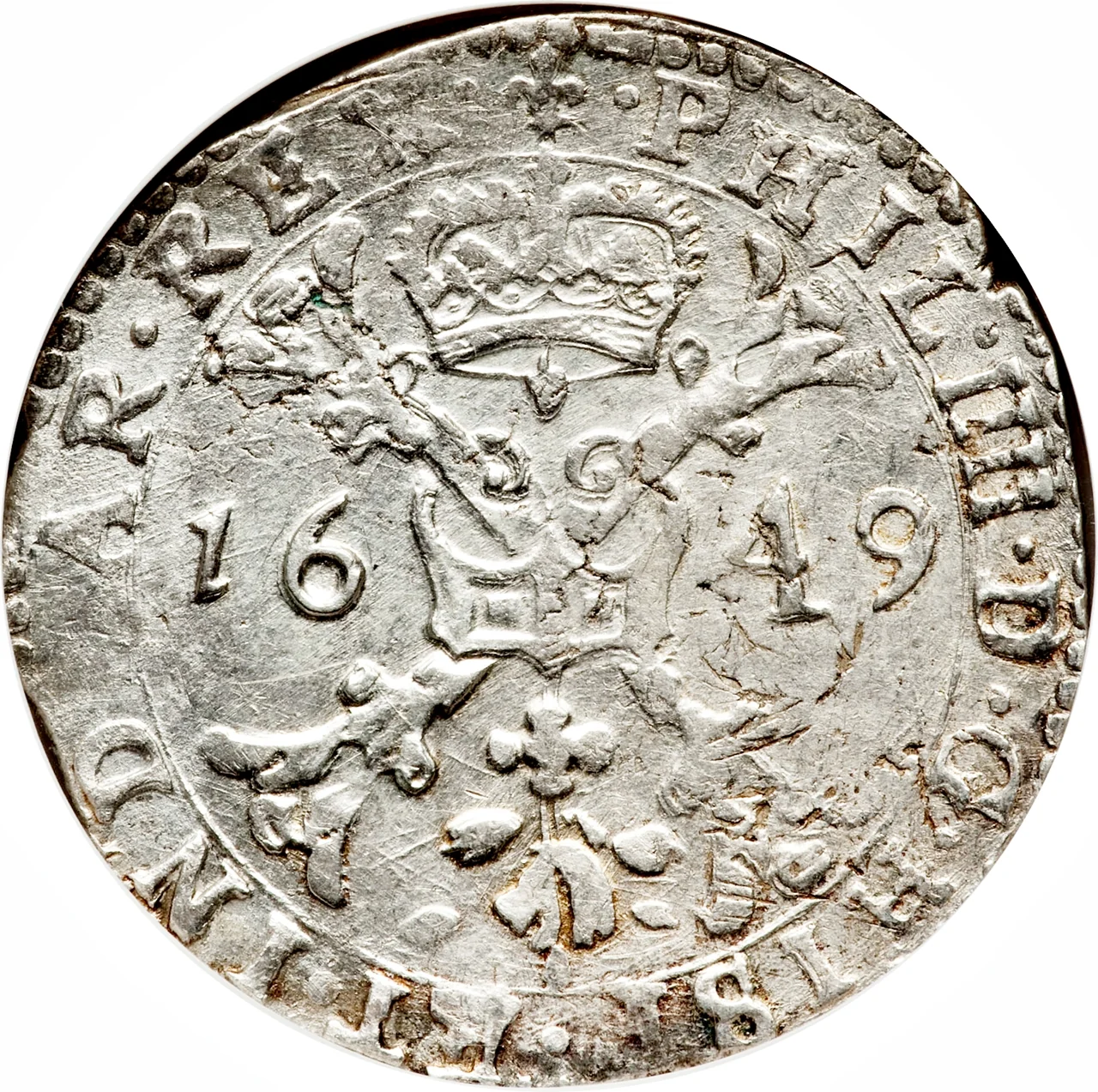
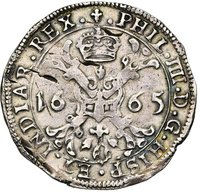
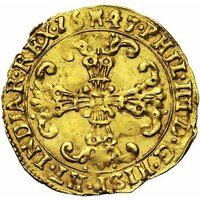
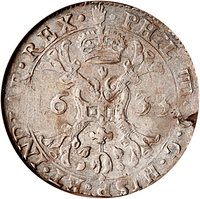
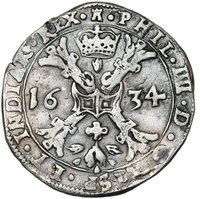
Burgundian cross with central firesteel, suspending the Golden Fleece jewel, flanking the date; fleur-de-lis mint mark above.
Inscription:
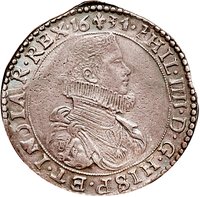
· PHIL · IIII · D · G · HISP · ET · INDIAR · REX · ⚜
1649
1649
Script: Latin
Reverse
Description:
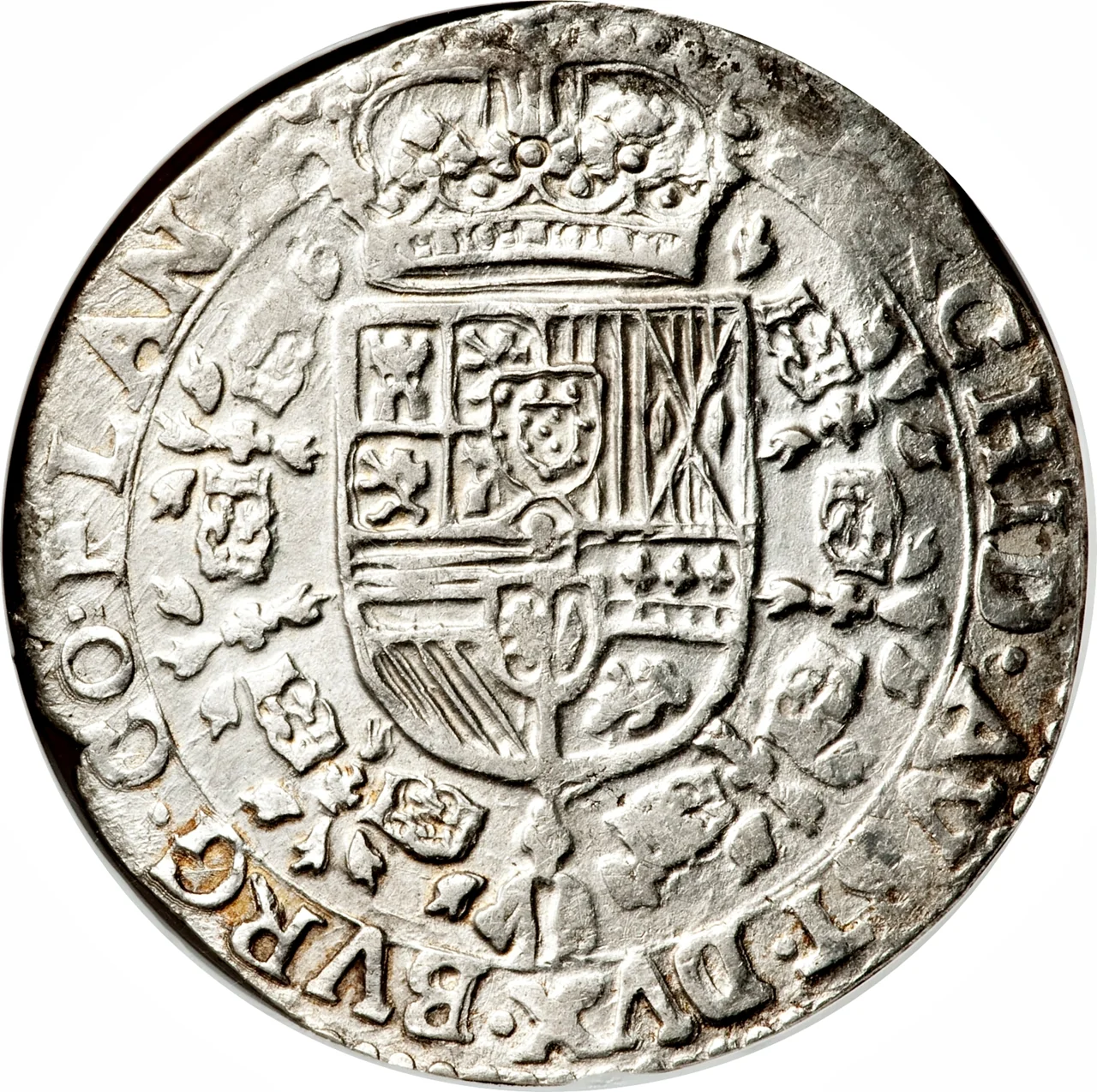
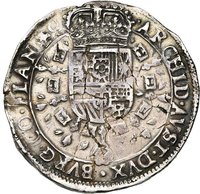
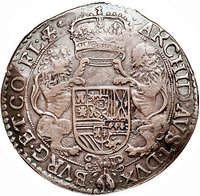
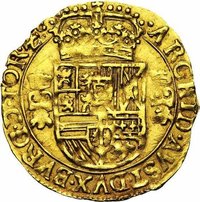
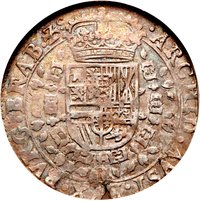
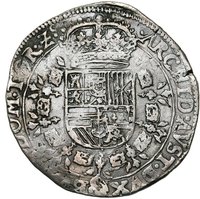
Arms crowned, encircled by the Golden Fleece collar.
Inscription:
ARCHID · AVST · DVX · BVRG · CO · FLAN Zc
Script: Latin
Edge
Mints
| Name | Mark |
|---|---|
| Bruges | — |
Mintings
| Year | Mint Mark | Mintage | Quality | Collection |
|---|---|---|---|---|
| 1622 | lis | — | ||
| 1623 | — | — | ||
| 1626 | — | — | ||
| 1628 | — | — | ||
| 1631 | — | — | ||
| 1632 | — | — | ||
| 1633 | — | — | ||
| 1635 | — | — | ||
| 1636 | — | — | ||
| 1638 | — | — | ||
| 1639 | — | — | ||
| 1640 | — | — | ||
| 1641 | — | — | ||
| 1642 | — | — | ||
| 1643 | — | — | ||
| 1644 | — | — | ||
| 1645 | — | — | ||
| 1646 | — | — | ||
| 1647 | — | — | ||
| 1648 | — | — | ||
| 1649 | — | — | ||
| 1650 | — | — | ||
| 1651 | — | — | ||
| 1652 | — | — | ||
| 1653 | — | — | ||
| 1654 | — | — | ||
| 1655 | — | — | ||
| 1656 | — | — | ||
| 1657 | — | — | ||
| 1658 | — | — | ||
| 1659 | — | — | ||
| 1660 | — | — | ||
| 1661 | — | — | ||
| 1662 | — | — | ||
| 1663 | — | — | ||
| 1664 | — | — | ||
| 1665 | — | — | ||
| 1666 | — | — |
Historical background
In 1622, the Spanish Netherlands was grappling with a severe and protracted monetary crisis, a direct consequence of the ongoing Eighty Years' War (1568-1648). The region's economy was strained by the immense costs of maintaining the Army of Flanders, leading the authorities to repeatedly debase the coinage. By lowering the silver content in coins like the patagon and ducatón while keeping their face value, the government aimed to create short-term revenue to pay troops. However, this practice, alongside the circulation of heavily debased "light money" from neighboring states, triggered Gresham's Law: good, full-weight coins were hoarded or exported, leaving the economy flooded with unreliable currency.
This monetary chaos caused rampant inflation, commercial paralysis, and a profound loss of public trust. Merchants and cities struggled with fluctuating exchange rates between the myriad of coins in circulation, hindering trade and sowing social unrest as the cost of living soared. The situation was exacerbated by the economic warfare of the era, including the Dutch Republic's blockade of the Scheldt River, which strangled Antwerp's trade and further isolated the region's economy.
Faced with this escalating crisis, the Habsburg authorities in Brussels under Archduchess Isabella enacted a major monetary reform on December 10, 1622. This ordinance aimed to restore stability by introducing new, properly valued silver coins and officially devaluing the debased ones in circulation. While a necessary step, the reform was economically painful, effectively crystallizing losses for those holding the old currency. It represented a critical attempt to reassert sovereign control over the currency and lay a foundation for fiscal stability, even as the underlying pressures of the war continued.
This monetary chaos caused rampant inflation, commercial paralysis, and a profound loss of public trust. Merchants and cities struggled with fluctuating exchange rates between the myriad of coins in circulation, hindering trade and sowing social unrest as the cost of living soared. The situation was exacerbated by the economic warfare of the era, including the Dutch Republic's blockade of the Scheldt River, which strangled Antwerp's trade and further isolated the region's economy.
Faced with this escalating crisis, the Habsburg authorities in Brussels under Archduchess Isabella enacted a major monetary reform on December 10, 1622. This ordinance aimed to restore stability by introducing new, properly valued silver coins and officially devaluing the debased ones in circulation. While a necessary step, the reform was economically painful, effectively crystallizing losses for those holding the old currency. It represented a critical attempt to reassert sovereign control over the currency and lay a foundation for fiscal stability, even as the underlying pressures of the war continued.
💎 Extremely Rare