

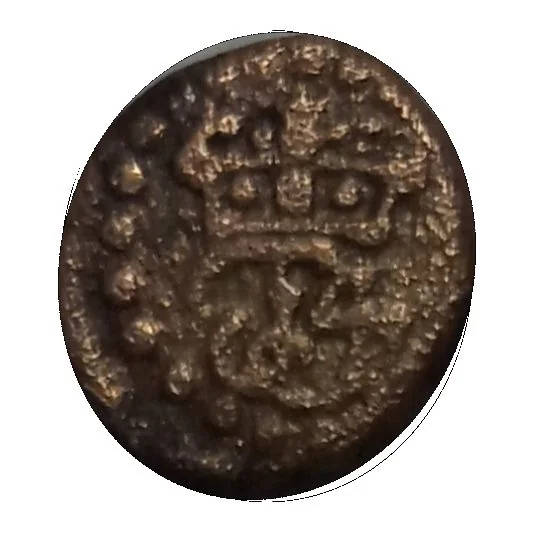
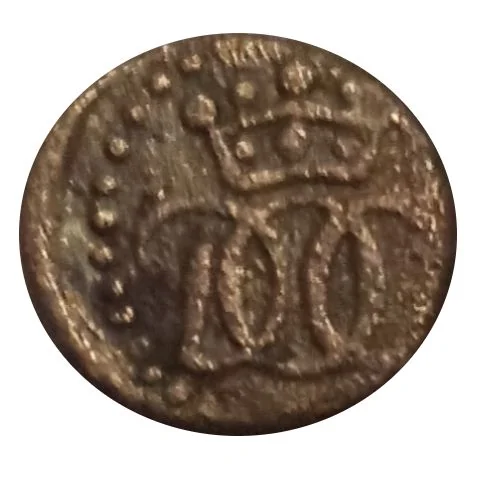
1 Cash – Danish India
India
Context
Year: 1700
Country: India 
Issuer: Danish India
Ruler: Frederick IV
Currency:
(1730—1818)
Demonetized: Yes
Material
Diameter: 9.57 mm
Weight: 0.68 g
Thickness: 1.53 mm
Shape: Irregular round
Composition: Copper
Magnetic: No
Alignment: Coin alignment
flip
References
KM: #Click to copy to clipboard124
Numista: #61002
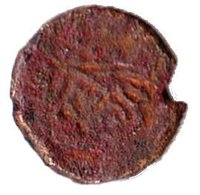
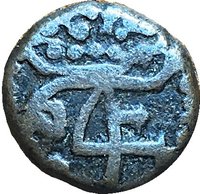
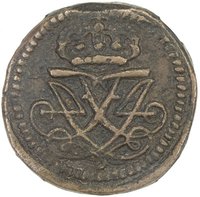
Obverse
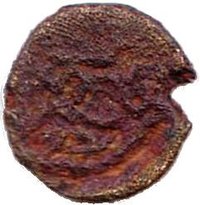
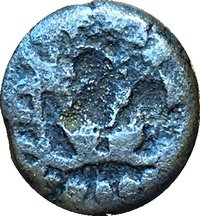
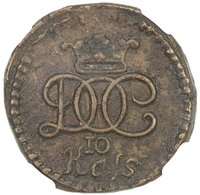
Reverse
Edge
Plain
Mintings
| Year | Mint Mark | Mintage | Quality | Collection |
|---|---|---|---|---|
| 1700 | — | — |
Historical background
In the early 18th century, the currency situation in Danish India, centered on the trading enclave of Tranquebar (Tharangambadi) and later the outpost of Serampore (Frederiksnagore), was characterized by profound monetary pluralism and practical complexity. The Danish Asiatic Company, operating these settlements, did not impose a unified Danish currency system. Instead, the economy functioned on a de facto basis using a wide array of circulating coins, reflecting the region's position as a crossroads of global trade. The most important of these was the Silver Fanam, a small, locally minted coin of the nearby Kingdom of Thanjavur, which served as the fundamental unit of account for local transactions and wages.
Alongside the fanam, a multitude of foreign silver coins circulated freely, their values determined by weight and fineness in a constantly fluctuating bazaar. The dominant European trade coin was the Mexican silver dollar (Spanish 8 Reales), while various Indian rupee issues from the Mughal Empire and regional powers like the Nawab of Arcot were also prevalent. The Danish authorities attempted to standardize this chaos by issuing official exchange rates (tariffs) that fixed the value of these foreign coins in terms of the Company's own accounting unit, the Danish Indian Rupee (a money of account, not commonly a physical coin). This system was essential for keeping the company's books, but daily commerce remained a hands-on affair of weighing and assessing disparate coins.
This monetary environment created significant challenges for the Danish Company. It was vulnerable to arbitrage as merchants exploited differences between the official tariff rates and market values, and the company consistently struggled with silver exports to finance its trade. While the Danish crown did mint some minor copper coins (like kash) for local use, they never displaced the established silver systems. Ultimately, the currency situation in 1700s Danish India was one of adaptive pragmatism, where European commercial enterprise was forced to operate entirely within the liquidity and monetary traditions of the wider Indian Ocean economy.
Alongside the fanam, a multitude of foreign silver coins circulated freely, their values determined by weight and fineness in a constantly fluctuating bazaar. The dominant European trade coin was the Mexican silver dollar (Spanish 8 Reales), while various Indian rupee issues from the Mughal Empire and regional powers like the Nawab of Arcot were also prevalent. The Danish authorities attempted to standardize this chaos by issuing official exchange rates (tariffs) that fixed the value of these foreign coins in terms of the Company's own accounting unit, the Danish Indian Rupee (a money of account, not commonly a physical coin). This system was essential for keeping the company's books, but daily commerce remained a hands-on affair of weighing and assessing disparate coins.
This monetary environment created significant challenges for the Danish Company. It was vulnerable to arbitrage as merchants exploited differences between the official tariff rates and market values, and the company consistently struggled with silver exports to finance its trade. While the Danish crown did mint some minor copper coins (like kash) for local use, they never displaced the established silver systems. Ultimately, the currency situation in 1700s Danish India was one of adaptive pragmatism, where European commercial enterprise was forced to operate entirely within the liquidity and monetary traditions of the wider Indian Ocean economy.
💎 Extremely Rare