

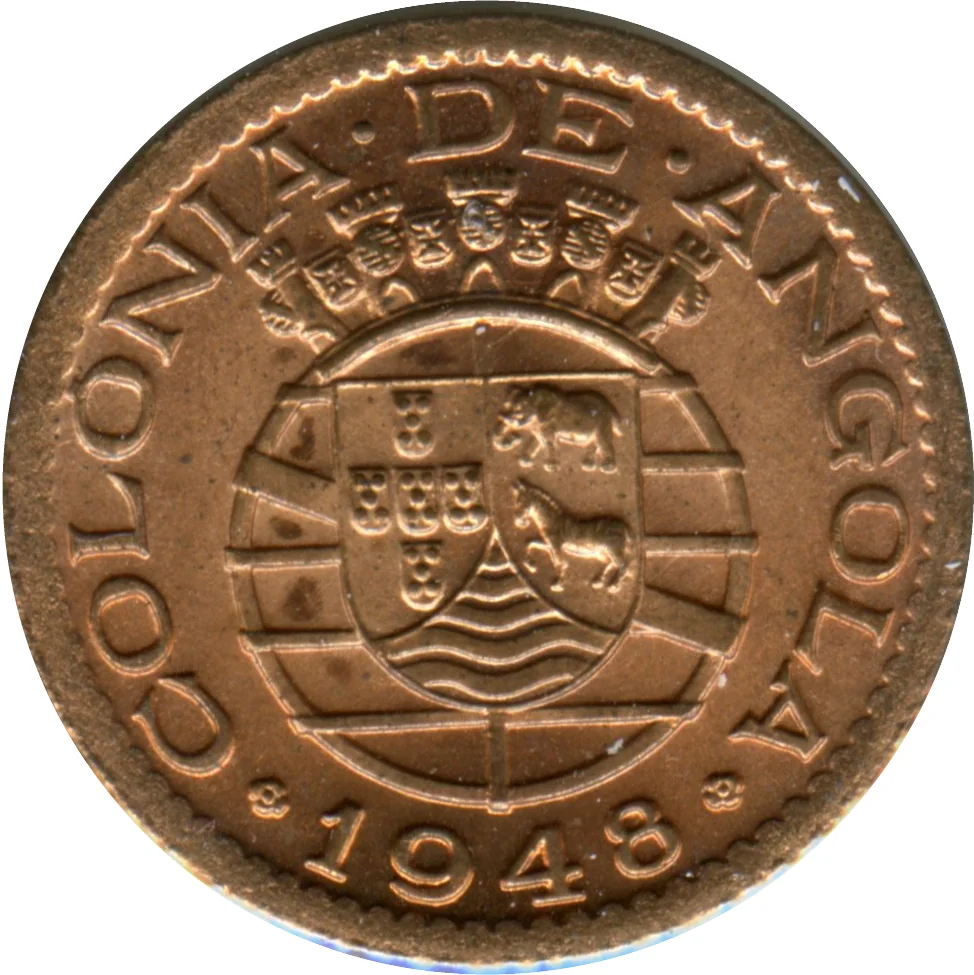
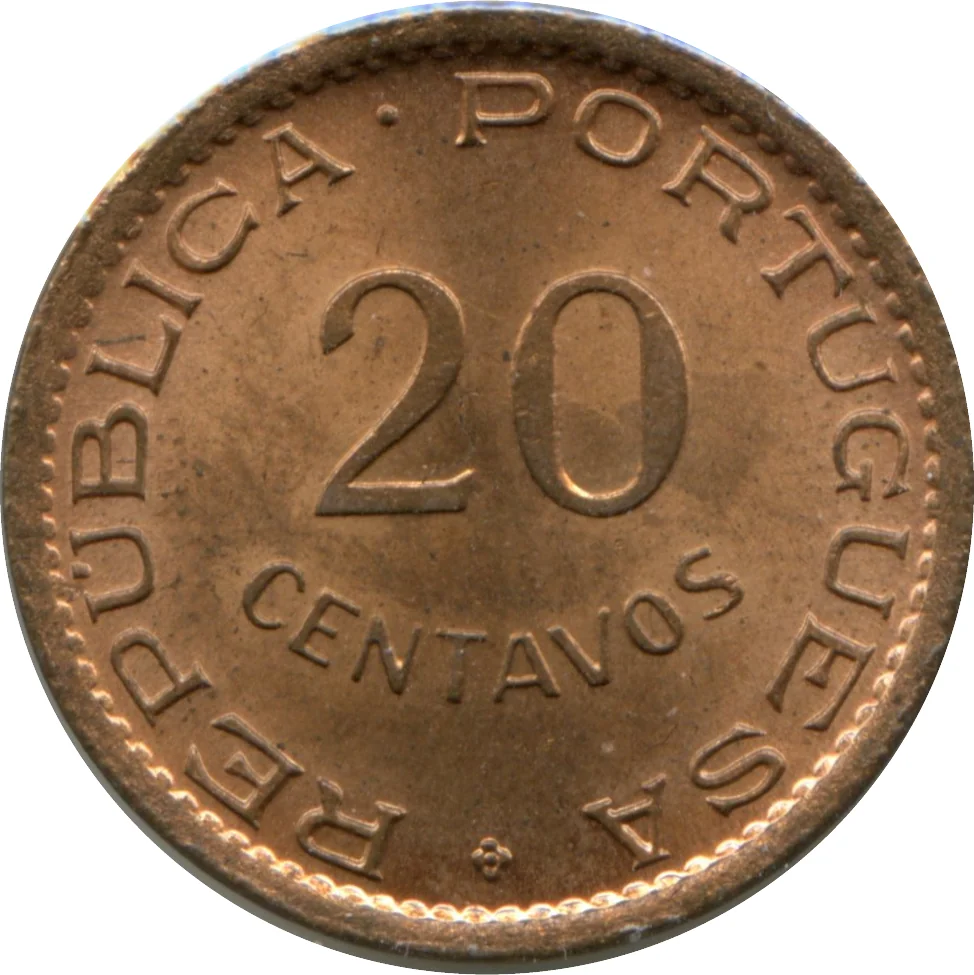
20 centavos – Angola
Add to wishlist
Angola
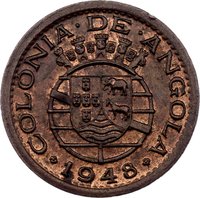
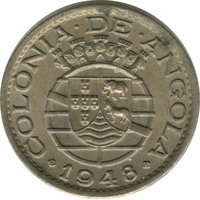
Obverse
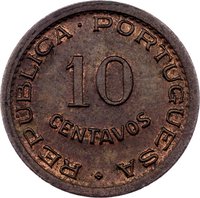
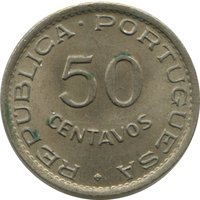
Reverse
Description:
Value encircled by inscription.
Inscription:
REPÚBLICA·PORTUGUESA
20
CENTAVOS
20
CENTAVOS
Translation:
Portuguese Republic
20
Cents
20
Cents
Script: Latin
Language: Portuguese
Edge
Plain
Categories
| Building> Castle or fortification |
| Animal> Elephant |
| Animal> Horse |
| Symbols> Coat of Arms |
Mints
| Name | Mark |
|---|---|
| Imprensa Nacional - Casa da Moeda | — |
Mintings
| Year | Mint Mark | Mintage | Quality | Collection |
|---|---|---|---|---|
| 1948 | — | 7,850,000 | ||
| 1949 | — | 2,150,000 |
Historical background
In 1948, Angola, as an overseas province of Portugal, was fully integrated into Portugal's monetary system. The official currency was the Angolan escudo, which had been introduced in 1928 (replacing the Angolan real) and was pegged at par with the Portuguese escudo. This meant there was no independent monetary policy; the value and supply of money were directly controlled by Lisbon through the Banco de Portugal and its local agent, the Banco de Angola (established in 1926). The currency's value was ultimately tied to the gold standard and influenced by Portugal's own economic strategies and reserves.
The primary economic function of this unified currency was to facilitate the extraction and export of Angola's raw materials—most notably coffee, diamonds, and sisal—to benefit the Portuguese metropole. The fixed exchange rate and capital controls ensured that trade revenues flowed back to Portugal and that the colony remained a captive market for Portuguese manufactured goods. Internally, the monetary economy was largely confined to coastal cities and settler communities, while much of the rural African population continued to rely on subsistence agriculture and non-monetary exchange, highlighting a deeply dualistic economic structure.
The currency situation in 1948 reflected a period of relative stability under the authoritarian Estado Novo regime, but it was a stability built on colonial exploitation and strict financial control. This system would remain largely unchanged until the Portuguese Colonial War began in the 1960s, which eventually led to economic strain and, following independence in 1975, a dramatic divergence in the currencies of the two nations. Thus, in 1948, the Angolan escudo was less a symbol of national economy and more a tool of colonial administration and economic integration.
The primary economic function of this unified currency was to facilitate the extraction and export of Angola's raw materials—most notably coffee, diamonds, and sisal—to benefit the Portuguese metropole. The fixed exchange rate and capital controls ensured that trade revenues flowed back to Portugal and that the colony remained a captive market for Portuguese manufactured goods. Internally, the monetary economy was largely confined to coastal cities and settler communities, while much of the rural African population continued to rely on subsistence agriculture and non-monetary exchange, highlighting a deeply dualistic economic structure.
The currency situation in 1948 reflected a period of relative stability under the authoritarian Estado Novo regime, but it was a stability built on colonial exploitation and strict financial control. This system would remain largely unchanged until the Portuguese Colonial War began in the 1960s, which eventually led to economic strain and, following independence in 1975, a dramatic divergence in the currencies of the two nations. Thus, in 1948, the Angolan escudo was less a symbol of national economy and more a tool of colonial administration and economic integration.
Series: 1948 Angola circulation coins
🌱 Common