

3 kreuzer – Austrian Empire
Add to wishlist
Austria
Context
Years: 1624–1637
Country: Austria
Issuer: Austrian Empire
Ruler: Ferdinand II
Currency:
(1520—1754)
Demonetized: Yes
Material
References
KM: #
Numista: #60553
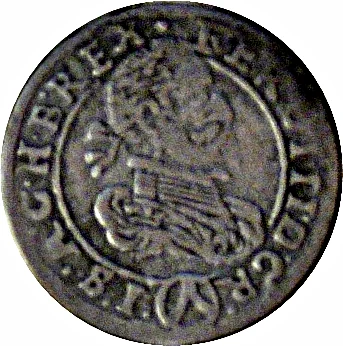
Obverse
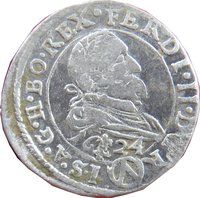
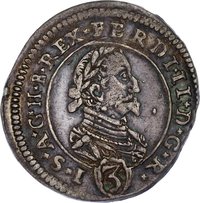
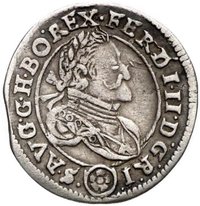
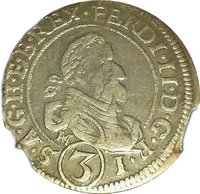
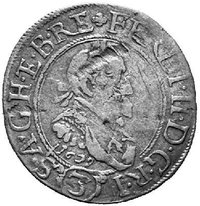
Description:
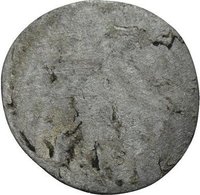
Right-facing portrait in inner circle, straight collar.
Inscription:
FERDI II D G R / I S A G H B REX
Script: Latin
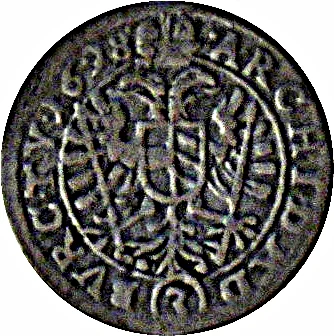
Reverse
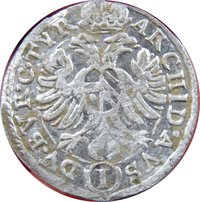
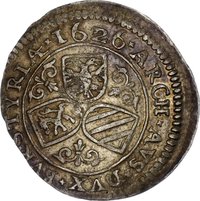
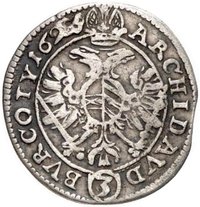
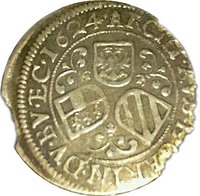
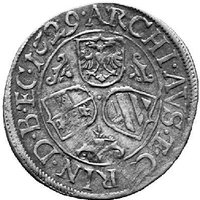
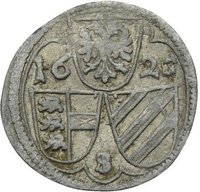
Description:
Double-headed eagle bearing Austrian and Burgundian arms.
Inscription:
ARCHID A D (3) BVR C TY 1628
Script: Latin
Edge
Mints
| Name | Mark |
|---|---|
| Münze Österreich | — |
Mintings
| Year | Mint Mark | Mintage | Quality | Collection |
|---|---|---|---|---|
| 1624 | Chevron | — | ||
| 1625 | Chevron | — | ||
| 1626 | Chevron | — | ||
| 1627 | Chevron | — | ||
| 1628 | Chevron | — | ||
| 1629 | Chevron | — | ||
| 1630 | Chevron | — | ||
| 1631 | Chevron | — | ||
| 1632 | Chevron | — | ||
| 1633 | Chevron | — | ||
| 1634 | Chevron | — | ||
| 1635 | Chevron | — | ||
| 1636 | Monogramme | — | ||
| 1637 | Monogramme | — |
Historical background
In 1624, the Austrian Habsburg monarchy was grappling with a severe and protracted currency crisis, a direct consequence of the immense financial strain of the Thirty Years' War (1618-1648). Emperor Ferdinand II’s campaigns against Protestant rebels and foreign adversaries demanded vast sums, leading to repeated debasement of the coinage. Mints, often leased to private operators, produced increasingly inferior silver coins (such as the Kreuzer) with high alloy content, flooding the economy with unstable money and causing rampant inflation, hoarding of good coins, and a collapse in public trust.
Recognizing the threat this posed to state finances and economic stability, Ferdinand II enacted a pivotal monetary reform in 1624, often termed the Münzordnung or Münzedikt. This decree aimed to standardize the currency across the Habsburg hereditary lands, most notably by introducing the Reichsthaler as a stable accounting unit. Crucially, the reform stipulated a fixed silver content and sought to centralize control over the mints, reducing the number in operation to curb the unchecked production of debased coinage.
The immediate impact of the 1624 reform was limited. While it established a crucial legal framework for sound money, the relentless financial pressures of the ongoing war made full implementation difficult. Debasement and fiscal emergencies continued in subsequent years. Nonetheless, the edict was a landmark attempt at imperial financial consolidation, setting a precedent for future reforms and highlighting the central challenge of the era: reconciling the crown’s desperate short-term war finances with the long-term need for a stable and uniform currency across its diverse territories.
Recognizing the threat this posed to state finances and economic stability, Ferdinand II enacted a pivotal monetary reform in 1624, often termed the Münzordnung or Münzedikt. This decree aimed to standardize the currency across the Habsburg hereditary lands, most notably by introducing the Reichsthaler as a stable accounting unit. Crucially, the reform stipulated a fixed silver content and sought to centralize control over the mints, reducing the number in operation to curb the unchecked production of debased coinage.
The immediate impact of the 1624 reform was limited. While it established a crucial legal framework for sound money, the relentless financial pressures of the ongoing war made full implementation difficult. Debasement and fiscal emergencies continued in subsequent years. Nonetheless, the edict was a landmark attempt at imperial financial consolidation, setting a precedent for future reforms and highlighting the central challenge of the era: reconciling the crown’s desperate short-term war finances with the long-term need for a stable and uniform currency across its diverse territories.
⭐ Somewhat Rare