

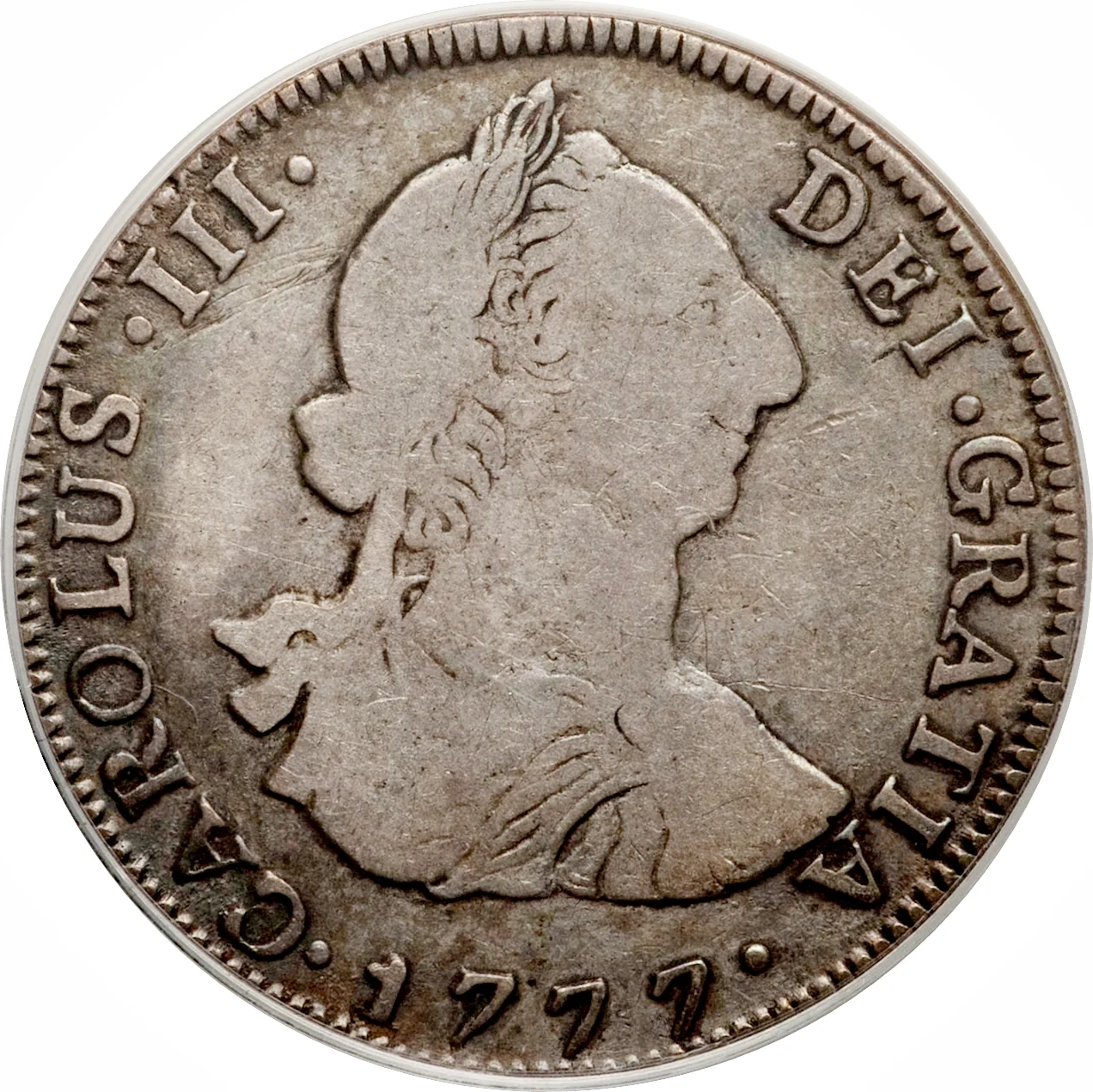
Obverse
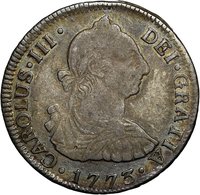
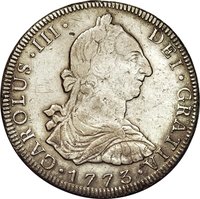
Description:
Bust right, legend around, date below.
Inscription:
CAROLUS • III • DEI • GRATIA
• 1777 •
• 1777 •
Script: Latin
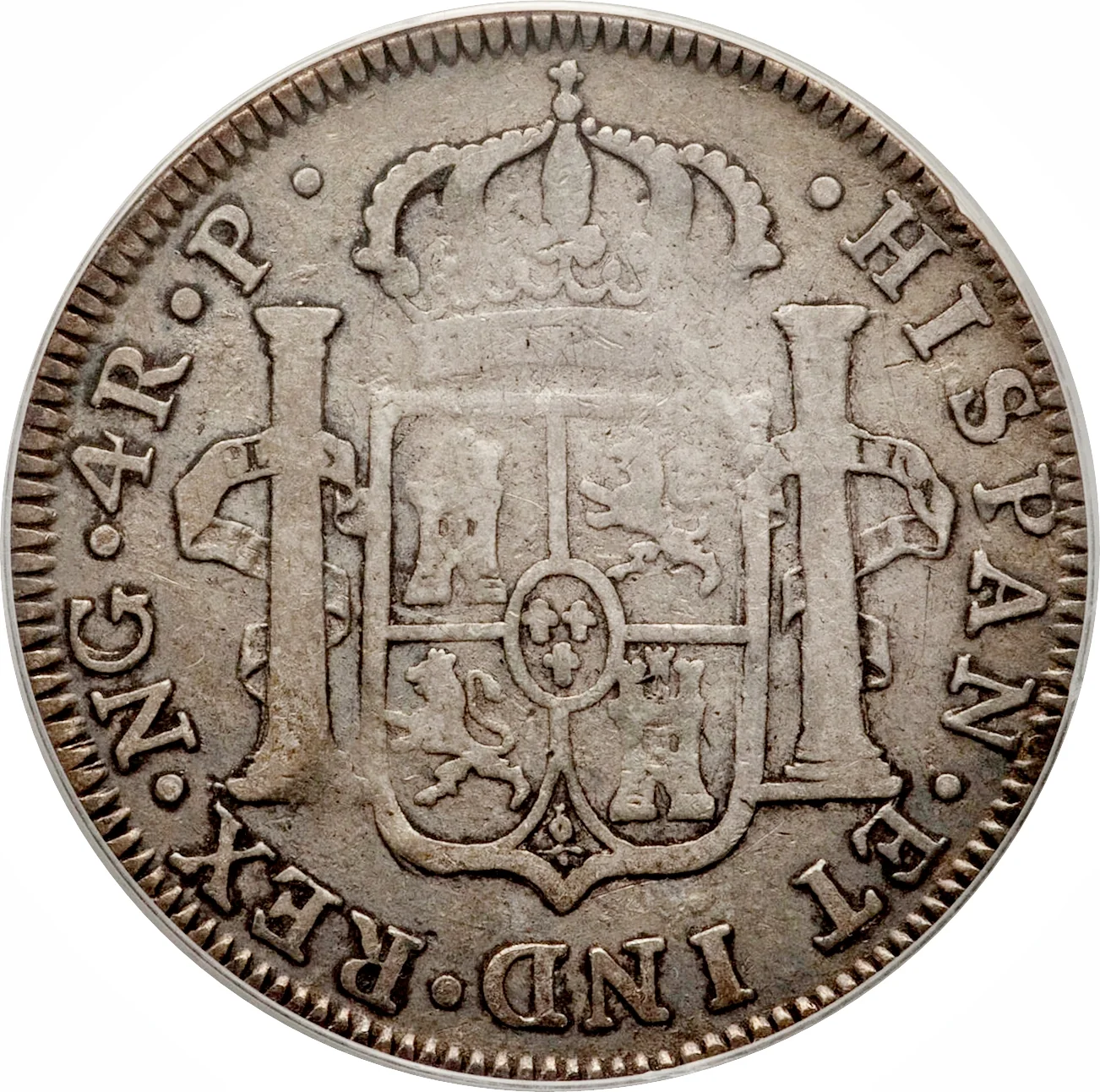
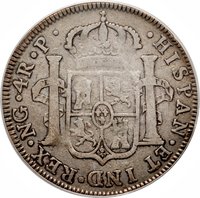
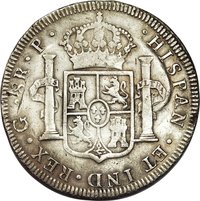
Reverse
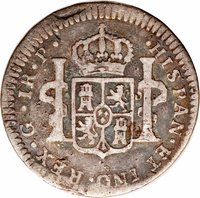
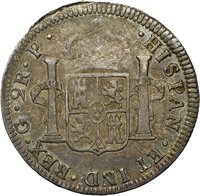
Description:
Crowned shield between pillars, encircled by legend.
Inscription:
• HISPAN • ET IND • REX • G • 4R • P •
Script: Latin
Edge
Categories
| Symbols> Coat of Arms |
| Person> Monarch |
Mints
| Name | Mark |
|---|---|
| Casa de Moneda de Guatemala | G |
| Casa de Moneda de Guatemala | NG |
Mintings
Historical background
In 1772, Guatemala was the heart of the Captaincy General of Guatemala, a Spanish colony encompassing much of Central America. The currency situation was complex and problematic, characterized by a severe and chronic shortage of official coinage. The primary unit of account was the peso, divided into 8 reales, but the physical supply of silver and gold coins minted in Mexico (and to a far lesser extent, in Guatemala itself until 1733) was insufficient for the region's economic activity. This scarcity stifered commerce and tax collection, forcing the local economy to rely heavily on inefficient barter and a variety of unofficial, often devalued, mediums of exchange.
The shortage led to the widespread circulation of macacos or tlacos, which were crude, locally produced tokens of silver or other metals, often cut from coins. Their value was unstable and inherently local, creating confusion in trade. Furthermore, the Spanish crown's mercantilist policies exacerbated the problem; precious metals were constantly drained away to Spain, and trade restrictions limited economic dynamism. To facilitate larger transactions, especially within the powerful Catholic Church and among wealthy merchants, accounting was often done in imaginary money—the peso de oro (gold peso) or peso de minas—which was a stable notational unit used for contracts and bookkeeping but had no physical counterpart.
This monetary instability reflected Guatemala's peripheral position within the Spanish Empire. While the Bourbon Reforms were underway to increase colonial efficiency and revenue, their impact on Guatemala's currency in 1772 was still limited. The situation would persist until later reforms, but in that year, the economy operated under a strained and fragmented system, caught between the imperial demand for precious metals and the practical necessity of local, makeshift solutions to enable daily trade.
The shortage led to the widespread circulation of macacos or tlacos, which were crude, locally produced tokens of silver or other metals, often cut from coins. Their value was unstable and inherently local, creating confusion in trade. Furthermore, the Spanish crown's mercantilist policies exacerbated the problem; precious metals were constantly drained away to Spain, and trade restrictions limited economic dynamism. To facilitate larger transactions, especially within the powerful Catholic Church and among wealthy merchants, accounting was often done in imaginary money—the peso de oro (gold peso) or peso de minas—which was a stable notational unit used for contracts and bookkeeping but had no physical counterpart.
This monetary instability reflected Guatemala's peripheral position within the Spanish Empire. While the Bourbon Reforms were underway to increase colonial efficiency and revenue, their impact on Guatemala's currency in 1772 was still limited. The situation would persist until later reforms, but in that year, the economy operated under a strained and fragmented system, caught between the imperial demand for precious metals and the practical necessity of local, makeshift solutions to enable daily trade.
Series: 1772 Guatemala circulation coins
✨ Legendary