

1 Kreuzer – Austrian Empire
Austria
Context
Years: 1730–1740
Country: Austria 
Issuer: Austrian Empire
Ruler: Charles VI
Currency:
(1520—1754)
Demonetized: Yes
Material
References
KM: #Click to copy to clipboard1638
Numista: #59697
Value
Bullion value: $2.58
Obverse
Description:
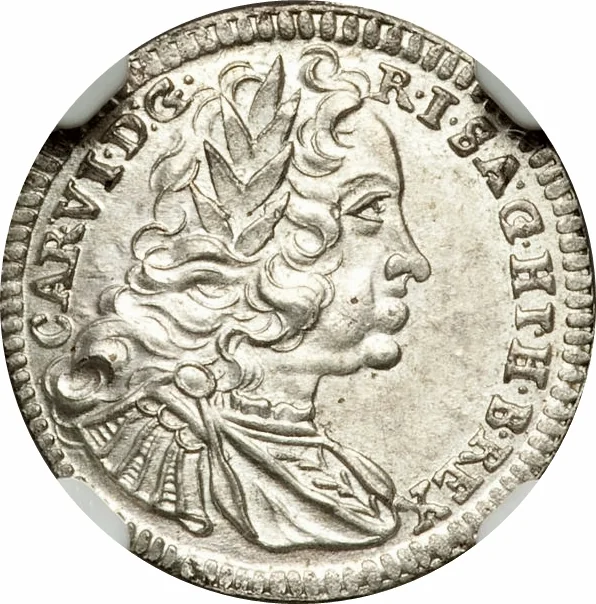
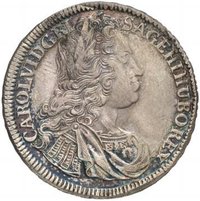
Bust of Charles VI facing right. Legend: "Carolus VI, by the Grace of God, Roman Emperor, forever Augustus, King of Germany, Spain, Hungary, and Bohemia."
Inscription:
CAR.VI.D.G. R.I.S.A.G.HI.H.B.REX
Script: Latin
Reverse
Description:
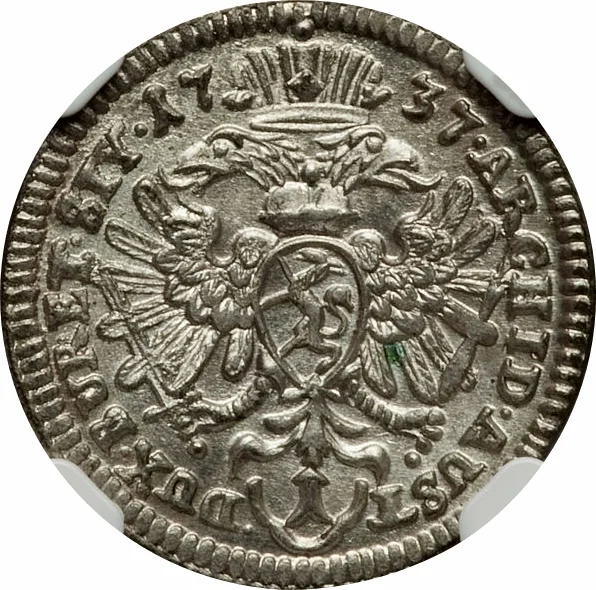
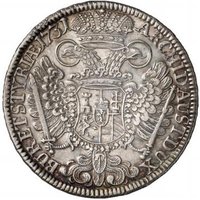
Styrian panther on a double-headed imperial eagle under an archducal crown. Value below. Legend: "Archidux Austriae Dux Burgundiae et Styriae".
Inscription:
17 37 ARCHID.AUST.DUX.BUR.ET.STY.
Script: Latin
Edge
Mints
| Name | Mark |
|---|---|
| Graz | — |
Mintings
| Year | Mint Mark | Mintage | Quality | Collection |
|---|---|---|---|---|
| 1730 | — | — | ||
| 1732 | — | — | ||
| 1733 | — | — | ||
| 1734 | — | — | ||
| 1735 | — | — | ||
| 1736 | — | — | ||
| 1737 | — | — | ||
| 1738 | — | — | ||
| 1739 | — | — | ||
| 1740 | — | — |
Historical background
In 1730, the currency system of the Habsburg Austrian Empire was a complex and fragmented patchwork, reflecting the decentralized nature of the state itself. The primary large silver coin was the Reichsthaler (Imperial Thaler), a theoretical standard, but in daily commerce, people used a bewildering array of regional and local coins. Each crown land and major city often minted its own subsidiary coins—kreuzers, groschen, and ducats—with varying silver content and exchange rates. This lack of uniformity created significant friction in trade and tax collection, as constant conversion calculations were needed and the value of money could change from one region to another.
The root of this monetary disarray lay in the aftermath of the expensive wars of the late 17th and early 18th centuries, particularly against the Ottoman Empire and in the War of Spanish Succession. To finance these conflicts, the Habsburg state had repeatedly debased the coinage, reducing the precious metal content to create more coins from the same silver reserves. This practice, while providing short-term fiscal relief, led to inflation, a loss of public trust in the currency, and Gresham's Law in action, where "bad" debased coins drove "good" full-weight coins out of circulation as people hoarded them.
Consequently, by 1730, the Austrian economy operated under a strained and inefficient system. While Emperor Charles VI (r. 1711-1740) was focused on securing the Pragmatic Sanction to ensure his daughter Maria Theresa's succession, comprehensive monetary reform was not yet a priority. The situation demanded a centralized and standardized coinage, but this would only begin to be addressed decades later under Maria Theresa, whose iconic Maria Theresa Thaler would eventually become a model of stability. Thus, in 1730, the Empire's currency remained a tangible symbol of its administrative challenges and the lingering financial burdens of its imperial ambitions.
The root of this monetary disarray lay in the aftermath of the expensive wars of the late 17th and early 18th centuries, particularly against the Ottoman Empire and in the War of Spanish Succession. To finance these conflicts, the Habsburg state had repeatedly debased the coinage, reducing the precious metal content to create more coins from the same silver reserves. This practice, while providing short-term fiscal relief, led to inflation, a loss of public trust in the currency, and Gresham's Law in action, where "bad" debased coins drove "good" full-weight coins out of circulation as people hoarded them.
Consequently, by 1730, the Austrian economy operated under a strained and inefficient system. While Emperor Charles VI (r. 1711-1740) was focused on securing the Pragmatic Sanction to ensure his daughter Maria Theresa's succession, comprehensive monetary reform was not yet a priority. The situation demanded a centralized and standardized coinage, but this would only begin to be addressed decades later under Maria Theresa, whose iconic Maria Theresa Thaler would eventually become a model of stability. Thus, in 1730, the Empire's currency remained a tangible symbol of its administrative challenges and the lingering financial burdens of its imperial ambitions.

💎 Extremely Rare