

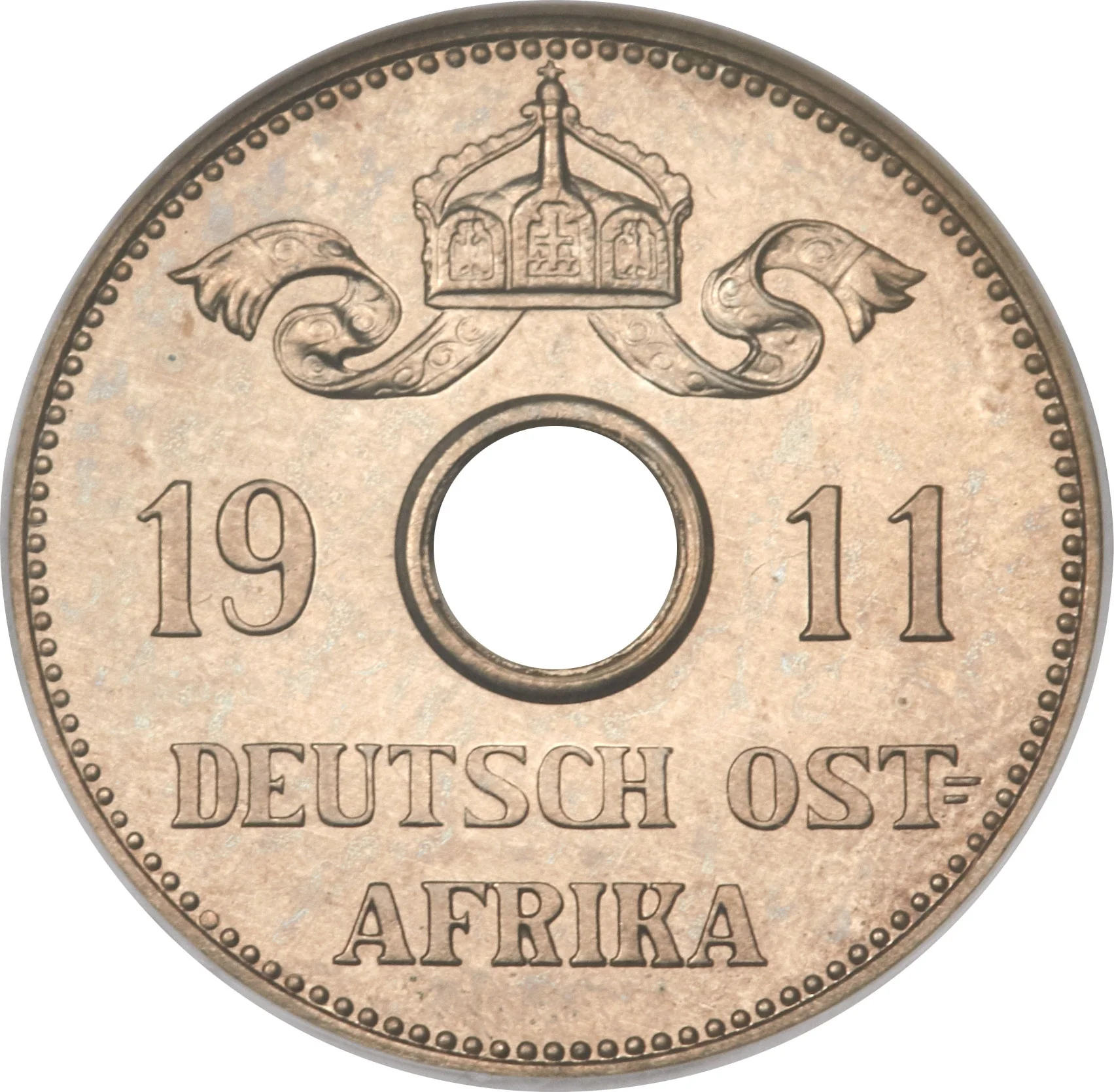
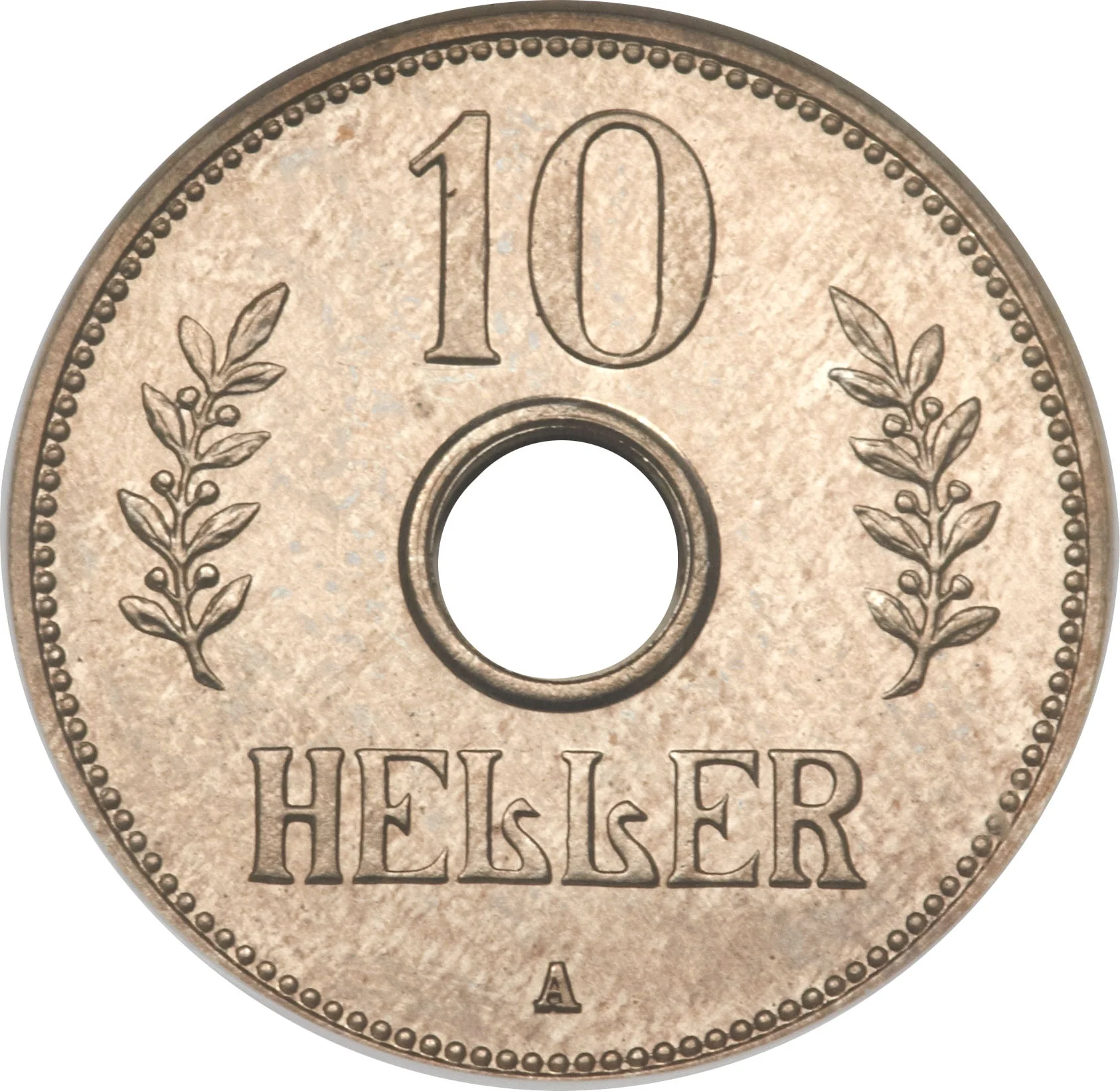
10 Heller – German East Africa
Tanzania
Context
Years: 1908–1914
Country: Tanzania 
Issuer: German East Africa
Ruler: William II
Currency:
(1904—1916)
Demonetized: Yes
Total mintage: 3,202,000
Material
Diameter: 26 mm
Weight: 6.25 g
Thickness: 1.55 mm
Shape: Round with a round hole
Composition: Copper-nickel
Technique: Milled
Alignment: Medal alignment
flip
References
KM: #Click to copy to clipboard12
Numista: #11911
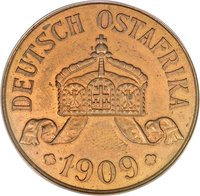
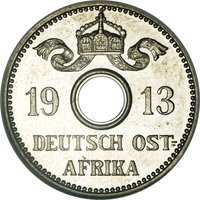
Obverse
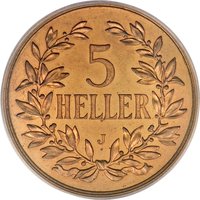
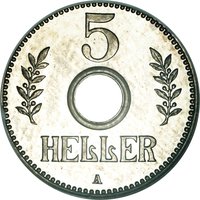
Reverse
Edge
Plain
Mints
| Name | Mark |
|---|---|
| Berlin | A |
| Hamburgische Münze | J |
Mintings
Historical background
In 1908, the currency situation in German East Africa was characterized by a complex and often problematic dual system of official and unofficial money. Officially, the colony used the German East African Rupie, a silver-based currency introduced in 1890 to replace the diverse array of foreign coins and trade goods. The Rupie was pegged to the Indian Rupee, reflecting the region's historical trade ties across the Indian Ocean, and was issued by the Deutsch-Ostafrikanische Bank. However, the supply of these coins and banknotes was frequently insufficient for the local economy, especially in the vast interior.
This scarcity led to the widespread persistence of traditional currencies, creating a de facto dual monetary system. The most important of these was the Heller (or Pesa), a small-denomination brass wire currency that was produced locally and served as the everyday money for the majority of the African population. Additionally, cloth (particularly Merikani from the US and Kaniki from India), cowrie shells, and ivory still functioned as mediums of exchange in many areas, especially for smaller transactions and tax payments. This coexistence created friction, as the colonial administration sought to impose its monetary standard while the local economy continued to operate on more familiar and accessible mediums.
The year 1908 fell within a period of increasing colonial efforts to consolidate economic control and streamline taxation. The administration insisted on tax payments in the official Rupie, which forced many Africans into the cash economy, often through wage labour on European plantations or by selling cash crops. This policy aimed to deepen the monetization of the economy and increase the circulation of the official currency, but it also caused hardship and was a source of resentment. Thus, the currency landscape of 1908 was one of transition and imposition, caught between the colonial government's desire for a unified modern currency and the enduring practical realities of a diverse, subsistence-based economy.
This scarcity led to the widespread persistence of traditional currencies, creating a de facto dual monetary system. The most important of these was the Heller (or Pesa), a small-denomination brass wire currency that was produced locally and served as the everyday money for the majority of the African population. Additionally, cloth (particularly Merikani from the US and Kaniki from India), cowrie shells, and ivory still functioned as mediums of exchange in many areas, especially for smaller transactions and tax payments. This coexistence created friction, as the colonial administration sought to impose its monetary standard while the local economy continued to operate on more familiar and accessible mediums.
The year 1908 fell within a period of increasing colonial efforts to consolidate economic control and streamline taxation. The administration insisted on tax payments in the official Rupie, which forced many Africans into the cash economy, often through wage labour on European plantations or by selling cash crops. This policy aimed to deepen the monetization of the economy and increase the circulation of the official currency, but it also caused hardship and was a source of resentment. Thus, the currency landscape of 1908 was one of transition and imposition, caught between the colonial government's desire for a unified modern currency and the enduring practical realities of a diverse, subsistence-based economy.
🌱 Fairly Common