

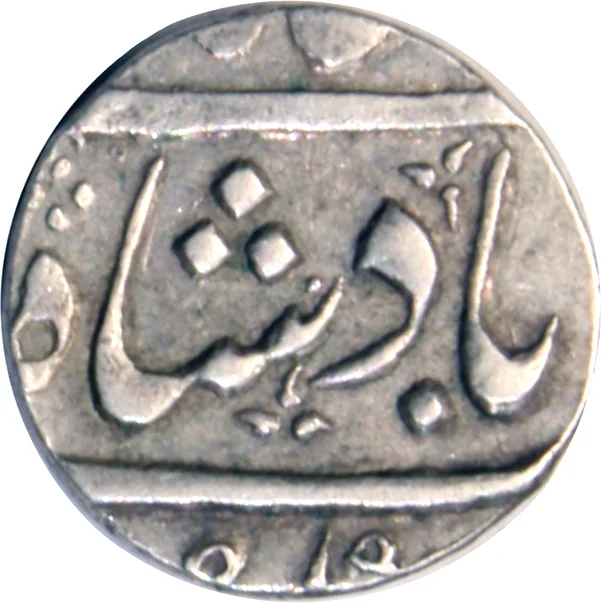

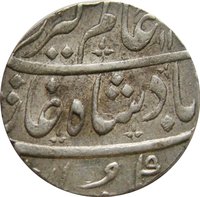
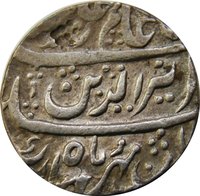
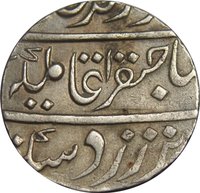
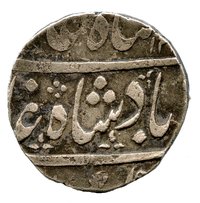
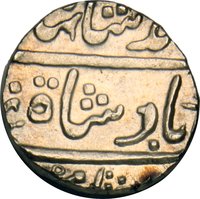
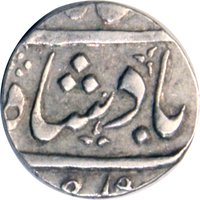
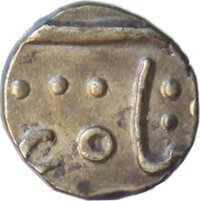
Obverse
Inscription:
Shah Alam II
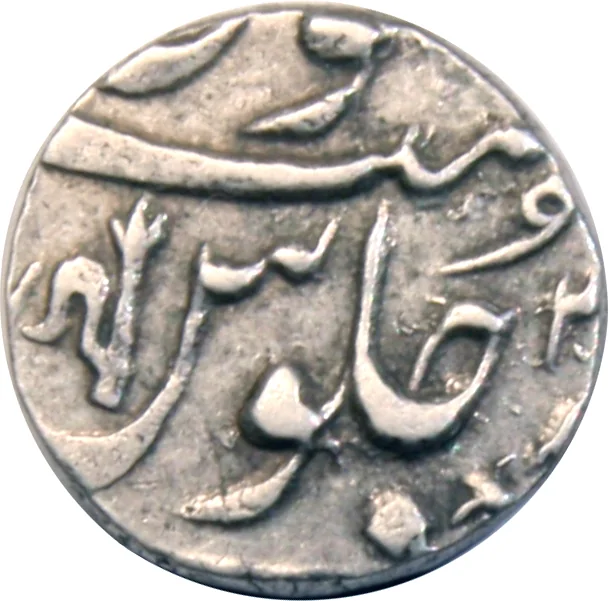
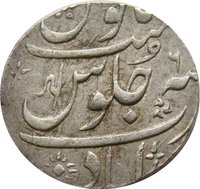
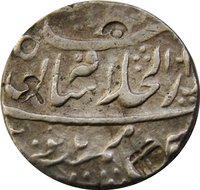
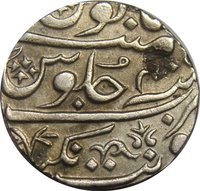
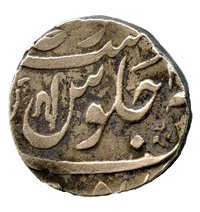
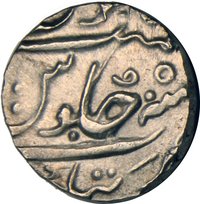
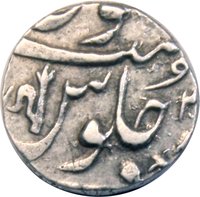
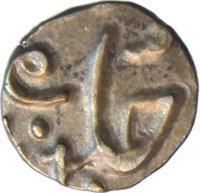
Reverse
Description:
Ankush Mint Mark
Inscription:
RY 27
Edge
Plain
Mints
| Name | Mark |
|---|---|
| Ahmadabad | — |
Mintings
| Year | Mint Mark | Mintage | Quality | Collection |
|---|---|---|---|---|
| — | //27 | — |
Historical background
By 1754, the Maratha Empire, under the nominal leadership of the Chhatrapati but effectively controlled by the Peshwa in Pune, was at the zenith of its territorial expansion. This vast dominion, however, was not a unified monetary zone. The currency situation was a complex and decentralized mosaic, reflecting the empire's political structure. The central Peshwa government minted its own silver rupee, the most prominent being the Hali Sicca, but its circulation was largely confined to the core territories around Pune. Beyond this, numerous subordinate Maratha chiefs (Sardars), like the Gaekwads in Baroda, the Holkars in Indore, and the Scindias in Gwalior, exercised the right of coinage (sanad) within their own jagirs, issuing their own distinct rupee coins, often stamped with their names or symbols.
This system created a landscape of multiple, competing currencies. While silver was the primary metal for high-value transactions, copper coins (paisa) were minted prolifically by local authorities for everyday use, leading to further fragmentation. The value and purity of these coins varied, requiring constant evaluation by merchants. Furthermore, the empire's territories incorporated regions with deep pre-existing monetary traditions, such as the Mughal rupees in the north and various regional issues in Gujarat and Central India. These older coins remained in circulation, adding to the monetary diversity.
Consequently, trade and revenue collection within the empire relied heavily on money changers (sarrafs) who assessed the weight, purity, and exchange rates of this bewildering array of coins. The Peshwa's administration attempted to impose some order by promoting the Hali Sicca as a standard for revenue payments and official transactions, but with limited success. The decentralized currency system, while flexible, was inherently inefficient for the vast economy the Marathas commanded. It created administrative hurdles, facilitated local autonomy at the expense of central fiscal control, and mirrored the growing political decentralization that would later challenge the empire's cohesion.
This system created a landscape of multiple, competing currencies. While silver was the primary metal for high-value transactions, copper coins (paisa) were minted prolifically by local authorities for everyday use, leading to further fragmentation. The value and purity of these coins varied, requiring constant evaluation by merchants. Furthermore, the empire's territories incorporated regions with deep pre-existing monetary traditions, such as the Mughal rupees in the north and various regional issues in Gujarat and Central India. These older coins remained in circulation, adding to the monetary diversity.
Consequently, trade and revenue collection within the empire relied heavily on money changers (sarrafs) who assessed the weight, purity, and exchange rates of this bewildering array of coins. The Peshwa's administration attempted to impose some order by promoting the Hali Sicca as a standard for revenue payments and official transactions, but with limited success. The decentralized currency system, while flexible, was inherently inefficient for the vast economy the Marathas commanded. It created administrative hurdles, facilitated local autonomy at the expense of central fiscal control, and mirrored the growing political decentralization that would later challenge the empire's cohesion.
✨ Legendary