

24 mariengroschen – Brunswick-Lüneburg-Calenberg-Hannover
Add to wishlist
Germany
Context
Material
References
KM: #
Numista: #58677
Value
Bullion value: $32.31
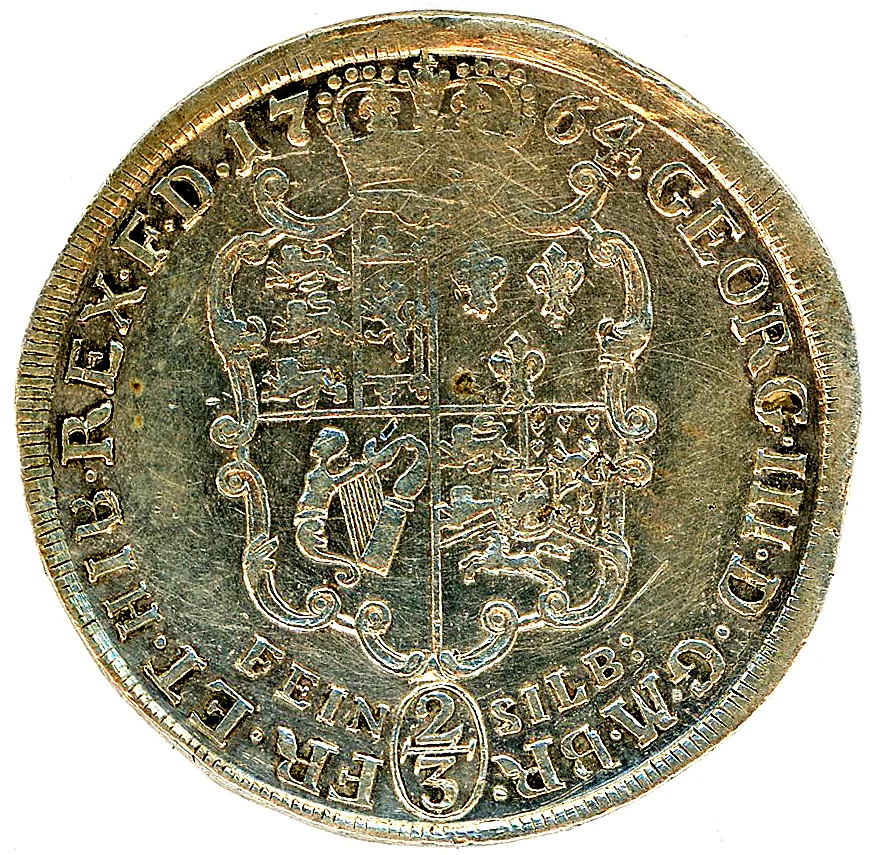
Obverse
Description:
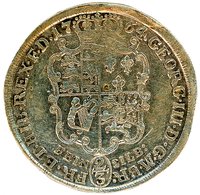
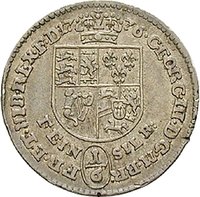
Quartered arms, date and legend around, value beneath.
Inscription:
17 64·
GEORG·III·D·G·M·BR· FR·ET·HIB·REX·F·D·
FEIN SILB:
2/3
GEORG·III·D·G·M·BR· FR·ET·HIB·REX·F·D·
FEIN SILB:
2/3
Script: Latin
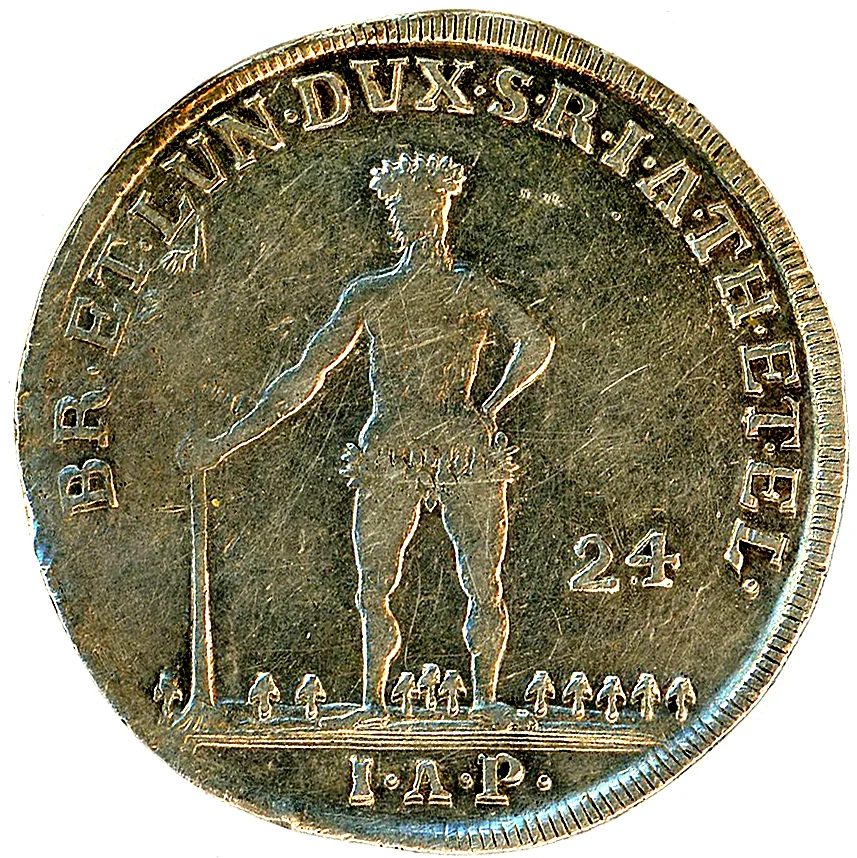
Reverse
Description:
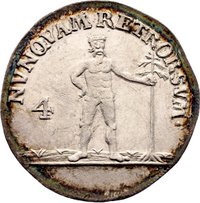
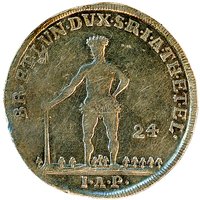
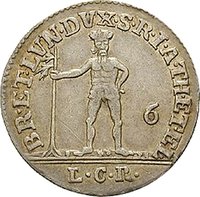
Wildman holding a tree, 24 at right above mark.
Inscription:
BR.ET.LVN.DVX.S.R.I.A.TH.ET.EL.
24
I·A·P·
24
I·A·P·
Script: Latin
Edge
Mints
| Name | Mark |
|---|---|
| Zellerfeld | — |
Mintings
| Year | Mint Mark | Mintage | Quality | Collection |
|---|---|---|---|---|
| 1762 | — | — | ||
| 1763 | — | — | ||
| 1764 | — | — | ||
| 1765 | — | — | ||
| 1766 | — | — | ||
| 1767 | — | — | ||
| 1768 | — | — | ||
| 1769 | — | — | ||
| 1770 | — | — | ||
| 1771 | — | — | ||
| 1772 | — | — | ||
| 1773 | — | — | ||
| 1774 | — | — | ||
| 1775 | — | — | ||
| 1776 | — | — | ||
| 1777 | — | — | ||
| 1778 | — | — | ||
| 1779 | .C. | — | ||
| 1780 | — | — | ||
| 1781 | — | — | ||
| 1782 | — | — | ||
| 1783 | — | — | ||
| 1784 | — | — |
Historical background
In 1762, the Electorate of Brunswick-Lüneburg (commonly known as Hanover after its capital) was embroiled in the final stages of the Seven Years' War (1756-1763). The conflict had placed an immense financial strain on the state, which was in personal union with Great Britain under King George II and later George III. To fund its military contributions and the costs of occupation by French forces earlier in the war, the Hanoverian government had resorted to heavy borrowing and the issuance of substantial quantities of low-value Scheidemünzen (small change coins). This led to a severely over-supplied and depreciated currency in circulation, causing inflation and a loss of public confidence in the coinage.
The core of the problem lay in the discrepancy between the intrinsic metallic value of the coins and their face value. The over-minted Scheidemünzen, including Gute Groschen and Mariengroschen, flooded the market and began to trade at a significant discount against the full-value Kurantgeld (specie money). This created a chaotic monetary system where everyday transactions were hampered, creditors suffered losses, and economic stability was undermined. The situation was particularly acute in the Calenberg-Göttingen region, the heartland of the electorate, where the war's disruption and monetary instability stifled commerce.
Consequently, 1762 was a year of crisis and impending reform. The Hanoverian authorities, under the guidance of officials like Gerlach Adolph von Münchhausen, recognized that a comprehensive monetary restructuring would be essential post-war. While major reform was deferred until the conflict's conclusion, planning began for the great Münzreform of 1764, which would demonetize the debased coins, introduce a new stable currency based on the Conventionsfuß standard, and restore fiscal order. Thus, the currency situation in 1762 represented the painful nadir of wartime finance, setting the stage for a necessary and sweeping monetary renewal.
The core of the problem lay in the discrepancy between the intrinsic metallic value of the coins and their face value. The over-minted Scheidemünzen, including Gute Groschen and Mariengroschen, flooded the market and began to trade at a significant discount against the full-value Kurantgeld (specie money). This created a chaotic monetary system where everyday transactions were hampered, creditors suffered losses, and economic stability was undermined. The situation was particularly acute in the Calenberg-Göttingen region, the heartland of the electorate, where the war's disruption and monetary instability stifled commerce.
Consequently, 1762 was a year of crisis and impending reform. The Hanoverian authorities, under the guidance of officials like Gerlach Adolph von Münchhausen, recognized that a comprehensive monetary restructuring would be essential post-war. While major reform was deferred until the conflict's conclusion, planning began for the great Münzreform of 1764, which would demonetize the debased coins, introduce a new stable currency based on the Conventionsfuß standard, and restore fiscal order. Thus, the currency situation in 1762 represented the painful nadir of wartime finance, setting the stage for a necessary and sweeping monetary renewal.
💎 Extremely Rare