Logo Title
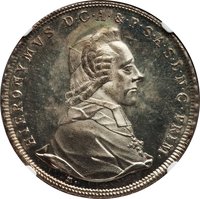
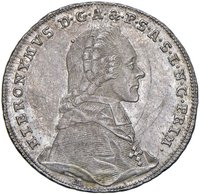
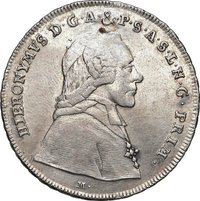
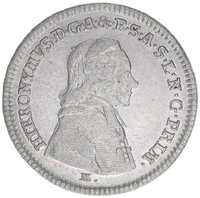
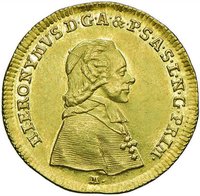
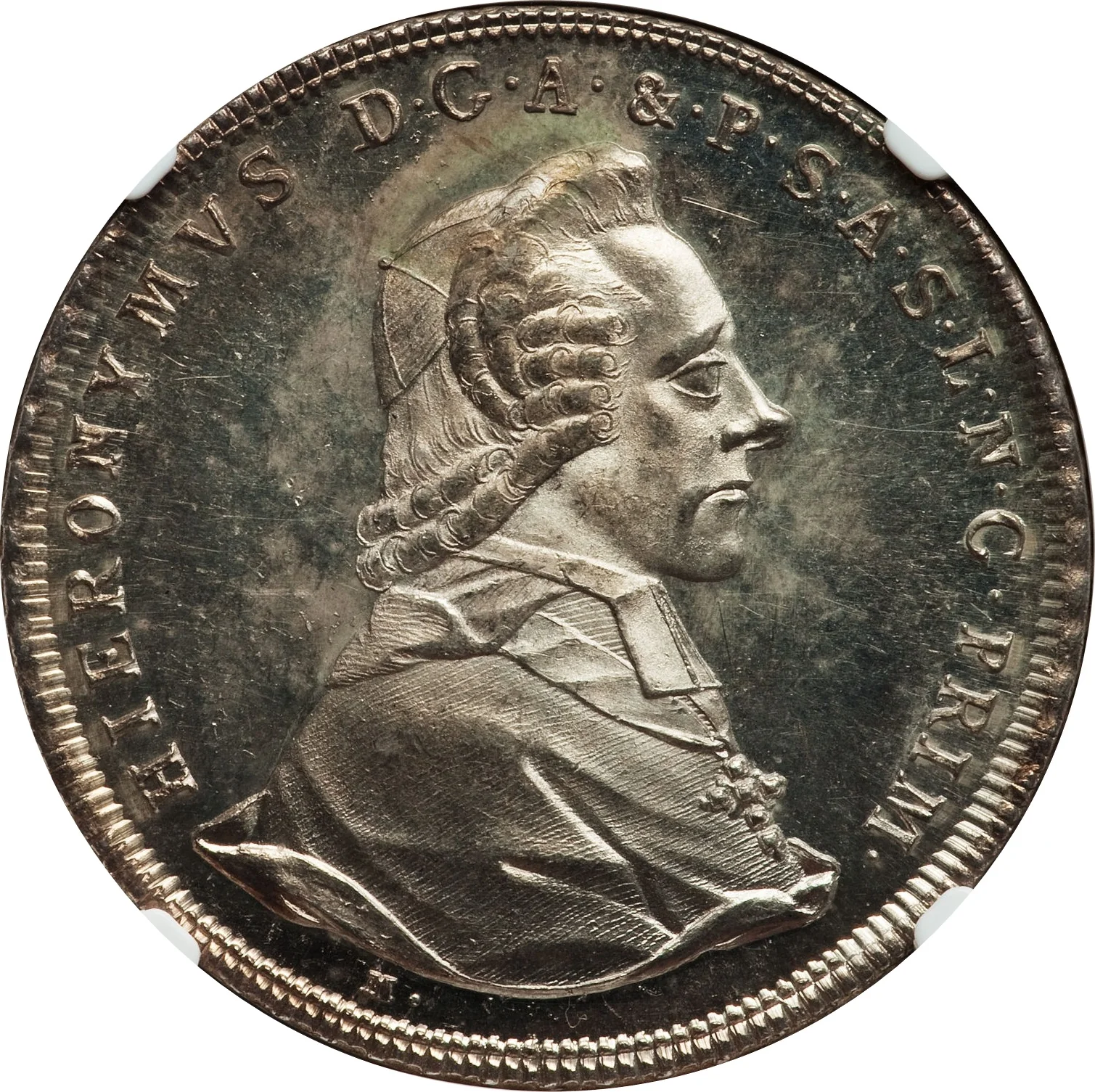
obverse
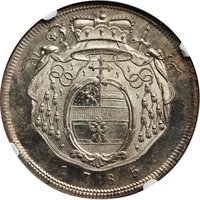
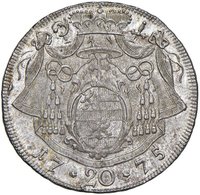
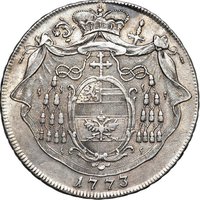
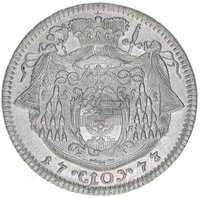
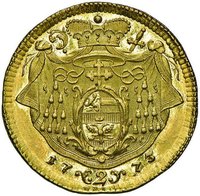
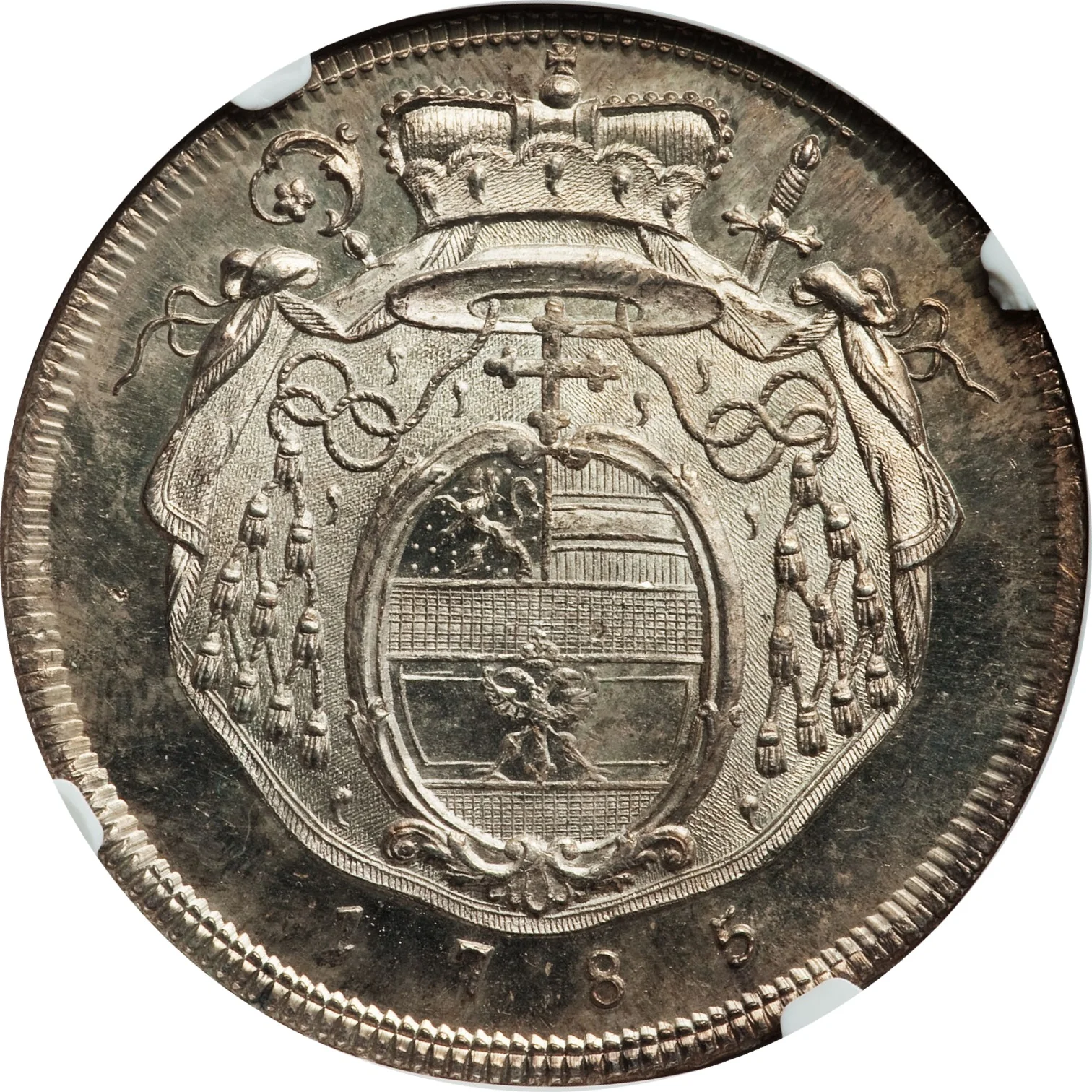
reverse
Heritage Auctions
Context
Years: 1773–1786
Currency:
Demonetized: Yes
Material
Diameter: 42 mm
Weight: 28.06 g
Silver weight: 23.37 g
Shape: Round
Composition: 83.3% Silver
Magnetic: No
Technique: Milled
Alignment: Medal alignment
Obverse
OBVERSE ↑
flip
Reverse
REVERSE ↑
References
KM: #Click to copy to clipboard435
Numista: #57917
Value
Bullion value: $66.12

Obverse

Description:
Hieronymus in profile.
Inscription:
HIERONYMUS D·G·A·&·P·S·A·S·L·N·G·PRIM·

Script: Latin

Reverse

Description:
Cardinal's hat over mantled shield, topped by a crown, date below.
Inscription:
1785
Script: Latin

Edge

Puff pastry

Mints

NameMark
Salzburg

Mintings

YearMint MarkMintageQualityCollection
1773
1773FMF
1773M
1774
1774M
1775M
1776M
1777M
1778M
1779M
1780M
1781M
1782FM
1782M
1783M
1784M
1785M
1786M

Historical background

In 1773, the currency situation within the Prince-Archbishopric of Salzburg was complex and fragmented, reflecting the broader monetary disarray of the Holy Roman Empire. The principality did not have a uniform, sovereign coinage system. Instead, its economy operated on a dual system: the official Rechnung (accounting unit) was the Guiden (Gulden), subdivided into 60 Kreuzer. However, a plethora of physical coins from neighbouring states, particularly Bavarian and Austrian issues, circulated alongside limited local mintings. This created chronic confusion, as the intrinsic silver content and value of these foreign coins often differed from their notational value in Salzburg's accounts, leading to frequent exchange rate disputes and manipulation.

The root of this instability lay in the 16th-century imperial monetary ordinances, which attempted to standardize coinage across the Empire's hundreds of territories with limited success. By the 18th century, the system was characterized by the widespread circulation of overvalued, debased subsidiary coins (Landmünzen) used for daily trade, while large transactions were calculated in high-quality silver Reichstalers. Salzburg's own mint, active for centuries, produced coins primarily for prestige and local convenience rather than monetary sovereignty, unable to displace the flood of external currency. This environment fostered uncertainty for merchants, complicated tax collection, and burdened the lower classes, who were most affected by the depreciation of small change.

Archbishop Hieronymus von Colloredo, a reformer influenced by Enlightenment principles, recognized this monetary chaos as an impediment to administrative and economic modernization. While major monetary reform for Salzburg would culminate later, in 1773 the situation was one of entrenched disorder. The year fell within a period of mounting pressure for change, setting the stage for Colloredo's future attempts to rationalize the currency system as part of his broader centralising policies, though these efforts would ultimately be overtaken by the principality's secularisation and annexation by Austria in 1803.

Series: 1773 Bishopric of Salzburg circulation coins

20 Kreuzers obverse
20 Kreuzers reverse
20 Kreuzers
1773-1786
½ Thaler - ½ Guldiner obverse
½ Thaler - ½ Guldiner reverse
½ Thaler - ½ Guldiner
1773-1782
1 Thaler - 1 Guldiner obverse
1 Thaler - 1 Guldiner reverse
1 Thaler - 1 Guldiner
1773-1786
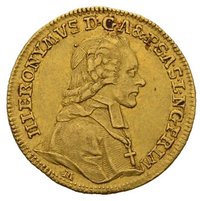
1 Ducat obverse
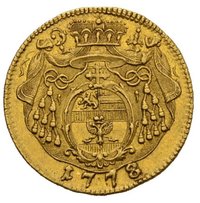
1 Ducat reverse
1 Ducat
1773-1786
10 Kreuzers obverse
10 Kreuzers reverse
10 Kreuzers
1773
2 Ducats obverse
2 Ducats reverse
2 Ducats
1773
💎 Very Rare