

1 denier – France
Add to wishlist
France
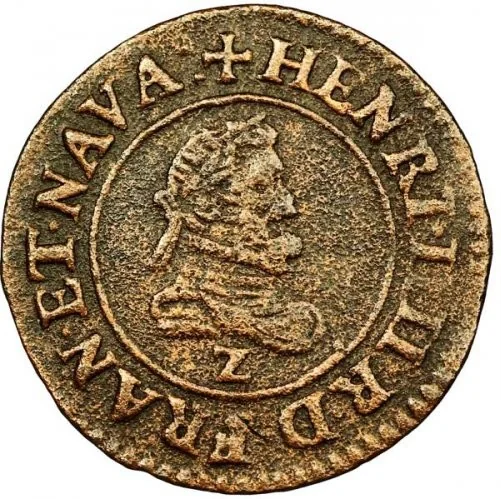
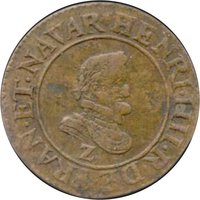
Obverse
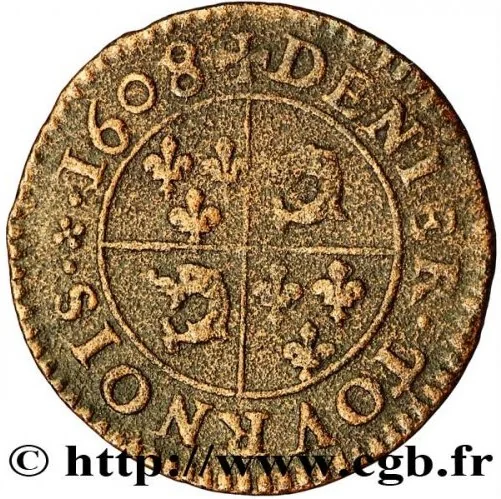
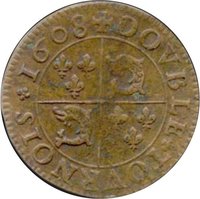
Reverse
Description:
Quartered shield of France and Dauphiné.
Inscription:
+ DENIER.TOVRNOIS.+.1608 (1)
+ DENIER.TOVRNOIS.x.1607 (2)
+ DENIER.TOVRNOIS.x.1607 (2)
Script: Latin
Edge
Categories
| Object> Armour |
| Symbols> Coat of Arms |
Mints
| Name | Mark |
|---|---|
| Grenoble | Z |
Historical background
In 1607, France was in the early reign of Henry IV, a period of recovery following the devastating Wars of Religion. The currency situation was complex and unstable, characterized by a bimetallic system of gold écus and silver livres tournois (the accounting unit) and francs. The state's constant need for revenue, especially to pay off war debts and fund reconstruction, led to repeated manipulations of coinage. The monarchy would officially alter the exchange rate between the livre and the actual coins, a practice known as augmentation (devaluation) or diminution (revaluation), effectively taxing the population by changing the nominal value of money.
This period saw a significant influx of precious metals from the New World, particularly Spanish silver, which flowed into France through trade and war. However, this influx often caused inflation and disrupted the relative value between gold and silver. The intrinsic metal value of a coin could thus differ greatly from its proclaimed legal value, leading to widespread confusion, hoarding of older "good" coin, and the circulation of debased or foreign currency. Counterfeiting was also a rampant problem, further eroding trust in the monetary system.
Recognizing the economic damage, Henry IV and his minister, the Duke of Sully, were attempting to bring order. They sought to stabilize the livre tournois and restore confidence by standardizing coinage and cautiously managing the money of account. While full stability was not yet achieved, their efforts laid crucial groundwork. The focus was on fiscal reform and rebuilding a war-shattered economy, with monetary stability seen as essential for reviving trade and agriculture, setting the stage for the stronger financial policies of the seventeenth century.
This period saw a significant influx of precious metals from the New World, particularly Spanish silver, which flowed into France through trade and war. However, this influx often caused inflation and disrupted the relative value between gold and silver. The intrinsic metal value of a coin could thus differ greatly from its proclaimed legal value, leading to widespread confusion, hoarding of older "good" coin, and the circulation of debased or foreign currency. Counterfeiting was also a rampant problem, further eroding trust in the monetary system.
Recognizing the economic damage, Henry IV and his minister, the Duke of Sully, were attempting to bring order. They sought to stabilize the livre tournois and restore confidence by standardizing coinage and cautiously managing the money of account. While full stability was not yet achieved, their efforts laid crucial groundwork. The focus was on fiscal reform and rebuilding a war-shattered economy, with monetary stability seen as essential for reviving trade and agriculture, setting the stage for the stronger financial policies of the seventeenth century.
✨ Legendary