

8 escudos – New Spain
Add to wishlist
Mexico
Context
Year: 1790
Country: Mexico
Issuer: New Spain
Ruler: Charles IV
Currency:
(1535—1897)
Demonetized: Yes
Material
References
KM: #
Numista: #57665
Value
Bullion value: $3636.38
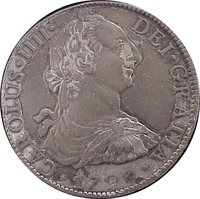
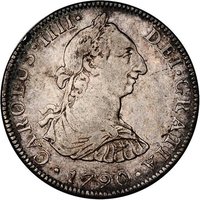
Obverse
Description:
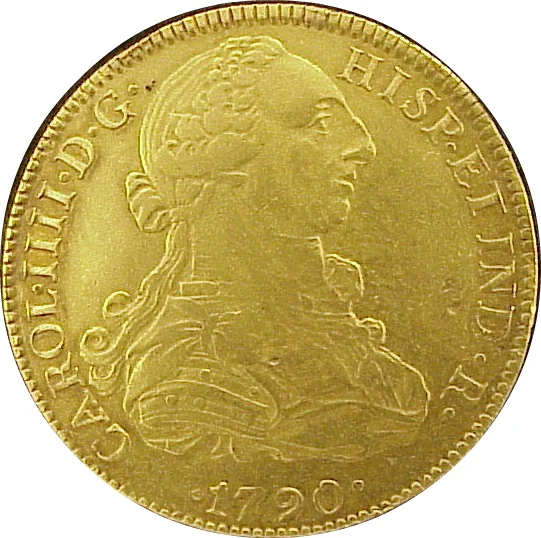
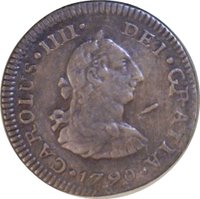
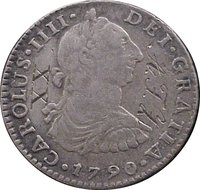
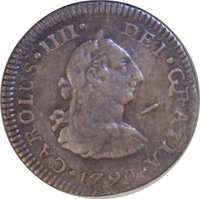
Armored bust of Charles III, facing right.
Inscription:
CAROL•IIII•D•G•
HISP•ET IND•R•
•1790•
HISP•ET IND•R•
•1790•
Script: Latin
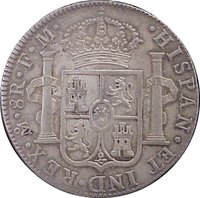
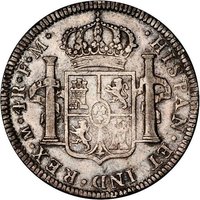
Reverse
Description:
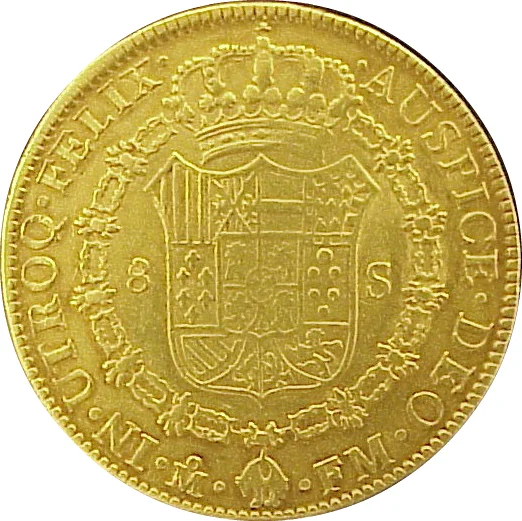
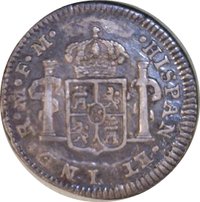
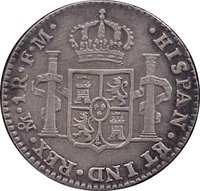
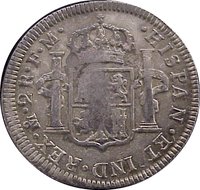
Shield crowned, encircled by eight linked S's.
Inscription:
IN•UTROQ•FELIX•
•AUSPICE•DEO
8 S
•Mo• •FM•
•AUSPICE•DEO
8 S
•Mo• •FM•
Script: Latin
Edge
Categories
| Animal> Feline |
| Building> Castle or fortification |
| Symbol> Crown |
| Symbols> Coat of Arms |
Mints
| Name | Mark |
|---|---|
| Mexican Mint | (Mo) |
Mintings
| Year | Mint Mark | Mintage | Quality | Collection |
|---|---|---|---|---|
| 1790 | FM | — |
Historical background
By 1790, the currency system of New Spain was a complex and often problematic pillar of its thriving yet strained economy. The colony was the financial engine of the Spanish Empire, its silver mines producing the vast majority of the world's supply. The primary coin was the silver real, with eight reales equaling one peso (the famous "piece of eight"). Gold escudos were also minted for high-value transactions. However, a chronic shortage of small-denomination coinage for daily commerce plagued the populace. To fill this void, a widespread system of tlacos—token coins made of copper or even base metals, issued by merchants, haciendas, and municipal authorities—circulated unofficially. This created a chaotic and unreliable local monetary environment, despite the global reputation of Mexican silver.
The Crown’s response to this disorder was the ambitious Monetary Reform of 1772, which was still defining the currency situation in 1790. This reform centralized minting, standardized coin weights and purity, and, most significantly, introduced a regulated royal copper currency (moneda de cobre) to replace the fraudulent tlacos. While successful in improving the consistency and prestige of the silver peso, the copper coinage was deeply unpopular. The public, remembering earlier debasements, distrusted its value, leading to hoarding of silver and persistent liquidity problems. Furthermore, the immense outflow of silver to Spain (the Situado) and to finance imperial wars in Europe and Asia constantly drained the colony of its own wealth.
Thus, in 1790, New Spain presented a monetary paradox. Its mint in Mexico City was one of the most sophisticated in the world, producing sound silver coins that were the benchmark for international trade from Manila to London. Yet internally, the system was strained by a lack of small change, public distrust of copper, and the structural hemorrhage of bullion to the metropolis. This tension between immense metallic wealth and localized monetary scarcity reflected the broader contradictions of colonial rule, contributing to the economic grievances that would later fuel the independence movement.
The Crown’s response to this disorder was the ambitious Monetary Reform of 1772, which was still defining the currency situation in 1790. This reform centralized minting, standardized coin weights and purity, and, most significantly, introduced a regulated royal copper currency (moneda de cobre) to replace the fraudulent tlacos. While successful in improving the consistency and prestige of the silver peso, the copper coinage was deeply unpopular. The public, remembering earlier debasements, distrusted its value, leading to hoarding of silver and persistent liquidity problems. Furthermore, the immense outflow of silver to Spain (the Situado) and to finance imperial wars in Europe and Asia constantly drained the colony of its own wealth.
Thus, in 1790, New Spain presented a monetary paradox. Its mint in Mexico City was one of the most sophisticated in the world, producing sound silver coins that were the benchmark for international trade from Manila to London. Yet internally, the system was strained by a lack of small change, public distrust of copper, and the structural hemorrhage of bullion to the metropolis. This tension between immense metallic wealth and localized monetary scarcity reflected the broader contradictions of colonial rule, contributing to the economic grievances that would later fuel the independence movement.
Series: 1790 New Spain circulation coins
✨ Legendary