

4 Escudos – New Spain
Mexico
Context
Years: 1748–1751
Country: Mexico 
Issuer: New Spain
Ruler: Ferdinand VI
Currency:
(1535—1897)
Demonetized: Yes
Material
References
KM: #Click to copy to clipboard137
Numista: #57655
Value
Bullion value: $2064.64
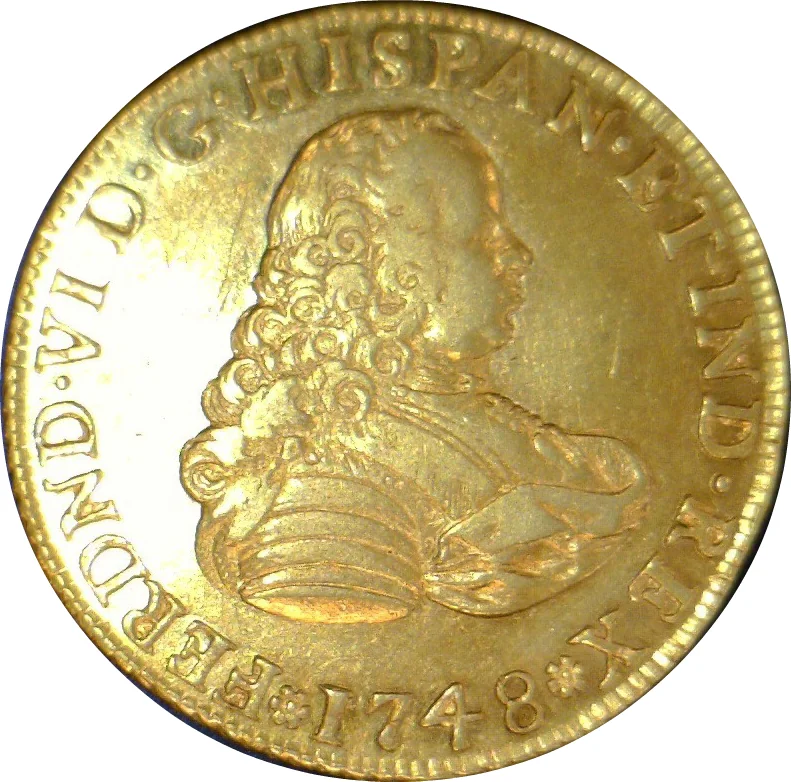
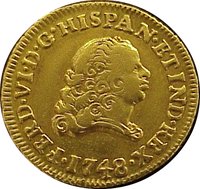
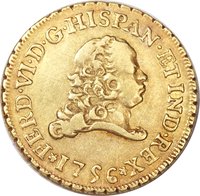
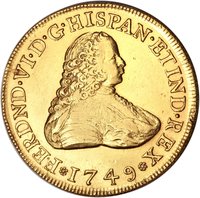
Obverse
Description:
Armored profile right
Inscription:
FERDND•VI•D•G•HISPAN•ET IND• REX
*1748*
*1748*
Script: Latin
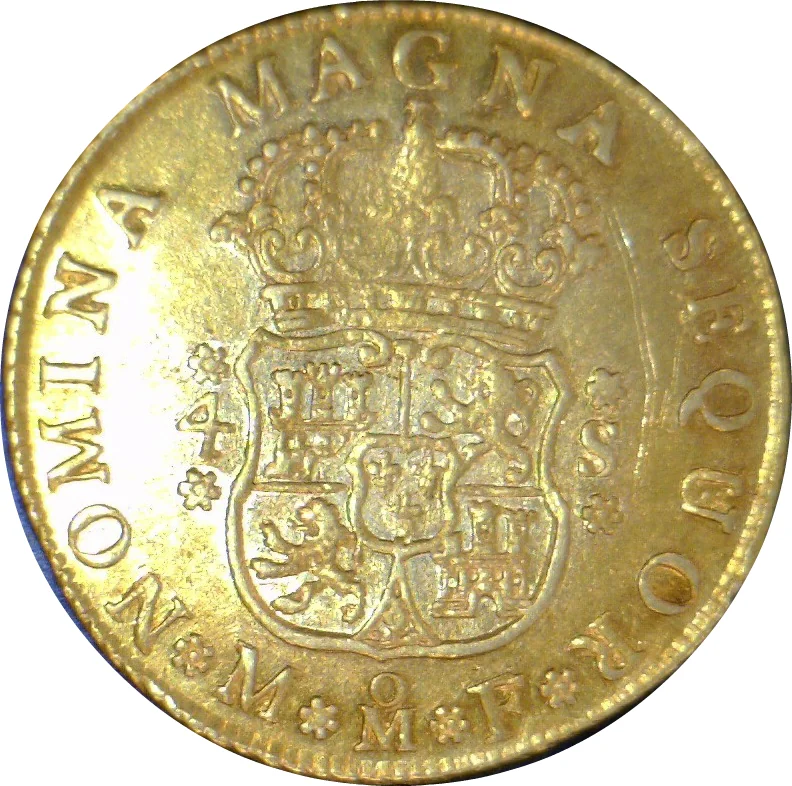
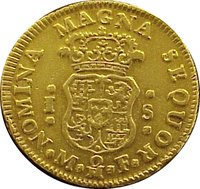
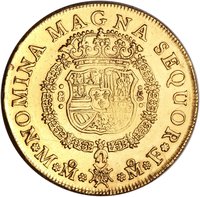
Reverse
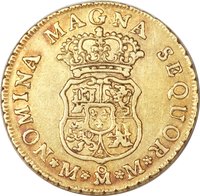
Description:
Shield with crown, flanked by four S's.
Inscription:
NOMINA MAGNA SEQUOR
*4* *S*
*M*Mo*F*
*4* *S*
*M*Mo*F*
Script: Latin
Edge
Mintings
| Year | Mint Mark | Mintage | Quality | Collection |
|---|---|---|---|---|
| 1748 | MF | — | ||
| 1749 | MF | — | ||
| 1750 | MF | — | ||
| 1751 | MF | — |
Historical background
In 1748, the currency system of New Spain, the wealthiest viceroyalty of the Spanish Empire, was a complex and often problematic blend of official minting and widespread fraud. The primary unit was the silver real, with eight reales making a peso (or "piece of eight"), a coin renowned globally for its purity and weight. Gold escudos were also minted but were less common in everyday commerce. The crown's primary source of wealth was the royal fifth (quinto real), a 20% tax on all precious metals mined, most notably from the prolific silver mines of Zacatecas and Guanajuato. The Mexico City Mint operated as a crucial financial engine for the entire empire, standardizing coinage that facilitated not only local trade but also transpacific commerce with the Philippines and the vital transatlantic fleets to Cádiz.
However, this system was under severe strain due to two chronic issues: a persistent shortage of small-denomination coins for daily transactions and rampant counterfeiting. The scarcity of tlacos—low-value tokens often issued by merchants or churches—highlighted the crown's failure to provide sufficient fractional currency, forcing the populace to rely on unreliable private credit. More destructively, the widespread circulation of macuquinas (clipped or debased coins) and outright forgeries eroded trust in the currency. This "bad money" problem was exacerbated by the government's own periodic attempts to recall and re-mint coinage, which often created confusion and economic disruption without solving the underlying structural flaws.
The year 1748 falls within a longer period of administrative efforts to reform the system. Following earlier failed attempts, the crown was in the process of implementing more standardized milled coinage (struck with engraved dies to prevent clipping), a technology slowly being adopted from Spain. Furthermore, the government continued its relentless, though often ineffective, prosecution of counterfeiters. The currency situation, therefore, was one of entrenched challenges met with gradual modernization, reflecting the broader Bourbon Reforms' aim to increase royal control and efficiency, all while the colony's economy continued to grow despite the circulatory ailments of its monetary lifeblood.
However, this system was under severe strain due to two chronic issues: a persistent shortage of small-denomination coins for daily transactions and rampant counterfeiting. The scarcity of tlacos—low-value tokens often issued by merchants or churches—highlighted the crown's failure to provide sufficient fractional currency, forcing the populace to rely on unreliable private credit. More destructively, the widespread circulation of macuquinas (clipped or debased coins) and outright forgeries eroded trust in the currency. This "bad money" problem was exacerbated by the government's own periodic attempts to recall and re-mint coinage, which often created confusion and economic disruption without solving the underlying structural flaws.
The year 1748 falls within a longer period of administrative efforts to reform the system. Following earlier failed attempts, the crown was in the process of implementing more standardized milled coinage (struck with engraved dies to prevent clipping), a technology slowly being adopted from Spain. Furthermore, the government continued its relentless, though often ineffective, prosecution of counterfeiters. The currency situation, therefore, was one of entrenched challenges met with gradual modernization, reflecting the broader Bourbon Reforms' aim to increase royal control and efficiency, all while the colony's economy continued to grow despite the circulatory ailments of its monetary lifeblood.
Series: 1748 New Spain circulation coins
✨ Legendary