

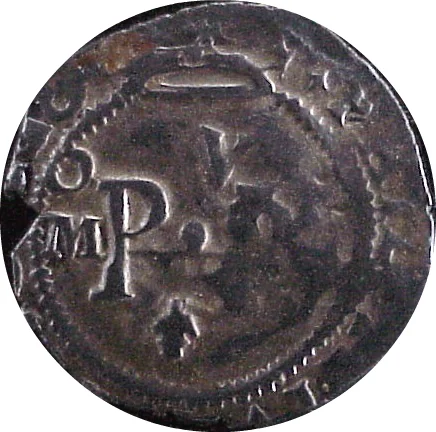
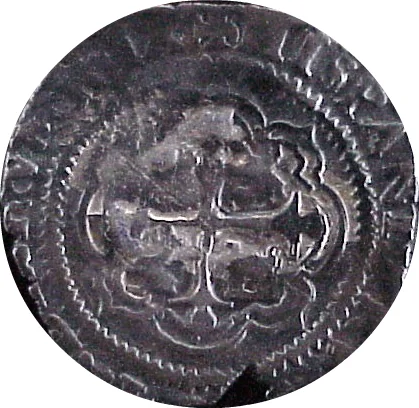
½ real – New Spain
Add to wishlist
Mexico
Context
Years: 1609–1620
Country: Mexico
Issuer: New Spain
Ruler: Philip III
Currency:
(1535—1897)
Demonetized: Yes
Material
Diameter: 17 mm
Weight: 1.69 g
Silver Weight:: 1.57 g
Shape: Irregular round
Composition: 93.1% Silver
Magnetic: No
References
KM: #
Numista: #57639
Value
Bullion value: $3.92
Obverse
Description:
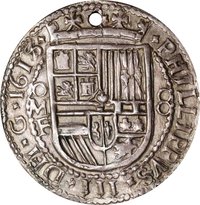
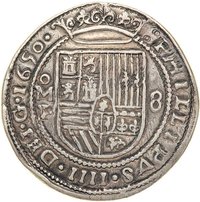
Crowned PHILIPVS monogram, mint mark M/Mo.
Reverse
Description:
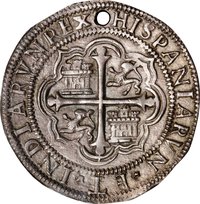
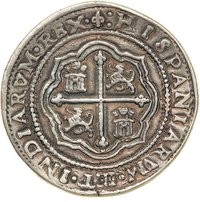
Cross, lions, castles.
Edge
Mintings
| Year | Mint Mark | Mintage | Quality | Collection |
|---|---|---|---|---|
| 1609 | A | — | ||
| 1610 | F | — | ||
| 1614 | F | — | ||
| 1620 | D | — |
Historical background
In 1609, the currency system of New Spain, the wealthiest viceroyalty of the Spanish Empire, was a complex and often problematic duality of official and unofficial mediums of exchange. The official backbone was silver, primarily minted into pesos or "reales de a ocho" at the Mexico City mint. These coins, struck from the immense silver output of mines like Zacatecas and Potosí (in the Viceroyalty of Peru), were the engine of global trade, flowing across the Pacific to Asia and across the Atlantic to finance Spain's European ambitions. However, the chronic shortage of small-denomination coins for everyday transactions created a persistent and severe economic friction for the local population.
This scarcity led to the widespread and tolerated use of an unofficial currency: cacao beans. Indigenous markets and a significant portion of the internal economy operated on this pre-Hispanic system, where cacao served as a stable, divisible, and universally accepted commodity money. The Spanish authorities and merchants were forced to engage with this system, even using cacao to pay for labor and goods, despite periodic attempts to regulate or suppress it. This created a unique monetary duality where high-value silver financed imperial and international ventures, while humble cacao greased the wheels of the colony's daily life and local commerce.
The situation was further strained by the Crown's ongoing financial pressures. While 1609 did not see a major debasement like the later "vellón" crises in Spain, the government constantly sought to extract more wealth from its colonies. This included rigorous tax collection in silver and the "quinto real" (the royal fifth) on mined bullion. The system was thus characterized by a tension between the colony's phenomenal mineral wealth and the persistent lack of circulating small coinage, a contradiction that fostered a vibrant informal economy and highlighted the gap between the imperial financial structure and the practical needs of New Spain's diverse society.
This scarcity led to the widespread and tolerated use of an unofficial currency: cacao beans. Indigenous markets and a significant portion of the internal economy operated on this pre-Hispanic system, where cacao served as a stable, divisible, and universally accepted commodity money. The Spanish authorities and merchants were forced to engage with this system, even using cacao to pay for labor and goods, despite periodic attempts to regulate or suppress it. This created a unique monetary duality where high-value silver financed imperial and international ventures, while humble cacao greased the wheels of the colony's daily life and local commerce.
The situation was further strained by the Crown's ongoing financial pressures. While 1609 did not see a major debasement like the later "vellón" crises in Spain, the government constantly sought to extract more wealth from its colonies. This included rigorous tax collection in silver and the "quinto real" (the royal fifth) on mined bullion. The system was thus characterized by a tension between the colony's phenomenal mineral wealth and the persistent lack of circulating small coinage, a contradiction that fostered a vibrant informal economy and highlighted the gap between the imperial financial structure and the practical needs of New Spain's diverse society.
✨ Legendary