

1 Rupee – Mughal Empire
India
Context
Years: 1632–1657
Country: India 
Issuer: Mughal Empire
Ruler: Shah Jahan
Currency:
(1540—1842)
Demonetized: Yes
Material
References
KM: #Click to copy to clipboard235.3
Numista: #57380
Value
Bullion value: $33.01
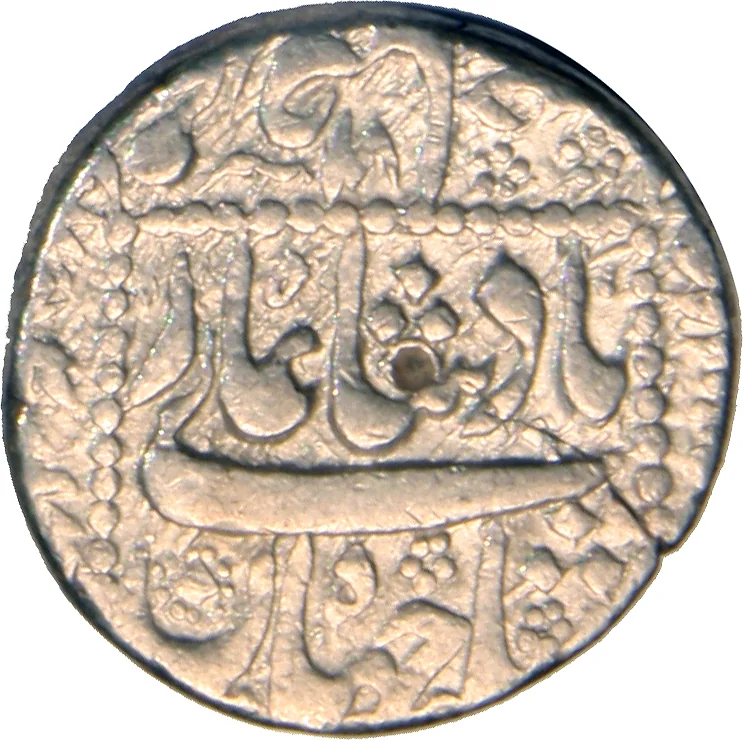
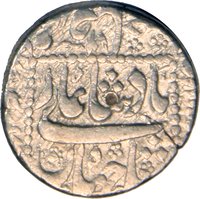
Obverse
Description:
[Emperor's Name] in Dotted Area
Inscription:
Shah Jahan Ghazi
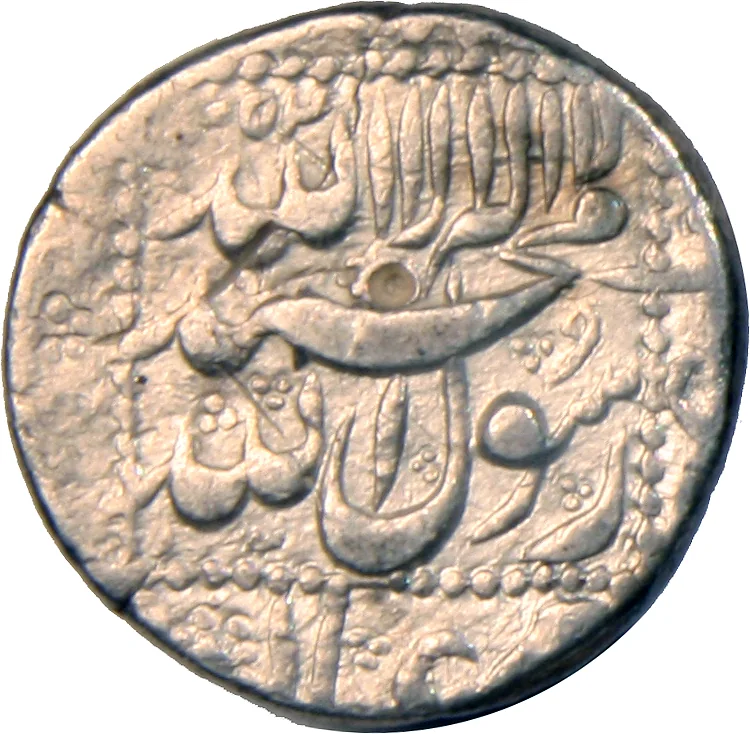
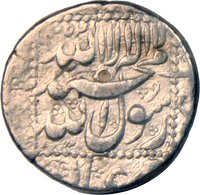
Reverse
Description:
Kalima and AH Date
Inscription:
۱۰۵۲
Edge
Plain
Mintings
| Year | Mint Mark | Mintage | Quality | Collection |
|---|---|---|---|---|
| 1632 | — | — | ||
| 1633 | — | — | ||
| 1634 | — | — | ||
| 1635 | — | — | ||
| 1636 | — | — | ||
| 1637 | — | — | ||
| 1638 | — | — | ||
| 1639 | — | — | ||
| 1640 | — | — | ||
| 1641 | — | — | ||
| 1642 | — | — | ||
| 1643 | — | — | ||
| 1643 | — | — | ||
| 1644 | — | — | ||
| 1645 | — | — | ||
| 1646 | — | — | ||
| 1647 | — | — | ||
| 1648 | — | — | ||
| 1649 | — | — | ||
| 1650 | — | — | ||
| 1651 | — | — | ||
| 1652 | — | — | ||
| 1653 | — | — | ||
| 1654 | — | — | ||
| 1655 | — | — | ||
| 1656 | — | — | ||
| 1657 | — | — |
Historical background
In 1632, the Mughal Empire's currency system under Emperor Shah Jahan was a well-established and highly regulated bimetallic standard, crucial for funding the empire's vast military and monumental architectural projects, including the nascent construction of the Taj Mahal. The primary units were the silver rupee and the gold mohur, with the rupee serving as the principal coin for revenue assessment and large-scale trade. These coins were renowned for their high purity and consistent weight, minted with intricate calligraphy in a centralized system of imperial mints (dar-ul-zarb) across major cities like Surat, Ahmedabad, and Lahore, which bolstered both domestic and international economic confidence.
The currency's stability was underpinned by a steady influx of precious metals, particularly New World silver entering the Indian Ocean trade via European trading companies and overland routes. This bullion financed Mughal imports and was converted into coinage, ensuring sufficient money supply for a booming economy. However, the system faced underlying tensions. Provincial governors and local potentates sometimes issued their own coins, potentially undermining central authority. Furthermore, the empire's immense size and the practice of granting revenue assignments (jagirs) created complexities in fiscal circulation, as local economies often relied on a mix of imperial and regional coinage alongside barter.
Shah Jahan's reign marked a peak in Mughal numismatic art and monetary control. The currency of 1632 was not just an economic instrument but also a potent tool of political propaganda, bearing the emperor's titles and symbols of legitimacy. This robust system facilitated the "Great Mughal" economy, enabling the collection of agrarian revenue, financing luxurious court culture, and supporting long-distance trade in textiles and spices. While stable at this juncture, the system's heavy reliance on agrarian surplus and external silver would later prove vulnerable to challenges in the decades to come.
The currency's stability was underpinned by a steady influx of precious metals, particularly New World silver entering the Indian Ocean trade via European trading companies and overland routes. This bullion financed Mughal imports and was converted into coinage, ensuring sufficient money supply for a booming economy. However, the system faced underlying tensions. Provincial governors and local potentates sometimes issued their own coins, potentially undermining central authority. Furthermore, the empire's immense size and the practice of granting revenue assignments (jagirs) created complexities in fiscal circulation, as local economies often relied on a mix of imperial and regional coinage alongside barter.
Shah Jahan's reign marked a peak in Mughal numismatic art and monetary control. The currency of 1632 was not just an economic instrument but also a potent tool of political propaganda, bearing the emperor's titles and symbols of legitimacy. This robust system facilitated the "Great Mughal" economy, enabling the collection of agrarian revenue, financing luxurious court culture, and supporting long-distance trade in textiles and spices. While stable at this juncture, the system's heavy reliance on agrarian surplus and external silver would later prove vulnerable to challenges in the decades to come.
💎 Extremely Rare