

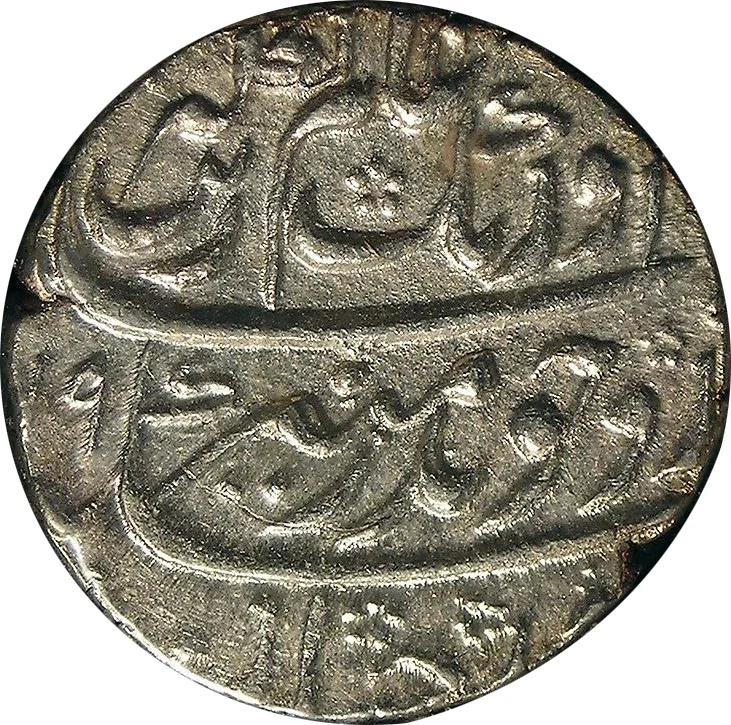
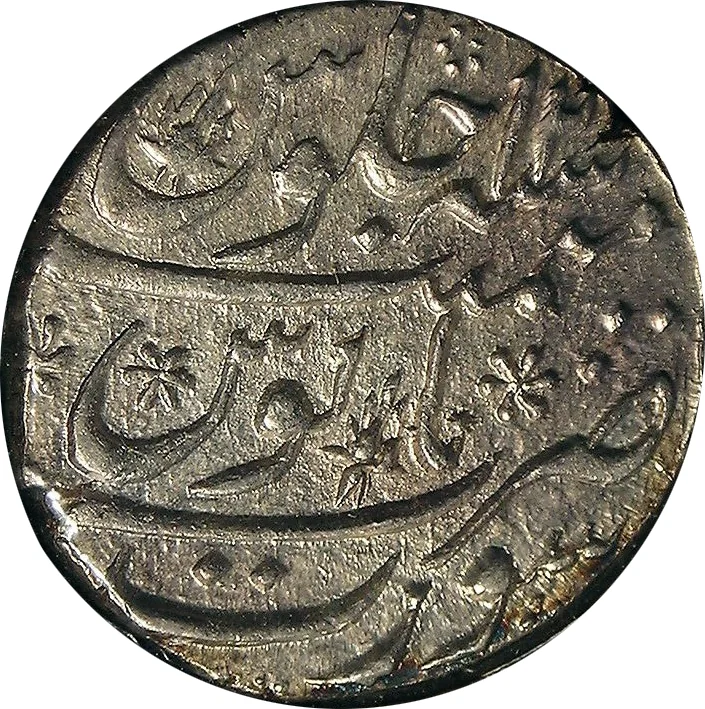
1 Rupee – Mughal Empire
India
Context
Years: 1659–1683
Country: India 
Issuer: Mughal Empire
Ruler: Aurangzeb
Currency:
(1540—1842)
Demonetized: Yes
Material
References
KM: #Click to copy to clipboard300.85
Numista: #56079
Value
Bullion value: $33.07
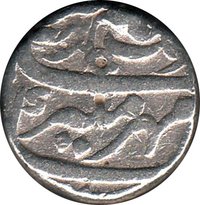
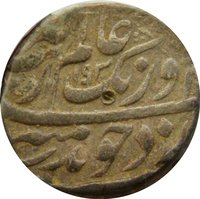
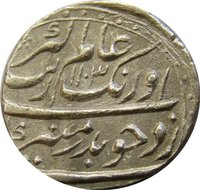
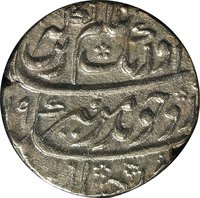
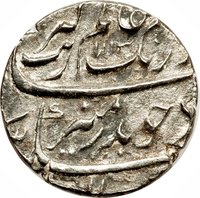
Obverse
Description:
The Emperor's name.
Inscription:
Aurangzeb Alamgir
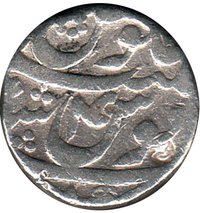
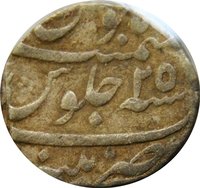
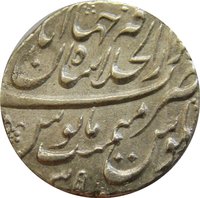
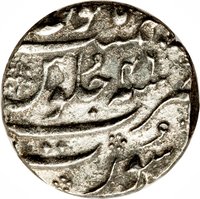
Reverse
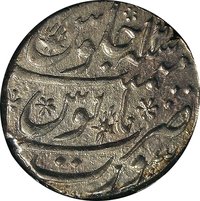
Description:
Bandar-i-Mubarak mint.
Inscription:
Zarb Surat
Edge
Plain
Mintings
| Year | Mint Mark | Mintage | Quality | Collection |
|---|---|---|---|---|
| 1659 | — | — | ||
| 1660 | — | — | ||
| 1661 | — | — | ||
| 1665 | — | — | ||
| 1679 | — | — | ||
| 1682 | — | — | ||
| 1683 | — | — |
Historical background
In 1659, the Mughal Empire under Emperor Aurangzeb Alamgir was in the midst of a profound political and economic transition following a brutal war of succession. The imperial currency system, however, remained a pillar of remarkable stability, inherited from the administrative reforms of Emperor Akbar (r. 1556–1605). The backbone of this system was the silver rupee, a high-purity coin that served as the primary unit of account and medium for revenue collection, trade, and large-scale transactions. It was complemented by the gold mohur, used for hoarding and prestigious gifts, and a well-regulated system of copper dams for everyday local commerce. This trimetallic system, supported by a vast network of imperial mints (sikkas), ensured a standardized currency across the subcontinent.
The integrity of the coinage was paramount. Coins bore the emperor's name and the mint of issue, and their widespread acceptance was enforced by the state, which demanded tax payments (jizya, zakat, and land revenue) specifically in rupee coin. This created a powerful engine for the monetization of the agrarian economy, drawing bullion into the imperial treasury and back into circulation. The empire's immense wealth, fueled by its prodigious agricultural output and its position as a net exporter of textiles and spices, attracted a massive influx of New World silver, primarily via European trading companies. This bullion flow was essential for minting the vast quantities of coins needed to lubricate the empire's extensive bureaucracy and military payroll.
Despite the political turmoil of Aurangzeb's accession, the currency itself in 1659 showed no immediate signs of debasement or crisis. The administrative machinery for minting and circulation continued to function, providing a stable monetary foundation for the new reign. However, the long-term strains of Aurangzeb's relentless military campaigns, particularly in the Deccan, would later place enormous fiscal pressure on the system. The costs of perpetual war would eventually lead to a gradual degradation of the currency's quality and contribute to the economic fragilities that surfaced in the 18th century.
The integrity of the coinage was paramount. Coins bore the emperor's name and the mint of issue, and their widespread acceptance was enforced by the state, which demanded tax payments (jizya, zakat, and land revenue) specifically in rupee coin. This created a powerful engine for the monetization of the agrarian economy, drawing bullion into the imperial treasury and back into circulation. The empire's immense wealth, fueled by its prodigious agricultural output and its position as a net exporter of textiles and spices, attracted a massive influx of New World silver, primarily via European trading companies. This bullion flow was essential for minting the vast quantities of coins needed to lubricate the empire's extensive bureaucracy and military payroll.
Despite the political turmoil of Aurangzeb's accession, the currency itself in 1659 showed no immediate signs of debasement or crisis. The administrative machinery for minting and circulation continued to function, providing a stable monetary foundation for the new reign. However, the long-term strains of Aurangzeb's relentless military campaigns, particularly in the Deccan, would later place enormous fiscal pressure on the system. The costs of perpetual war would eventually lead to a gradual degradation of the currency's quality and contribute to the economic fragilities that surfaced in the 18th century.
💎 Extremely Rare