

1 Para – Ottoman Empire
Turkey
Context
Years: 1737–1745
Country: Turkey 
Issuer: Ottoman Empire
Ruler: Mahmud I
Currency:
(1688—1844)
Demonetized: Yes
Material
References
KM: #Click to copy to clipboard194
Numista: #55780
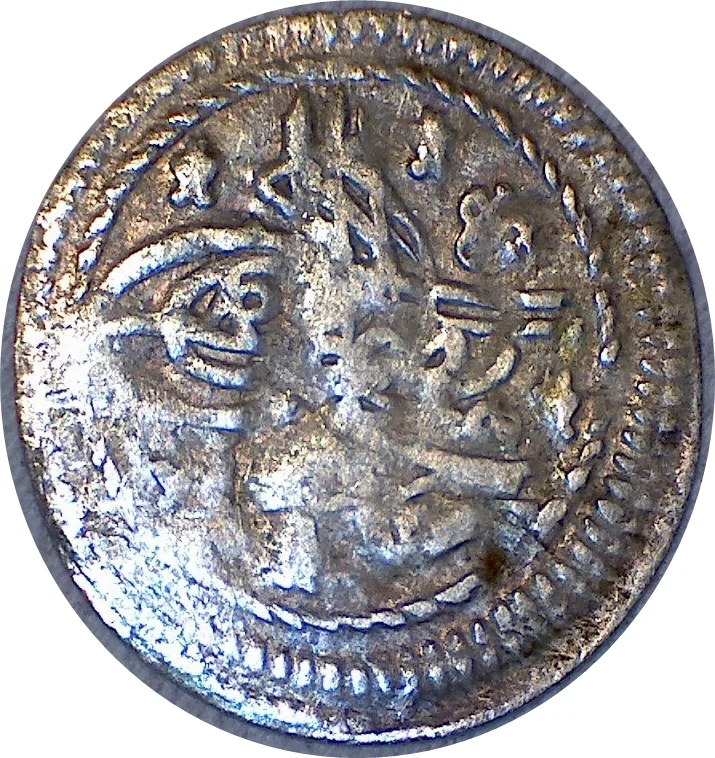
Obverse
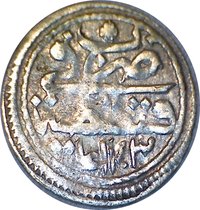
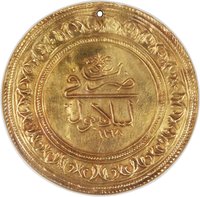
Description:
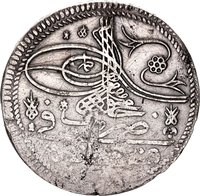
Tughra with lattice pattern, one star above and eight below.
Inscription:
Tugra /Ornament at the right of tugra
Script: Arabic
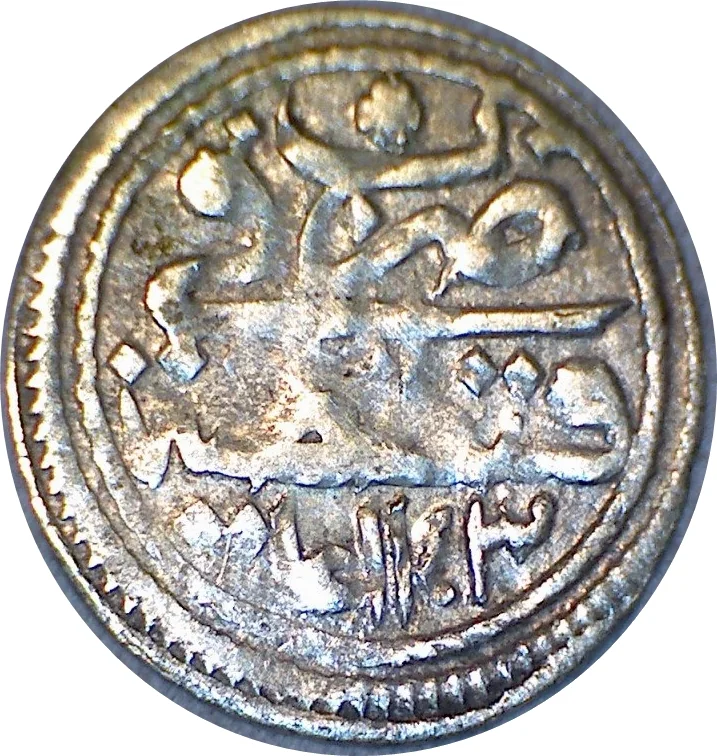
Reverse
Description:
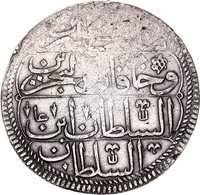
Mint mark indicates Constantinople. The accession year 1143 (1731) is at the bottom, with symbols to its left specifying the production year.
Inscription:
darebe fi Kostantiniye AYN ELIF 1143
Script: Arabic
Edge
Smooth. The coin is paper-thin, so there is barely any edge to speak of.
Mints
| Name | Mark |
|---|---|
| Constantinople | — |
Mintings
| Year | Mint Mark | Mintage | Quality | Collection |
|---|---|---|---|---|
| 1737 | ٨ | — | ||
| 1741 | ۱٢ | — | ||
| 1744 | ۱٥ | — | ||
| 1745 | ۱٦ | — |
Historical background
In 1737, the Ottoman Empire was grappling with a severe and chronic currency crisis, a manifestation of its deeper economic and military struggles. The primary issue was the drastic debasement of the silver akçe, the empire's traditional unit of account, and the widespread circulation of unstable foreign coins, particularly the Spanish piastre (or riyal guruş). To finance its prolonged wars, especially against the Habsburgs and Russia (as part of the Austro-Russian-Turkish War, 1735–1739), the state repeatedly resorted to clipping the silver content of its coinage. This created a classic vicious cycle: minting inferior coins generated short-term revenue but triggered inflation, a loss of public confidence, and the hoarding of older, purer coins, which further exacerbated the shortage of sound money.
The monetary system had effectively become bimetallic and chaotic. Large transactions were dominated by the guruş, a heavy silver coin often minted from melted foreign currency, while the chronically debased akçe served for small change. The disparity between the official nominal value of coins and their intrinsic metallic value led to rampant speculation and market confusion. Money changers (sarrafs) gained significant power, manipulating exchange rates and creating a complex, unstable financial environment that hampered both trade and state treasury (Hazine) operations. The government's attempts to fix exchange rates by decree (narh) were largely ineffective against market forces.
This financial instability directly undermined the Ottoman military campaign. Soldiers, particularly the Janissaries, were paid in devalued currency, leading to frequent mutinies and a decline in military effectiveness. The crisis of 1737 was not an isolated event but a acute phase of a long-term structural decline, highlighting the empire's difficulty in adapting its pre-modern fiscal structures to the pressures of global flows of precious metals and protracted warfare on multiple fronts. The eventual Treaty of Belgrade in 1739 would bring territorial gains but no resolution to the underlying monetary disorders that would continue to plague the empire for decades.
The monetary system had effectively become bimetallic and chaotic. Large transactions were dominated by the guruş, a heavy silver coin often minted from melted foreign currency, while the chronically debased akçe served for small change. The disparity between the official nominal value of coins and their intrinsic metallic value led to rampant speculation and market confusion. Money changers (sarrafs) gained significant power, manipulating exchange rates and creating a complex, unstable financial environment that hampered both trade and state treasury (Hazine) operations. The government's attempts to fix exchange rates by decree (narh) were largely ineffective against market forces.
This financial instability directly undermined the Ottoman military campaign. Soldiers, particularly the Janissaries, were paid in devalued currency, leading to frequent mutinies and a decline in military effectiveness. The crisis of 1737 was not an isolated event but a acute phase of a long-term structural decline, highlighting the empire's difficulty in adapting its pre-modern fiscal structures to the pressures of global flows of precious metals and protracted warfare on multiple fronts. The eventual Treaty of Belgrade in 1739 would bring territorial gains but no resolution to the underlying monetary disorders that would continue to plague the empire for decades.
⭐ Rare