

1 Quattrino – Papal States
Vatican City
Context
Years: 1606–1613
Country: Vatican City 
Issuer: Papal States
Ruler: Paul V
Currency:
(1534—1835)
Demonetized: Yes
References
KM: #Click to copy to clipboard35
Numista: #55571
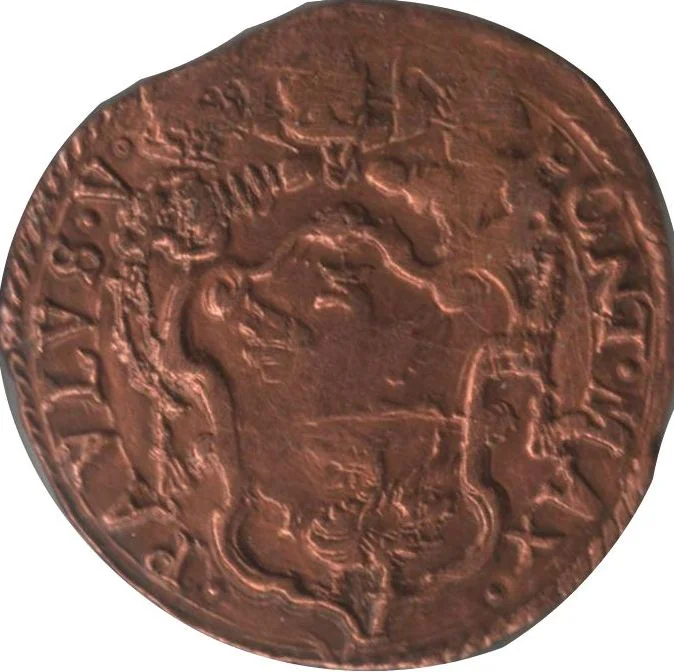
Obverse
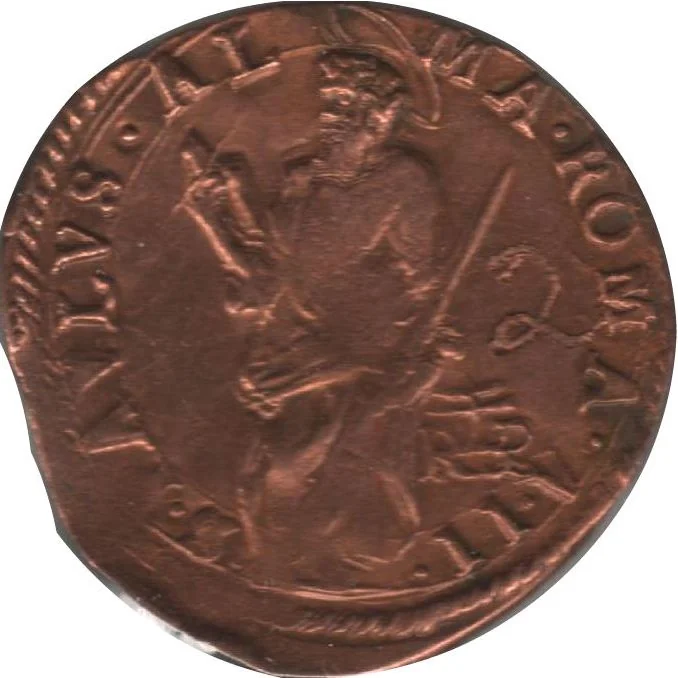
Reverse
Description:
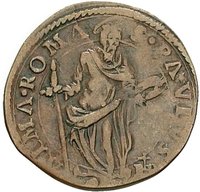
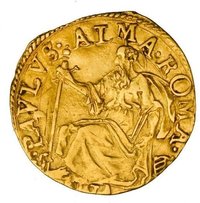
Saint Paul, facing left, holds a book in his right hand and a sword in his left.
Inscription:
X·PAVLVS·AL
MA·ROMA·A·II·
MA·ROMA·A·II·
Script: Latin
Edge
Plain
Categories
| Object> Cold weapons |
| Person> Religious figure |
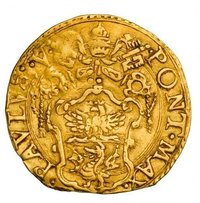
| Symbol> Crown |
| Symbols> Coat of Arms |
Mintings
| Year | Mint Mark | Mintage | Quality | Collection |
|---|---|---|---|---|
| 1606 | — | — | ||
| 1607 | — | — | ||
| 1608 | — | — | ||
| 1609 | — | — | ||
| 1610 | — | — | ||
| 1611 | — | — | ||
| 1612 | — | — | ||
| — | — | — |
Historical background
In 1606, the Papal States under Pope Paul V faced a complex and strained currency situation typical of early modern Italian polities. The monetary system was bimetallic, based on the scudo (gold) and the giulio (silver), but it was plagued by chronic instability. A primary issue was the widespread practice of currency debasement by neighboring states, which flooded the Papal markets with inferior coinage. This drove good, full-weight papal coins out of circulation (following Gresham's Law) and caused significant confusion in trade, as the real value of coins often differed from their face value, leading to price inflation and public distrust.
The Papal government attempted to maintain control through strict edicts from the Camera Apostolica (the Apostolic Chamber), which set official exchange rates and repeatedly forbade the circulation of foreign or debased coins. However, enforcement was difficult, and the economic pressures of funding large-scale projects (like the completion of St. Peter's Basilica) and the papacy's political and military engagements strained finances. Furthermore, the Papal States were not a unified economic zone, with different cities sometimes having their own minting practices, which complicated a cohesive monetary policy.
Ultimately, the currency woes of 1606 were a symptom of a larger structural problem: the lack of a unified Italian monetary system in a politically fragmented peninsula. While Pope Paul V continued to issue decrees to uphold the standard of the papal scudo, the effectiveness was limited without regional cooperation. The situation reflected the broader European "Price Revolution" and the constant battle of sovereigns to control the money supply, protect their seigniorage revenue, and maintain economic stability within their territories amidst wider continental flows of precious metals and competing currencies.
The Papal government attempted to maintain control through strict edicts from the Camera Apostolica (the Apostolic Chamber), which set official exchange rates and repeatedly forbade the circulation of foreign or debased coins. However, enforcement was difficult, and the economic pressures of funding large-scale projects (like the completion of St. Peter's Basilica) and the papacy's political and military engagements strained finances. Furthermore, the Papal States were not a unified economic zone, with different cities sometimes having their own minting practices, which complicated a cohesive monetary policy.
Ultimately, the currency woes of 1606 were a symptom of a larger structural problem: the lack of a unified Italian monetary system in a politically fragmented peninsula. While Pope Paul V continued to issue decrees to uphold the standard of the papal scudo, the effectiveness was limited without regional cooperation. The situation reflected the broader European "Price Revolution" and the constant battle of sovereigns to control the money supply, protect their seigniorage revenue, and maintain economic stability within their territories amidst wider continental flows of precious metals and competing currencies.
✨ Legendary