

1 Farthing – Ireland
Ireland
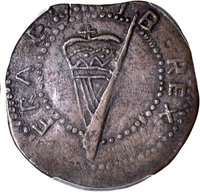
Obverse
Description:
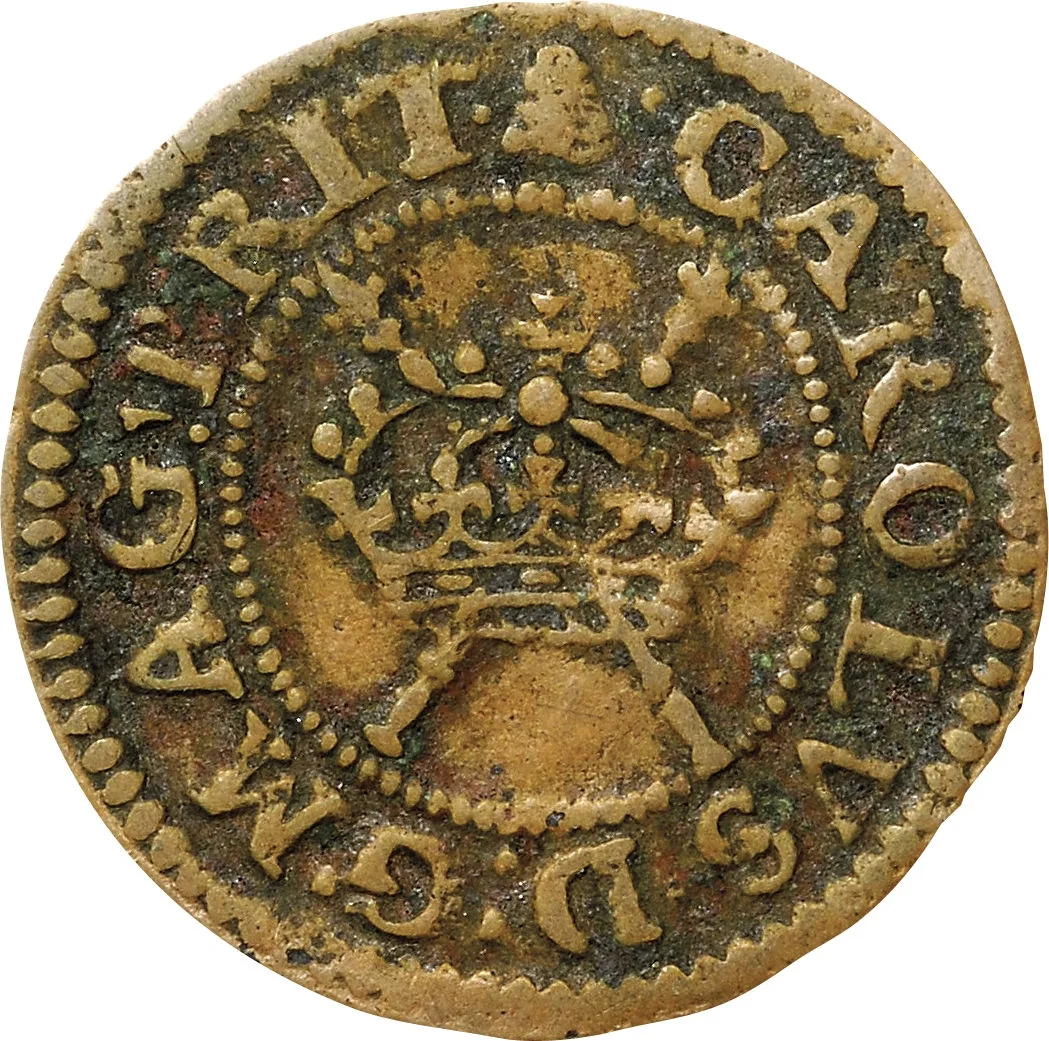
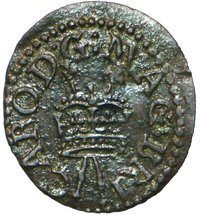
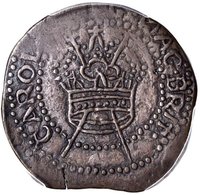
Crown over crossed sceptres within a dotted circle, surrounded by lettering.
Inscription:
CAROLVS: D:G. MAG: BRIT
Script: Latin
Reverse
Description:
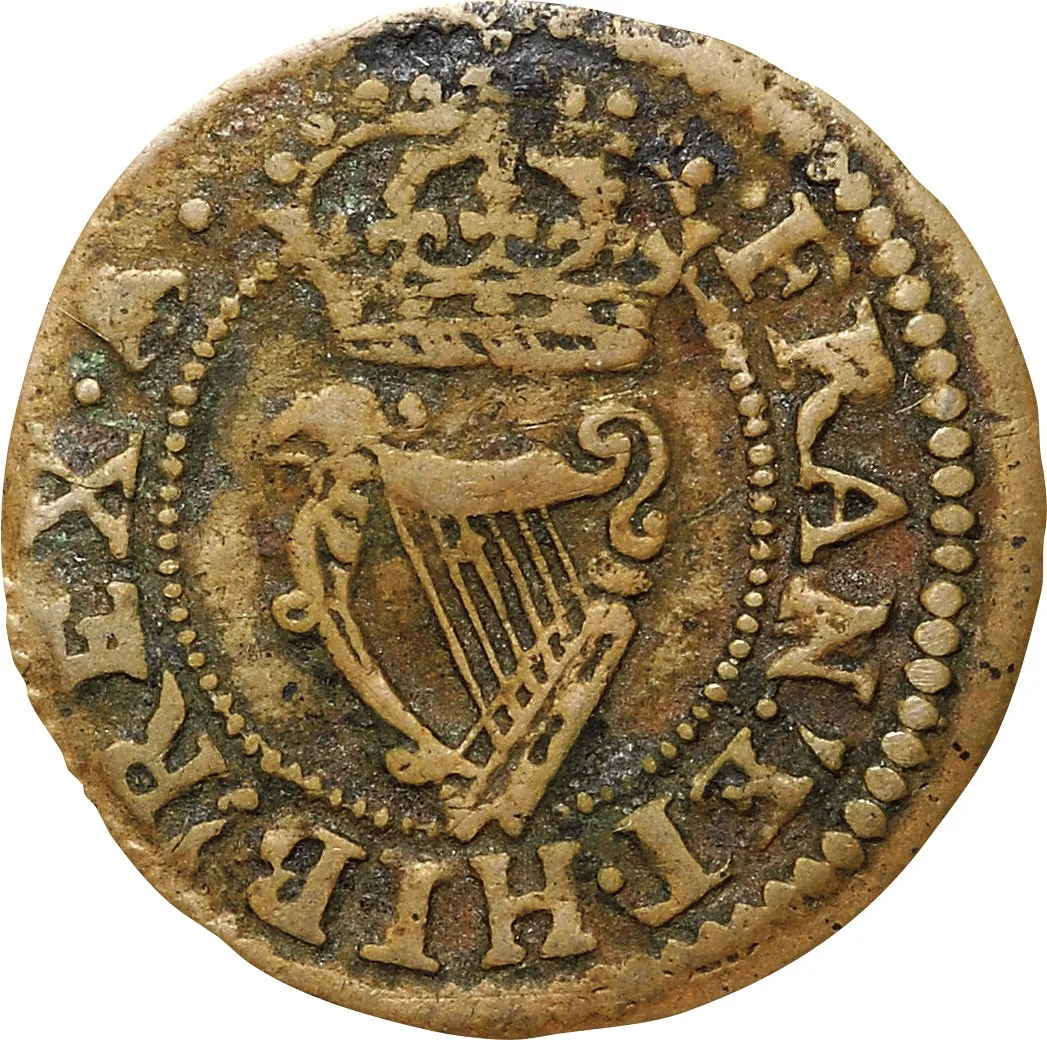
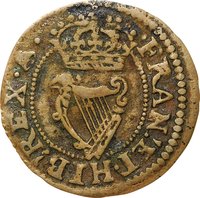
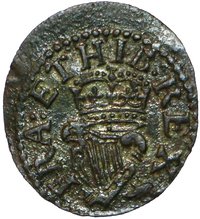
A harp within a dotted circle, crowned. Lettering encircles.
Inscription:
FRAN· ET· HIB: REX
Script: Latin
Edge
Mintings
| Year | Mint Mark | Mintage | Quality | Collection |
|---|---|---|---|---|
| — | — | — |
Historical background
In 1634, Ireland operated under a complex and often inadequate monetary system, a legacy of its status as a kingdom under the English Crown. The official currency was nominally aligned with England, using pounds, shillings, and pence, but the reality was a chronic shortage of regulated coinage in circulation. This scarcity was exacerbated by the fact that Ireland was economically subordinate; its exports, primarily livestock and agricultural goods, often generated an outflow of good English silver coin to settle debts with London merchants, leaving the Irish economy starved of sound money.
To fill this void, a bewildering array of alternative currencies circulated. These included worn and clipped English coins, Spanish pieces of eight (from trade with the continent), and a significant volume of privately minted tokens issued by local merchants, towns, and even large landowners. Most problematic was the widespread circulation of "Irish money" or "harp" coins—coins of lower silver content officially minted for Ireland, which traded at a significant discount against sterling. This created a dual-currency system where accounts, especially for large estates and government dues, were often kept in sterling, while daily transactions used this debased coinage.
The situation was a source of constant economic friction and grievance. The shortage of reliable coin hindered trade and commerce, while the discount on Irish money created uncertainty and loss. Furthermore, the monetary chaos reflected broader colonial tensions, as the Protestant New English administration and the Old English Catholic gentry both suffered from the instability, though the native Irish population bore the brunt of its impoverishing effects. This unstable system would persist until the 1680s, when a concerted effort was finally made to bring Irish currency into parity with England's.
To fill this void, a bewildering array of alternative currencies circulated. These included worn and clipped English coins, Spanish pieces of eight (from trade with the continent), and a significant volume of privately minted tokens issued by local merchants, towns, and even large landowners. Most problematic was the widespread circulation of "Irish money" or "harp" coins—coins of lower silver content officially minted for Ireland, which traded at a significant discount against sterling. This created a dual-currency system where accounts, especially for large estates and government dues, were often kept in sterling, while daily transactions used this debased coinage.
The situation was a source of constant economic friction and grievance. The shortage of reliable coin hindered trade and commerce, while the discount on Irish money created uncertainty and loss. Furthermore, the monetary chaos reflected broader colonial tensions, as the Protestant New English administration and the Old English Catholic gentry both suffered from the instability, though the native Irish population bore the brunt of its impoverishing effects. This unstable system would persist until the 1680s, when a concerted effort was finally made to bring Irish currency into parity with England's.
💎 Extremely Rare