

1 Farthing – Ireland
Ireland
Material
Weight: 0.45 g
Shape: Oval
Composition: Copper
Magnetic: No
Technique: Roller milled
Alignment: Medal alignment
flip
References
KM: #Click to copy to clipboard25-26.2
Numista: #347138
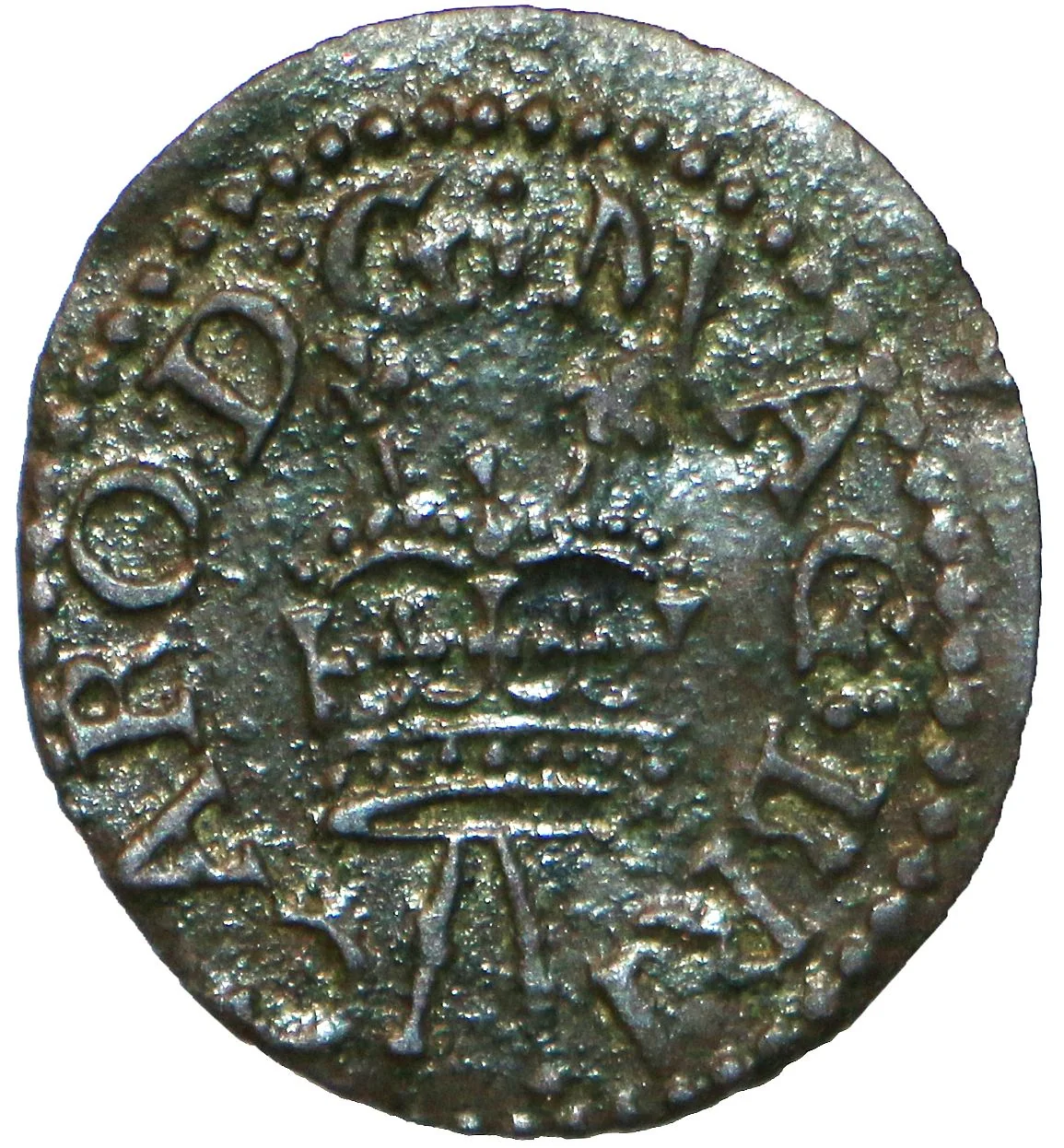
Obverse
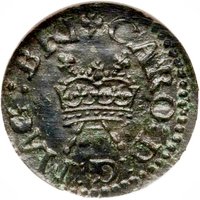
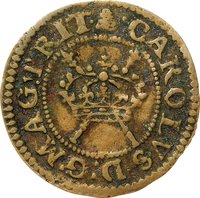
Description:
Crown with nine jewels. Legend encircles from 7 o'clock. No privy mark.
Inscription:
CARO: D: G(:) MAG: BRI(:)
Script: Latin
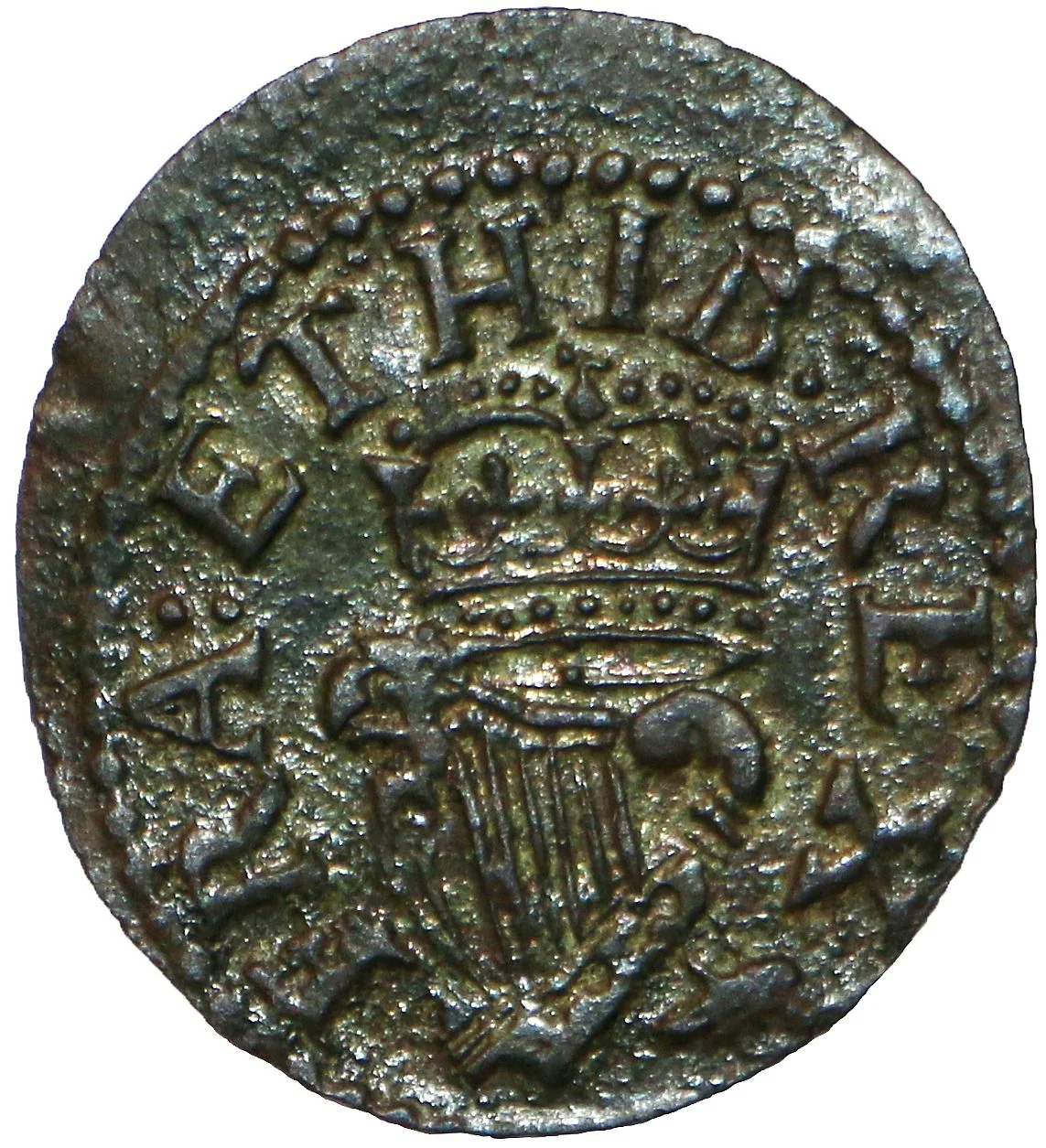
Reverse
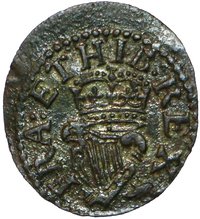
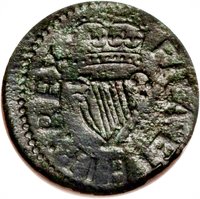
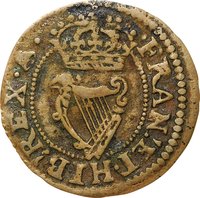
Description:
Eagle-headed harp with six strings, crown set with nine jewels. Privymark (millrind/martlet) on reverse legend.
Inscription:
FRA: ET HIB(:) REX (.)
Script: Latin
Edge
Mintings
| Year | Mint Mark | Mintage | Quality | Collection |
|---|---|---|---|---|
| — | — | — |
Historical background
In 1625, Ireland operated under a complex and strained monetary system, reflecting its status as a kingdom under the English Crown. The official currency was nominally aligned with England, using pounds, shillings, and pence, but the reality was one of severe shortage and confusion. The primary circulating coins were often worn, clipped, or counterfeit English silver, supplemented by a significant influx of foreign coins from Ireland's extensive European trade, particularly Spanish silver reales and Portuguese crusados. This created a de facto system where transactions were frequently assessed by the weight and perceived purity of the metal rather than by face value.
The scarcity of official, high-quality coinage was a chronic problem that stifled economic activity. To address this, the Irish government had previously resorted to issuing "coinage debentures" or tokens, and there were recurring but unsuccessful proposals for the establishment of a dedicated Irish mint. The situation was exacerbated by the economic policies emanating from London, which often treated Ireland as a subordinate economic zone, restricting its trade and viewing it as a source of revenue and resources. This led to a persistent drain of good silver coinage to England, further depleting the local supply.
Consequently, the monetary environment was unstable and inefficient, hindering commerce and taxation. The reliance on disparate foreign coins required constant proclamations to assign them official values, leading to market uncertainty. This fragile system contributed to broader economic grievances and social tension in the lead-up to the political upheavals of the mid-17th century. The currency situation of 1625 thus exemplifies the administrative and economic challenges of governing Ireland under the early Stuart monarchy.
The scarcity of official, high-quality coinage was a chronic problem that stifled economic activity. To address this, the Irish government had previously resorted to issuing "coinage debentures" or tokens, and there were recurring but unsuccessful proposals for the establishment of a dedicated Irish mint. The situation was exacerbated by the economic policies emanating from London, which often treated Ireland as a subordinate economic zone, restricting its trade and viewing it as a source of revenue and resources. This led to a persistent drain of good silver coinage to England, further depleting the local supply.
Consequently, the monetary environment was unstable and inefficient, hindering commerce and taxation. The reliance on disparate foreign coins required constant proclamations to assign them official values, leading to market uncertainty. This fragile system contributed to broader economic grievances and social tension in the lead-up to the political upheavals of the mid-17th century. The currency situation of 1625 thus exemplifies the administrative and economic challenges of governing Ireland under the early Stuart monarchy.
✨ Legendary