

1 Shilling – Ireland
Ireland
Material
Diameter: 28 mm
Weight: 5.65 g
Silver weight: 5.65 g
Shape: Irregular round
Composition: Silver
Magnetic: No
References
KM: #Click to copy to clipboard12
Numista: #55257
Value
Bullion value: $16.06
Obverse
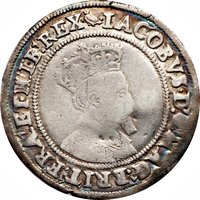
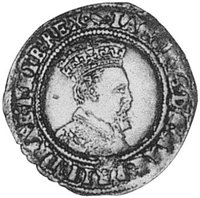
Description:
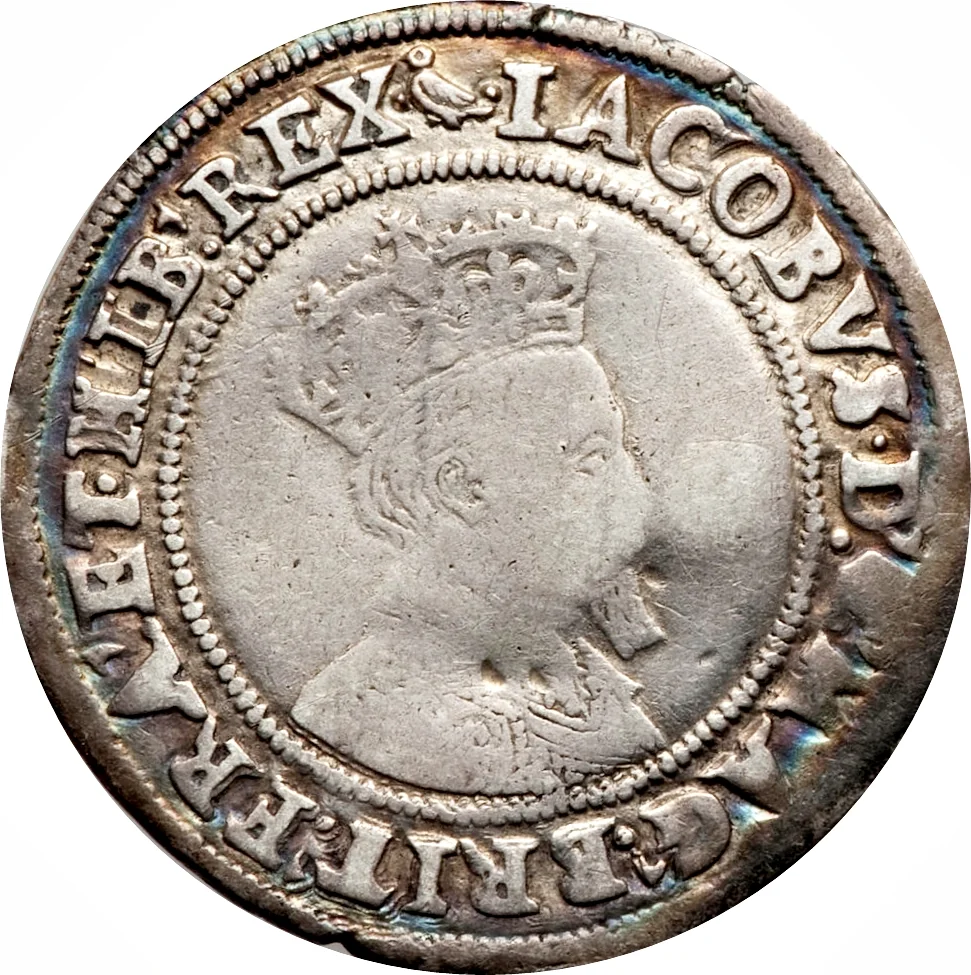
Bearded bust right within beaded circle. Mint mark above.
Inscription:
· IACOBVS · D'G'· ANG'· SCO'· FRA'· ET· HIB'· REX ·
Script: Latin
Reverse
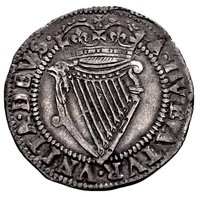
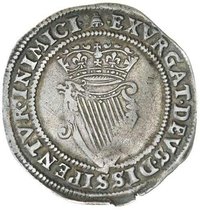
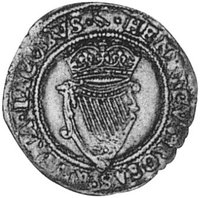
Description:
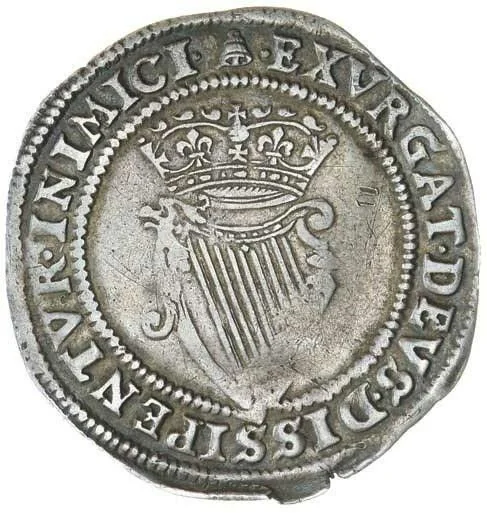
Harp crowned within beaded circle.
Inscription:
EXVRGAT · DEVS ·DISSIPENTVR · INIMICI
Script: Latin
Edge
Mints
| Name | Mark |
|---|---|
| Royal Mint (Tower of London) | — |
Mintings
| Year | Mint Mark | Mintage | Quality | Collection |
|---|---|---|---|---|
| — | — | — |
Historical background
In 1603, Ireland’s currency situation was complex and unstable, reflecting the island’s contested political and economic status. Following the death of Queen Elizabeth I and the accession of James I, Ireland was a kingdom under the English Crown but remained only partially anglicised and economically integrated. The official currency was sterling, consisting of English gold and silver coins, but in practice, a wide variety of debased and foreign coins circulated, particularly Spanish reales and Portuguese cruzados from lucrative continental trade. This proliferation of foreign coinage, often clipped or worn, created significant problems for trade and taxation, as their intrinsic value was uncertain and frequently below their face value.
The core of the monetary crisis was a severe shortage of high-quality, full-weight silver coin. Decades of warfare during the Tudor conquest, especially the devastating Nine Years' War (1594–1603) which had just concluded with the Treaty of Mellifont, had drained the country of good coin through military expenditures and hoarding. Furthermore, Gresham’s Law was in full effect: "bad money drives out good." Any full-weight sterling coins that arrived from England were either hoarded or exported, while the lightweight and debased coins remained in common circulation, eroding trust in the monetary system and hindering economic recovery in the war's aftermath.
Recognising this crisis, the state took decisive action in 1603. One of the first proclamations issued by the new king, James I, addressed the Irish currency directly. It attempted to stabilise the situation by officially recognising and re-rating the most common foreign coins, like the Spanish real, giving them a fixed sterling value acceptable for all payments. This was a pragmatic, short-term measure to increase the supply of circulating medium. However, the fundamental shortage persisted, setting the stage for more comprehensive reforms later in James’s reign, most notably the issue of a new, copper token coinage in 1607-08, which aimed to facilitate small everyday transactions but would itself become highly controversial.
The core of the monetary crisis was a severe shortage of high-quality, full-weight silver coin. Decades of warfare during the Tudor conquest, especially the devastating Nine Years' War (1594–1603) which had just concluded with the Treaty of Mellifont, had drained the country of good coin through military expenditures and hoarding. Furthermore, Gresham’s Law was in full effect: "bad money drives out good." Any full-weight sterling coins that arrived from England were either hoarded or exported, while the lightweight and debased coins remained in common circulation, eroding trust in the monetary system and hindering economic recovery in the war's aftermath.
Recognising this crisis, the state took decisive action in 1603. One of the first proclamations issued by the new king, James I, addressed the Irish currency directly. It attempted to stabilise the situation by officially recognising and re-rating the most common foreign coins, like the Spanish real, giving them a fixed sterling value acceptable for all payments. This was a pragmatic, short-term measure to increase the supply of circulating medium. However, the fundamental shortage persisted, setting the stage for more comprehensive reforms later in James’s reign, most notably the issue of a new, copper token coinage in 1607-08, which aimed to facilitate small everyday transactions but would itself become highly controversial.
Series: 1603 Ireland circulation coins

💎 Extremely Rare