

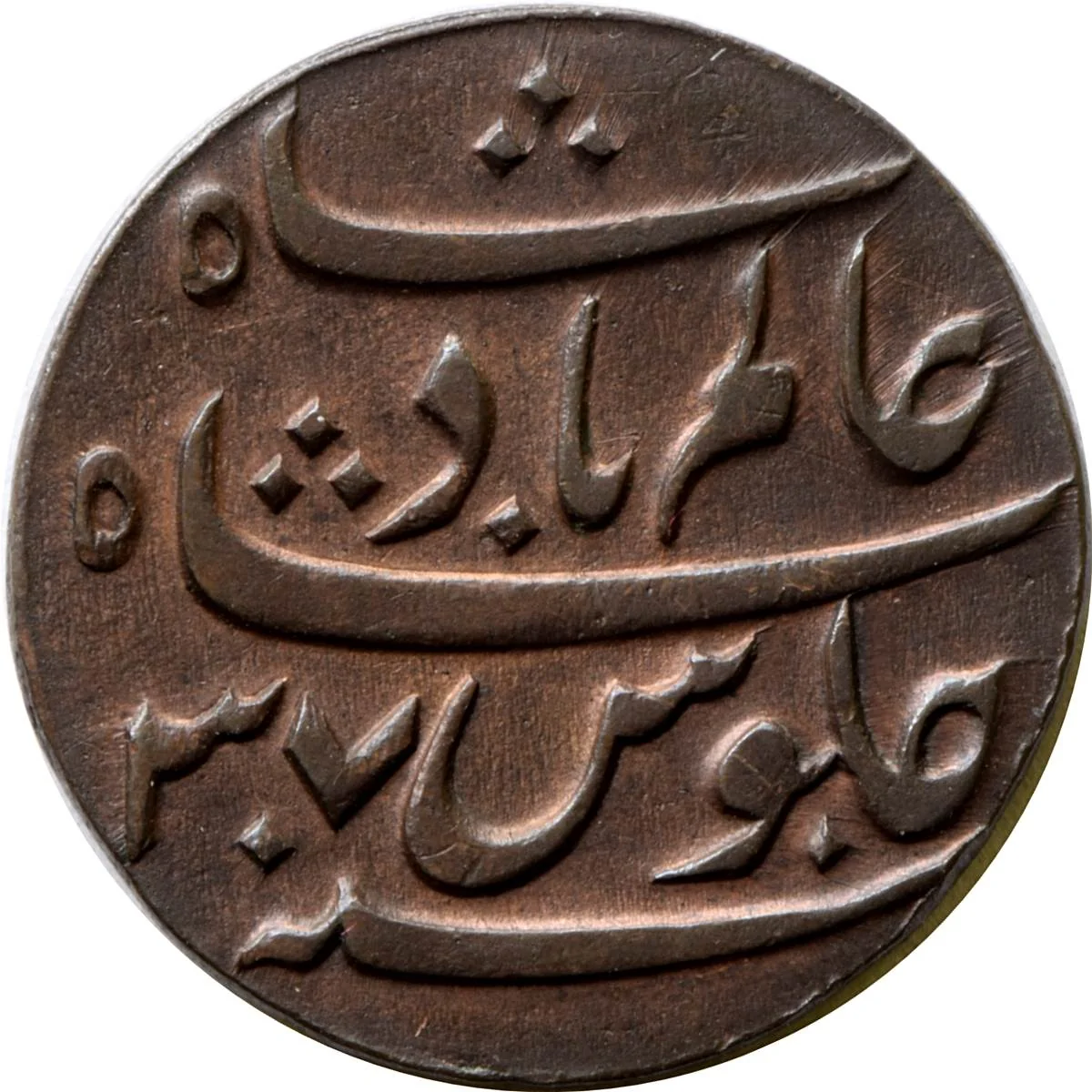

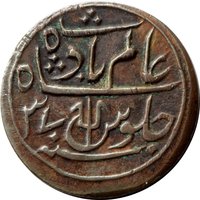
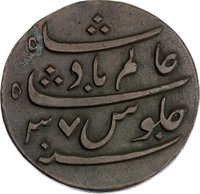
Obverse
Description:
Shah Alam, Year 37 of his reign.
Inscription:
٣٧
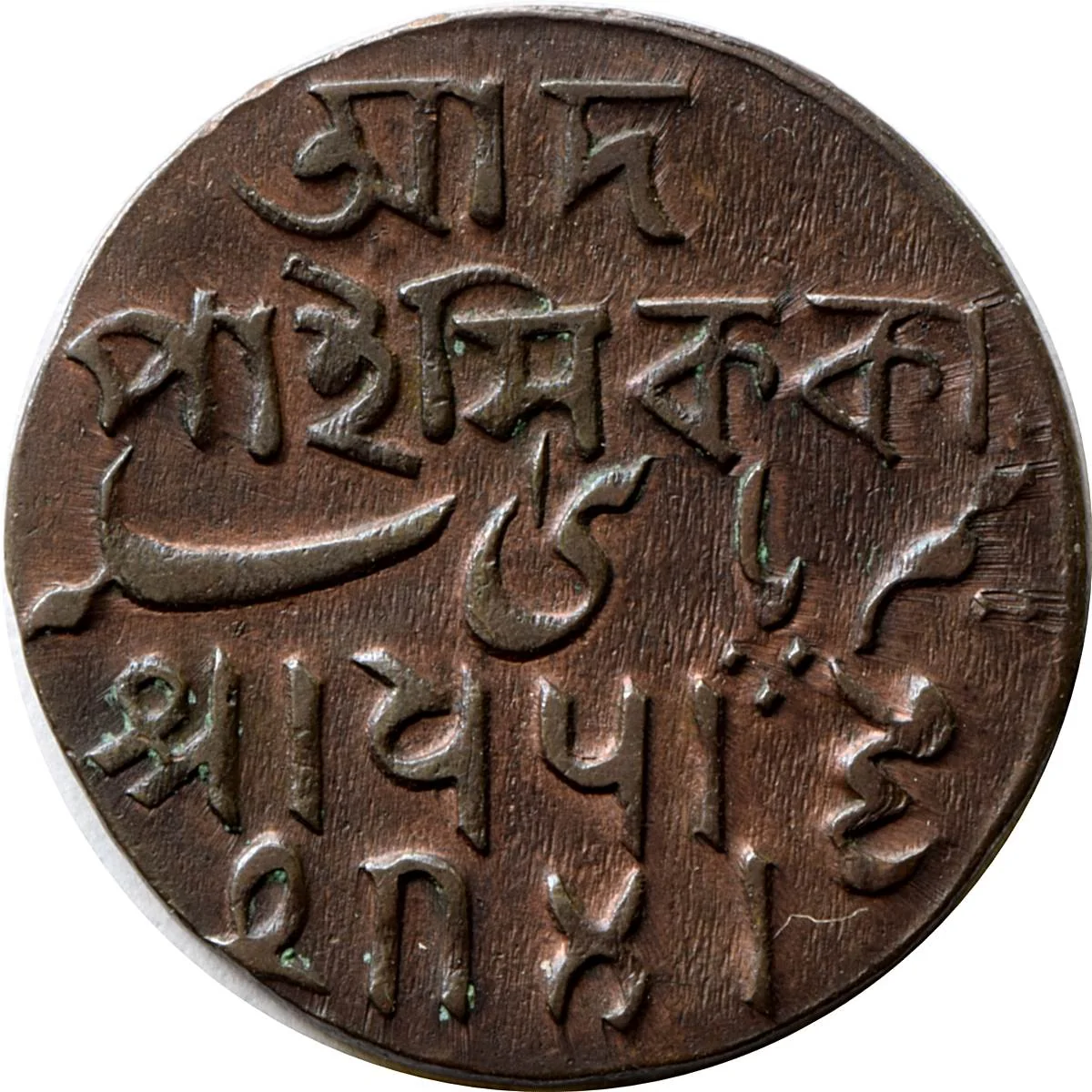
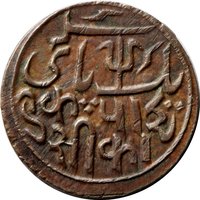
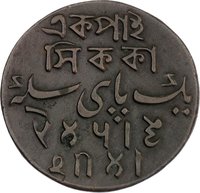
Reverse
Description:
Value in three languages: Bengali/Devnagari: Aadha pai sikka. Persian: Ad pai sikka.
Inscription:
আধ পাই সিককা
आध पाई सीका
आध पाई सीका
Edge
Plain
Mintings
| Year | Mint Mark | Mintage | Quality | Collection |
|---|---|---|---|---|
| 1796 | — | — |
Historical background
In 1796, the Bengal Presidency of the British East India Company was grappling with a profound and chaotic currency crisis, a direct legacy of its territorial conquests. The monetary system was a complex and inefficient patchwork of local and imported coins. The primary silver rupee, the Sicca, circulated alongside many older, worn Mughal rupees and a multitude of regional coins, all with varying weights and intrinsic values. This created rampant confusion, facilitated widespread forgery, and hindered commercial transactions. Furthermore, the Company's own attempts to standardize currency through the Calcutta Mint were undermined by a critical shortage of precious metals, especially silver, which was being drained from Bengal to finance the Company's costly wars in Mysore and the Carnatic.
The crisis was exacerbated by the Company's own fiscal policies and the activities of private traders. A thriving business in "coin clipping" (shaving metal from coins) and counterfeiting eroded public trust in the currency. Simultaneously, European private traders and Company officials were illegally exporting large quantities of silver bullion and specie to China to pay for tea, further starving the Bengal economy of its monetary base. This drain, combined with the high cost of military campaigns, led to severe deflationary pressures and a scarcity of usable, trustworthy coin, crippling both revenue collection and everyday trade.
Recognizing the crisis as a threat to its revenue and commercial stability, the Company was on the verge of decisive action. The period around 1796 was a pivotal moment of diagnosis and planning, which would culminate in the major recoinage reform of 1799. The proposed solution was to demonetize the old, variable coins and introduce a uniform, machine-struck silver rupee—the "Company Rupee"—to be the sole legal tender. Thus, 1796 represents the tense climax of a deteriorating monetary order, setting the stage for the Company to impose a standardized, centralized currency system as an essential tool of colonial economic control.
The crisis was exacerbated by the Company's own fiscal policies and the activities of private traders. A thriving business in "coin clipping" (shaving metal from coins) and counterfeiting eroded public trust in the currency. Simultaneously, European private traders and Company officials were illegally exporting large quantities of silver bullion and specie to China to pay for tea, further starving the Bengal economy of its monetary base. This drain, combined with the high cost of military campaigns, led to severe deflationary pressures and a scarcity of usable, trustworthy coin, crippling both revenue collection and everyday trade.
Recognizing the crisis as a threat to its revenue and commercial stability, the Company was on the verge of decisive action. The period around 1796 was a pivotal moment of diagnosis and planning, which would culminate in the major recoinage reform of 1799. The proposed solution was to demonetize the old, variable coins and introduce a uniform, machine-struck silver rupee—the "Company Rupee"—to be the sole legal tender. Thus, 1796 represents the tense climax of a deteriorating monetary order, setting the stage for the Company to impose a standardized, centralized currency system as an essential tool of colonial economic control.
💎 Very Rare