

1 Crown – England
United Kingdom
Context
Years: 1667–1671
Country: United Kingdom 
Issuer: England 
Ruler: Charles II
Currency:
(1158—1970)
Demonetized: Yes
Material
References
KM: #Click to copy to clipboard422.3
Numista: #53766
Value
Bullion value: $80.90
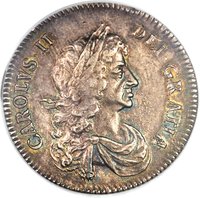
Obverse
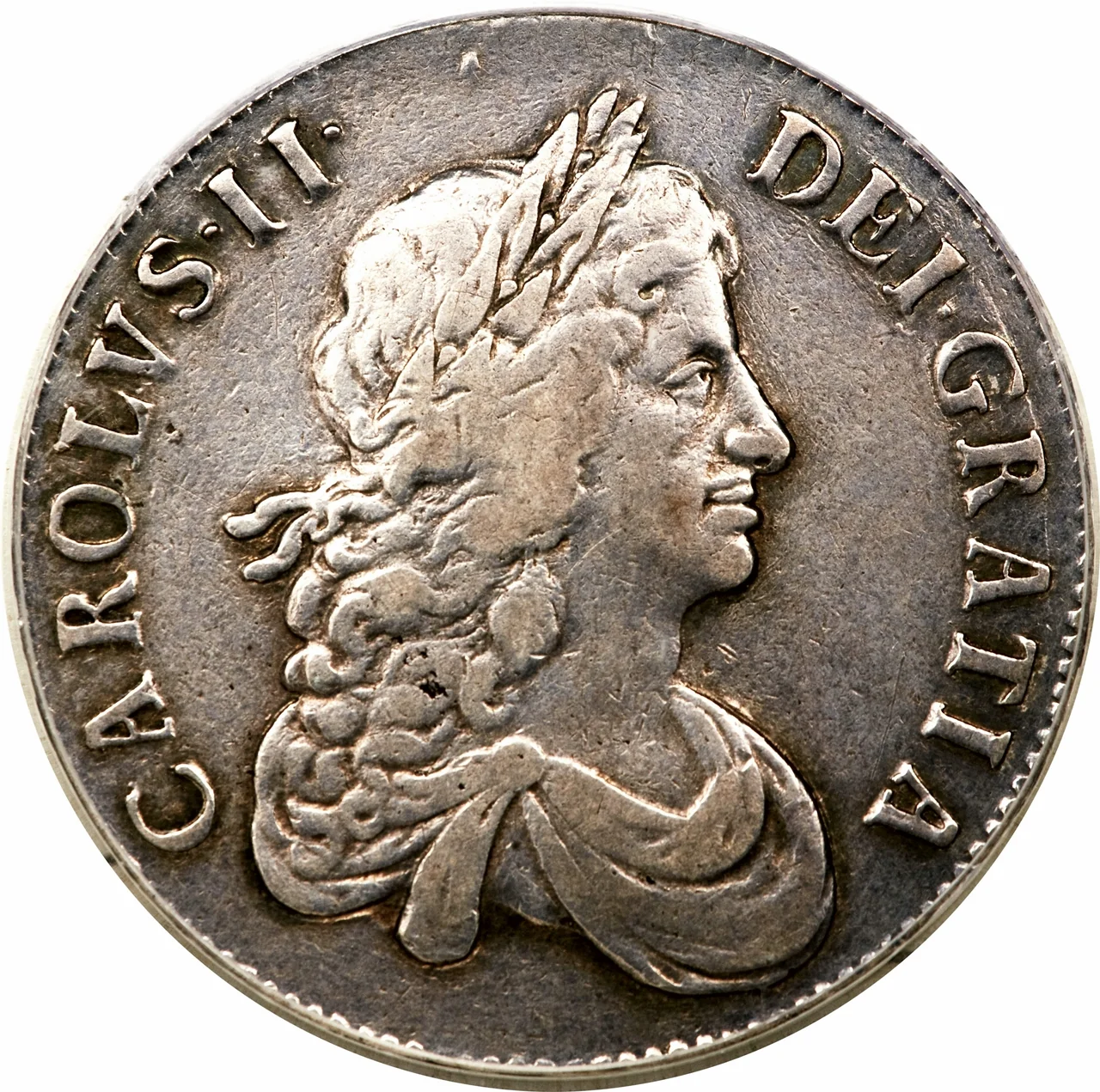
Description:
Second laureate, draped bust of Charles II right, legend surrounding.
Inscription:
CAROLVS·II· DEI·GRATIA
Script: Latin
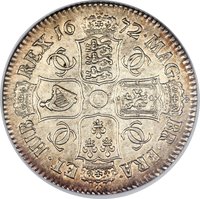
Reverse
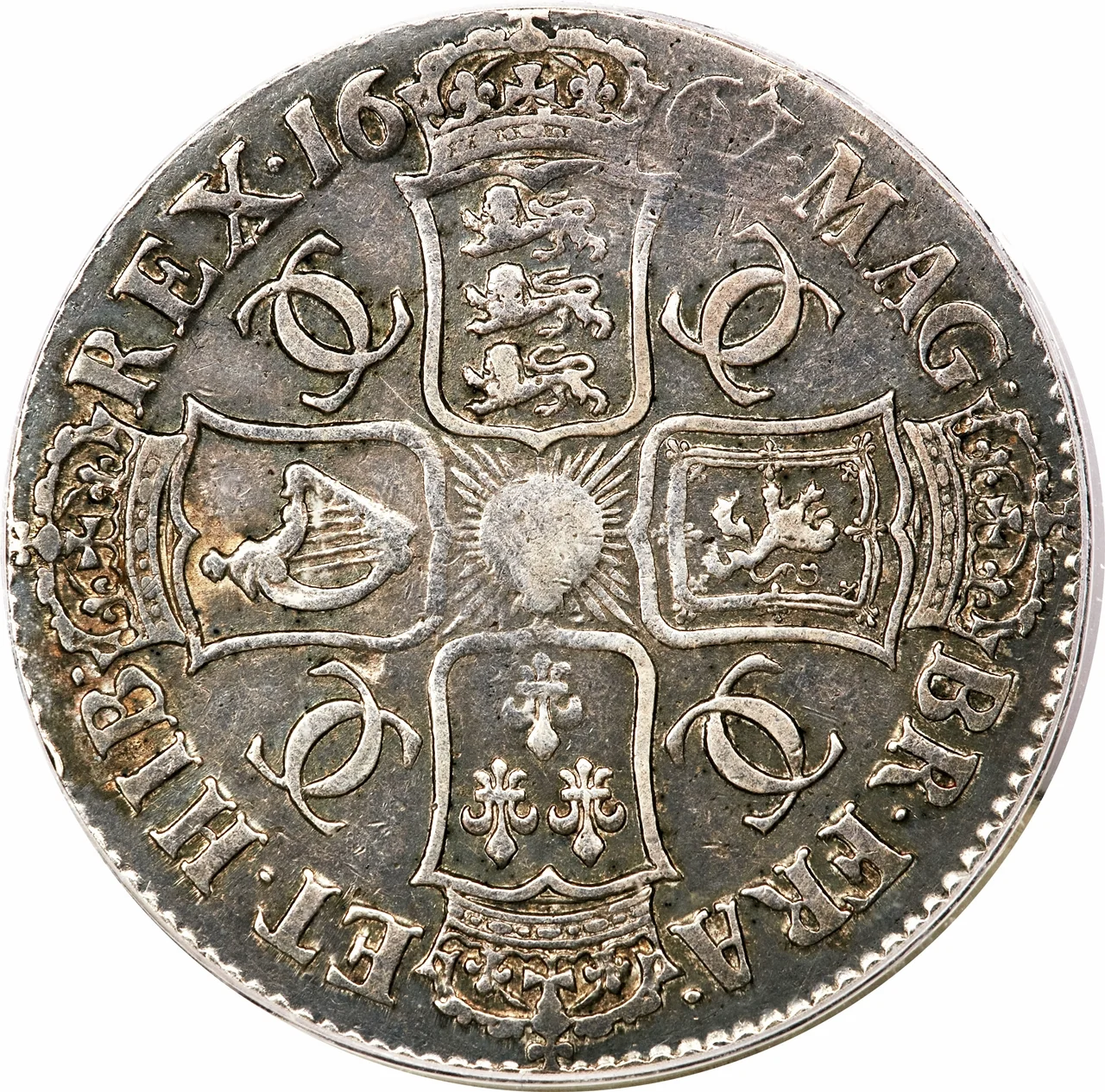
Description:
Crowned shields flank central Garter star, interlinked C's in angles, date above, legend around.
Inscription:
MAG· BR·FRA· ET·HIB· REX·1667·
Script: Latin
Edge
Regnal year in Latin
Legend:
DECIMO NONO
Mintings
| Year | Mint Mark | Mintage | Quality | Collection |
|---|---|---|---|---|
| 1667 | — | — | ||
| 1668 | — | — | ||
| 1669 | — | — | ||
| 1670 | — | — | ||
| 1671 | — | — |
Historical background
In 1667, England’s currency was predominantly silver-based, centred on the hammered silver coinage of the realm—the shilling, crown, and penny. However, this system was in a state of severe crisis. The coins in circulation were heavily degraded through decades of clipping and wear, reducing their intrinsic silver content well below their official face value. This created a fundamental economic instability: good, full-weight coins were hoarded or melted down for their bullion, while only the poor, lightweight coins remained in everyday use, a classic example of Gresham’s Law ("bad money drives out good"). Consequently, public confidence in the currency was low, and trade was hampered by disputes over the actual value of the coinage.
This monetary decay was a direct legacy of the Civil War and the expensive Anglo-Dutch War (1665-1667), which had drained the Exchequer. The government of King Charles II, led by Lord Treasurer Thomas Clifford and Chancellor of the Exchequer George Downing, recognised that the chaotic currency was stifling commerce and state revenue. A major catalyst for action came in June 1667 with the Dutch Raid on the Medway, a humiliating naval defeat that exposed England’s financial and military vulnerability. This event underscored the urgent need for fiscal and monetary reform to stabilise the nation’s finances and restore its credit.
The situation in 1667 was therefore a critical juncture, setting the stage for the Great Recoinage of 1696 under a later government. While the immediate response in 1667 was limited, the year’s events intensified the debate that would eventually lead to the mechanised production of milled coins with raised edges to prevent clipping. The monetary instability also contributed to the broader financial innovations of the period, including the founding of the Bank of England in 1694, as the state sought more sophisticated ways to manage debt and secure a stable circulating medium.
This monetary decay was a direct legacy of the Civil War and the expensive Anglo-Dutch War (1665-1667), which had drained the Exchequer. The government of King Charles II, led by Lord Treasurer Thomas Clifford and Chancellor of the Exchequer George Downing, recognised that the chaotic currency was stifling commerce and state revenue. A major catalyst for action came in June 1667 with the Dutch Raid on the Medway, a humiliating naval defeat that exposed England’s financial and military vulnerability. This event underscored the urgent need for fiscal and monetary reform to stabilise the nation’s finances and restore its credit.
The situation in 1667 was therefore a critical juncture, setting the stage for the Great Recoinage of 1696 under a later government. While the immediate response in 1667 was limited, the year’s events intensified the debate that would eventually lead to the mechanised production of milled coins with raised edges to prevent clipping. The monetary instability also contributed to the broader financial innovations of the period, including the founding of the Bank of England in 1694, as the state sought more sophisticated ways to manage debt and secure a stable circulating medium.
💎 Very Rare