

1 Crown – England
United Kingdom
Context
Year: 1662
Country: United Kingdom 
Issuer: England 
Ruler: Charles II
Currency:
(1158—1970)
Demonetized: Yes
Material
References
KM: #Click to copy to clipboard417.4
Numista: #53763
Value
Bullion value: $78.37
Obverse
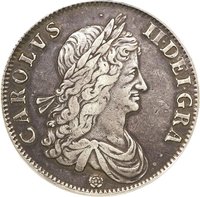
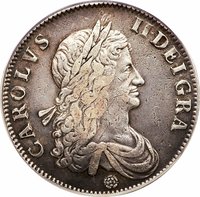
Description:
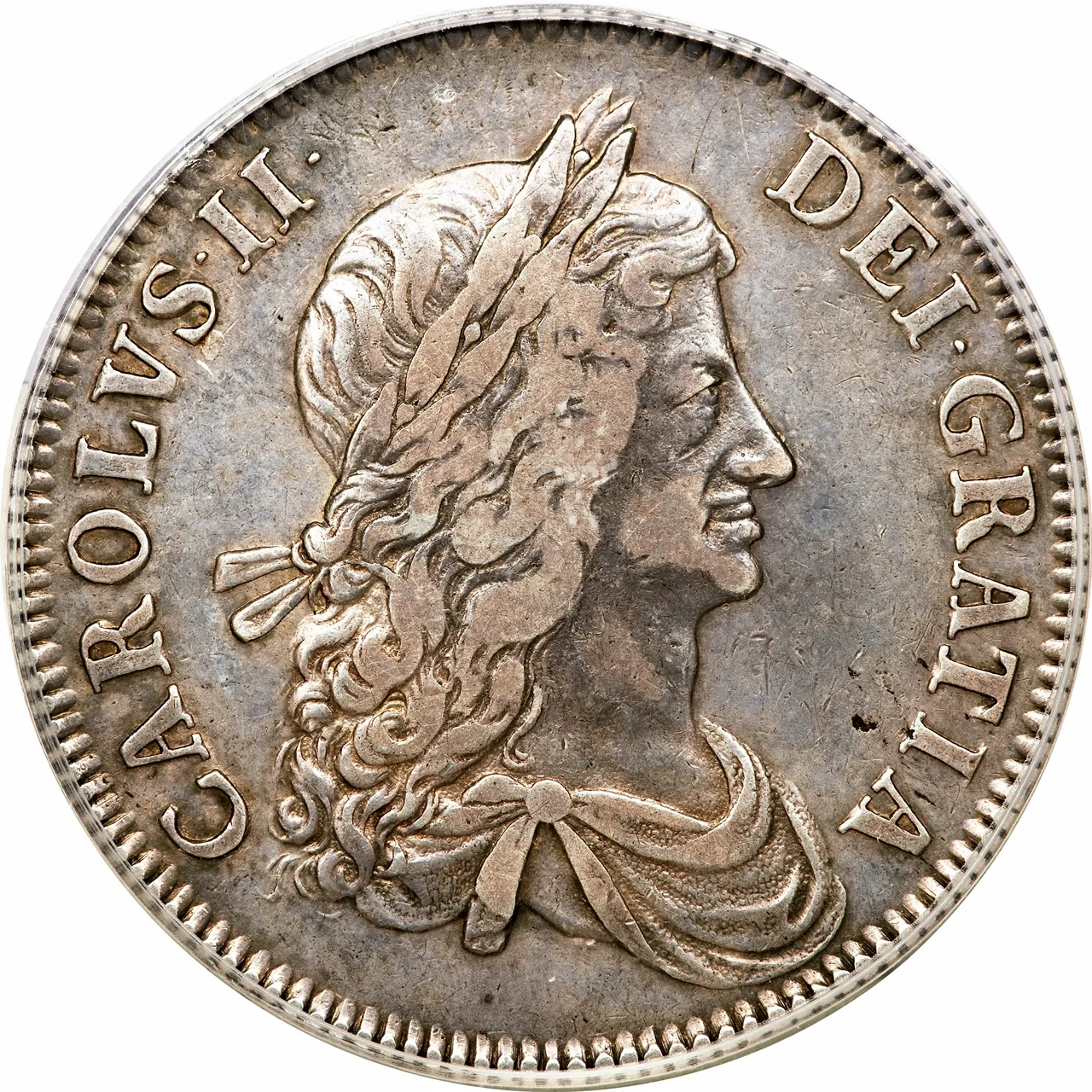
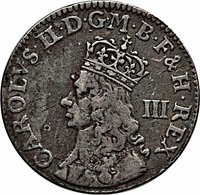
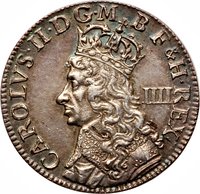
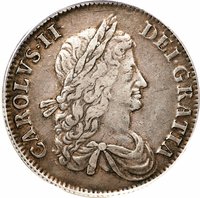
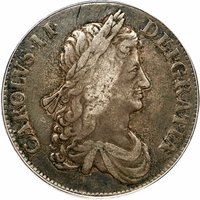
First laureate and draped bust of Charles II right, legend surrounding.
Inscription:
CAROLVS·II· DEI·GRATIA
Script: Latin
Reverse
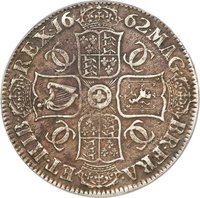
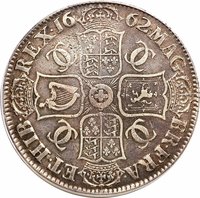
Description:
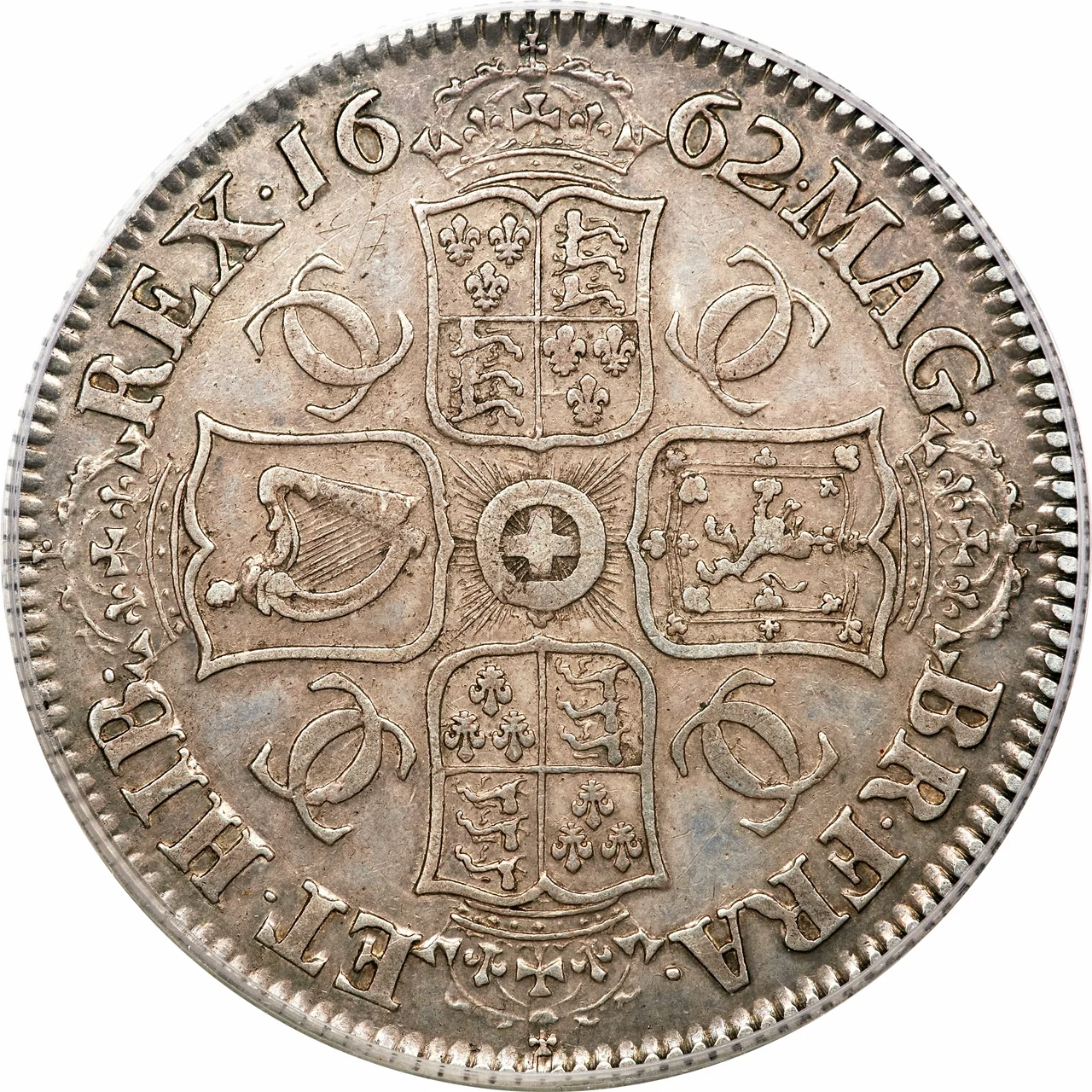
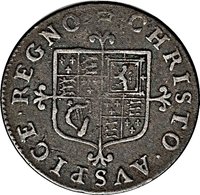
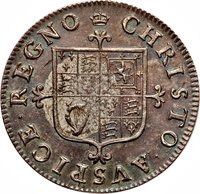
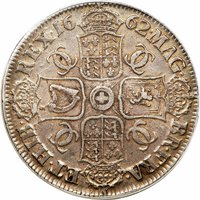
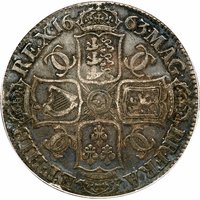
Crowned shields flank central Garter star, interlinked C's in angles, date above, legend around.
Inscription:
MAG· BR·FRA· ET·HIB· REX·1662·
Script: Latin
Edge
Plain
Mintings
| Year | Mint Mark | Mintage | Quality | Collection |
|---|---|---|---|---|
| 1662 | — | — |
Historical background
In 1662, England’s currency was in a state of significant transition and disorder, caught between medieval practices and the demands of a growing commercial economy. The primary issue was the widespread physical degradation of the nation's silver coinage. For decades, coins had been clipped (the edges shaved off) and filed, while many older, worn, and lightweight coins remained in circulation alongside newer ones. This created a system where coins were valued not by their face value but by their actual weight in silver, leading to complex calculations and rampant fraud. Furthermore, the official mint price for silver bullion was set too low, discouraging people from bringing precious metal to be coined and exacerbating the shortage of sound money.
The situation was economically corrosive. The poor state of the coinage undermined both domestic trade and England’s international standing. Merchants and foreign traders, distrusting the lightweight English shillings and crowns, demanded a premium for transactions, effectively causing exchange rates to fall. This monetary instability occurred against a backdrop of post-Restoration optimism following Charles II’s return to the throne in 1660. The Crown and government recognized that a modernizing economy, expanding global trade, and the state’s own need for reliable revenue to fund the navy and administration were all hampered by a discredited currency.
Consequently, 1662 fell within a period of intense scrutiny and debate that would ultimately lead to major reform. While the Great Recoinage of 1696 under Isaac Newton is more famous, the groundwork was laid in these earlier decades. In 1662, a key technological advancement was introduced: the mint began using machinery to produce "milled" coins with inscribed edges, making clipping immediately apparent. Although initially produced in limited quantities alongside the old hammered coinage, these new coins, featuring the iconic image of Britannia, represented the future. They symbolised the state’s growing commitment to asserting control over the monetary system, a necessary precursor to the financial revolution that would follow.
The situation was economically corrosive. The poor state of the coinage undermined both domestic trade and England’s international standing. Merchants and foreign traders, distrusting the lightweight English shillings and crowns, demanded a premium for transactions, effectively causing exchange rates to fall. This monetary instability occurred against a backdrop of post-Restoration optimism following Charles II’s return to the throne in 1660. The Crown and government recognized that a modernizing economy, expanding global trade, and the state’s own need for reliable revenue to fund the navy and administration were all hampered by a discredited currency.
Consequently, 1662 fell within a period of intense scrutiny and debate that would ultimately lead to major reform. While the Great Recoinage of 1696 under Isaac Newton is more famous, the groundwork was laid in these earlier decades. In 1662, a key technological advancement was introduced: the mint began using machinery to produce "milled" coins with inscribed edges, making clipping immediately apparent. Although initially produced in limited quantities alongside the old hammered coinage, these new coins, featuring the iconic image of Britannia, represented the future. They symbolised the state’s growing commitment to asserting control over the monetary system, a necessary precursor to the financial revolution that would follow.
Series: 1662 England circulation coins
✨ Legendary