

1 Crown – England
United Kingdom
Context
Years: 1671–1680
Country: United Kingdom 
Issuer: England 
Ruler: Charles II
Currency:
(1158—1970)
Demonetized: Yes
Material
References
KM: #Click to copy to clipboard435
Numista: #53756
Value
Bullion value: $79.15
Obverse
Description:
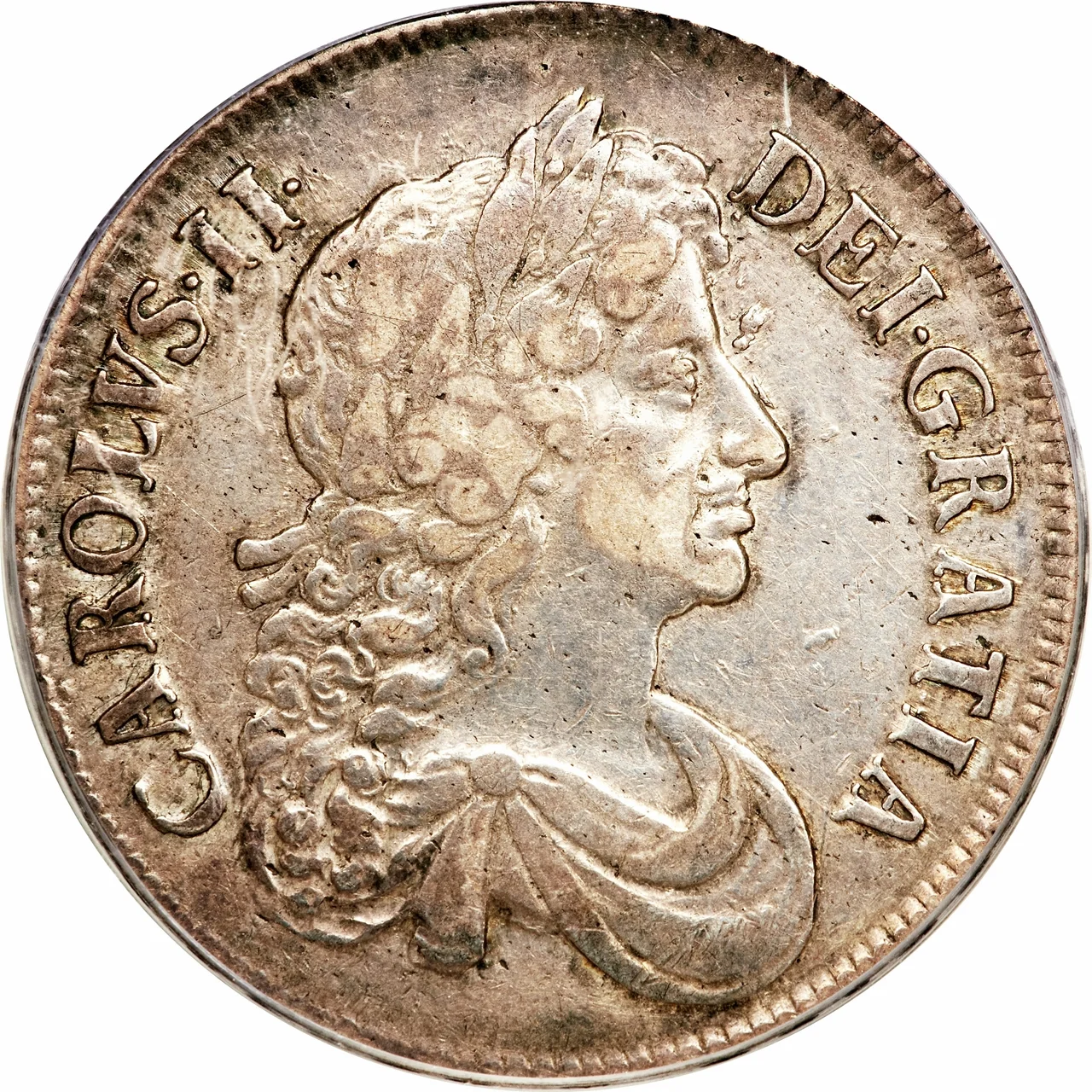
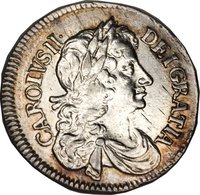
Third laureate, draped bust of Charles II right, legend around. Larger and broader than second bust, hair tie nearly straight.
Inscription:
CAROLVS·II· DEI·GRATIA
Script: Latin
Reverse
Description:
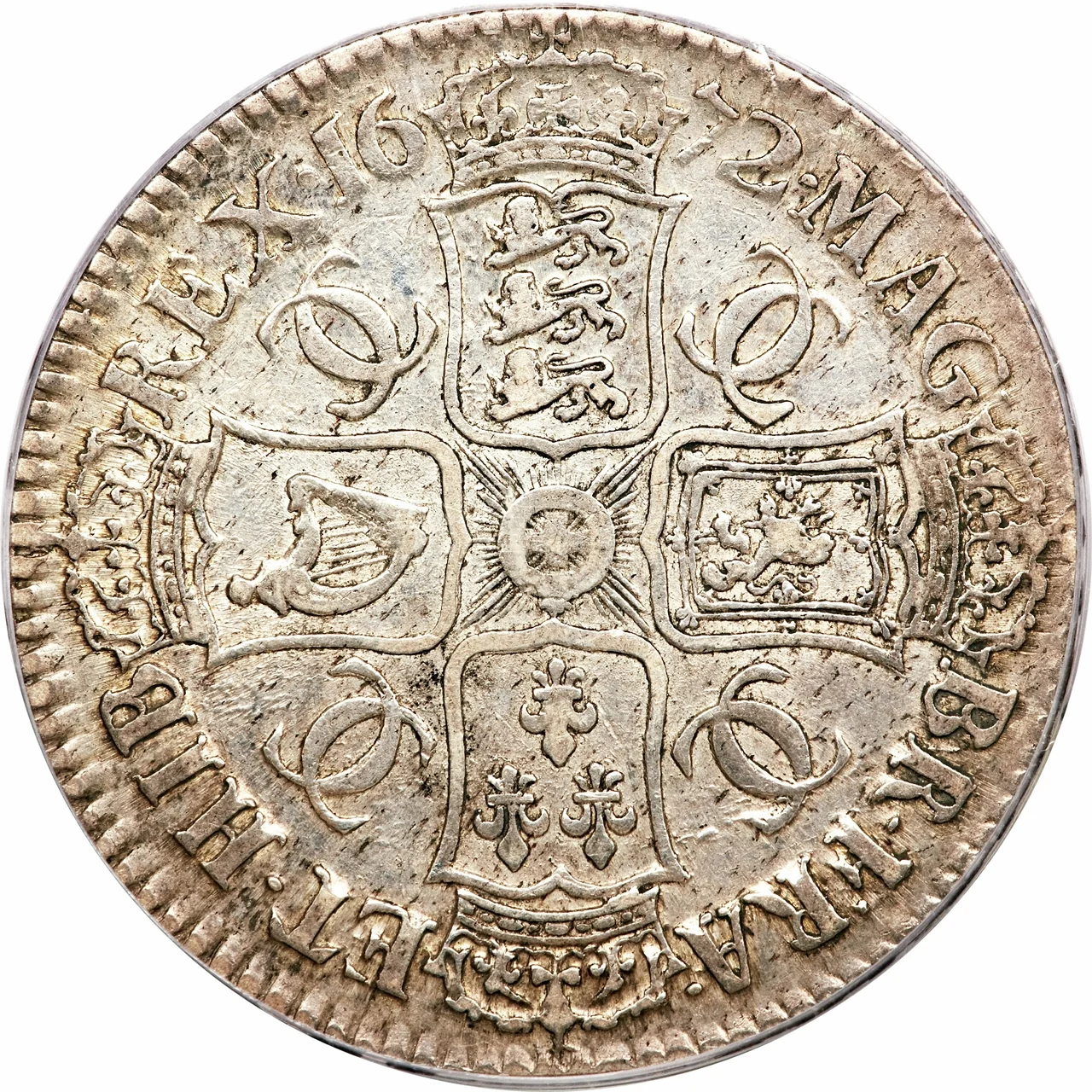
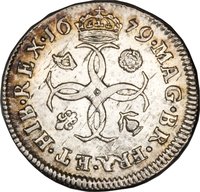
Crowned shields flank central Garter star, interlinked C's in angles, date above, legend around.
Inscription:
MAG· BR·FRA· ET·HIB REX·16 72·
Script: Latin
Edge
Regnal year in Latin
Legend:
VICESIMO QVARTO
Mintings
| Year | Mint Mark | Mintage | Quality | Collection |
|---|---|---|---|---|
| 1671 | — | — | ||
| 1672 | — | — | ||
| 1673 | — | — | ||
| 1674 | — | — | ||
| 1675 | — | — | ||
| 1676 | — | — | ||
| 1677 | — | — | ||
| 1678 | — | — | ||
| 1679 | — | — | ||
| 1680 | — | — |
Historical background
In 1671, England's currency system was in a state of significant strain and transition, operating under a bimetallic standard of silver and gold. The core problem was the widespread clipping and counterfeiting of silver coinage, particularly the silver shillings that formed the backbone of everyday commerce. Years of wear and clipping had reduced the average weight of coins in circulation well below their official face value, creating a gap between their nominal and intrinsic metal worth. This led to Gresham's Law in action: "bad" underweight coins drove "good," full-weight coins out of circulation, as people hoarded or exported the latter for their bullion value. The result was a degraded and untrustworthy medium of exchange that hampered trade and provoked public anxiety.
The situation was exacerbated by the official mint price for silver bullion being set too low compared to market prices in other European countries. This made it unprofitable for merchants or bullion dealers to bring silver to the Royal Mint for coining, starving the system of new, high-quality money. Consequently, the recoinage efforts of the early 1660s under the newly restored King Charles II—which had introduced milled edges to prevent clipping—had failed to solve the systemic issue. By 1671, the shortage of sound currency was acute, and the government, led by Lord Treasurer Thomas Osborne, the Earl of Danby, was under increasing pressure to act, though a comprehensive solution remained elusive.
This monetary crisis set the stage for the Great Recoinage of 1696, but in 1671, the authorities were still grappling with stopgap measures. The Crown was deeply in debt from the Anglo-Dutch Wars, limiting its fiscal capacity for a major recoinage. Discussions focused on the need to recall and remint all hammered silver coinage, but the enormous cost—estimated at hundreds of thousands of pounds—and the complex question of who should bear the loss (the state or the holders of the bad coins) caused paralysis. Thus, 1671 represents a pivotal year of mounting crisis, where the flaws of the old monetary system were glaringly apparent, yet the political will and financial means for a definitive remedy were still being painfully assembled.
The situation was exacerbated by the official mint price for silver bullion being set too low compared to market prices in other European countries. This made it unprofitable for merchants or bullion dealers to bring silver to the Royal Mint for coining, starving the system of new, high-quality money. Consequently, the recoinage efforts of the early 1660s under the newly restored King Charles II—which had introduced milled edges to prevent clipping—had failed to solve the systemic issue. By 1671, the shortage of sound currency was acute, and the government, led by Lord Treasurer Thomas Osborne, the Earl of Danby, was under increasing pressure to act, though a comprehensive solution remained elusive.
This monetary crisis set the stage for the Great Recoinage of 1696, but in 1671, the authorities were still grappling with stopgap measures. The Crown was deeply in debt from the Anglo-Dutch Wars, limiting its fiscal capacity for a major recoinage. Discussions focused on the need to recall and remint all hammered silver coinage, but the enormous cost—estimated at hundreds of thousands of pounds—and the complex question of who should bear the loss (the state or the holders of the bad coins) caused paralysis. Thus, 1671 represents a pivotal year of mounting crisis, where the flaws of the old monetary system were glaringly apparent, yet the political will and financial means for a definitive remedy were still being painfully assembled.
⭐ Somewhat Rare