

4 ore – Sweden
Add to wishlist
Sweden
Context
Year: 1777
Issuer: Sweden
Ruler: Gustav III
Currency:
(1719—1798)
Demonetized: Yes
Total mintage: 1,216,536
Material
References
KM: #
Numista: #53731
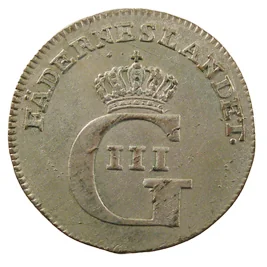
Obverse
Description:
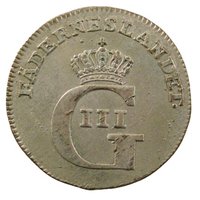
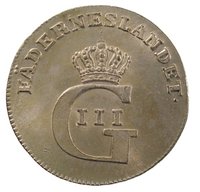
King Gustav III's crowned monogram with his motto above.
Inscription:
FÄDERNESLANDET·
GIII
GIII
Script: Latin
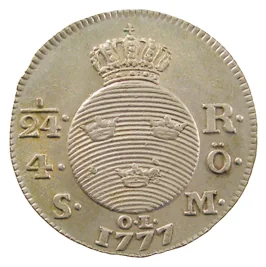
Reverse
Description:
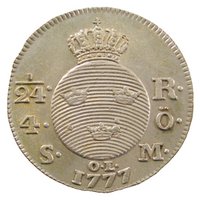
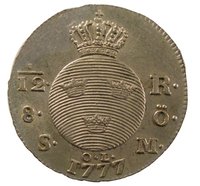
Swedish three-crowned orb. Double value on sides; date and mintmark below.
Inscription:
1/24· R·
4· Ö·
S· M·
O·L
1777
4· Ö·
S· M·
O·L
1777
Script: Latin
Edge
Plain
Mintings
| Year | Mint Mark | Mintage | Quality | Collection |
|---|---|---|---|---|
| 1777 | OL | 1,216,536 |
Historical background
In 1777, Sweden was navigating a complex monetary landscape shaped by decades of war, political upheaval, and economic experimentation. The dominant currency was the Riksdaler Riksmynt, a silver-based coin established in 1776 to bring order to a chaotic system. However, it coexisted with a parallel and deeply problematic currency: the Riksgälds Sedlar, or Treasury notes, first issued in 1745 to finance wars. These paper notes were not backed by sufficient silver reserves, leading to chronic depreciation and a severe loss of public confidence. The result was a dual system where goods had one price in precious metal and a much higher, fluctuating price in paper money, causing significant economic distortion and hardship for the common people.
This instability was a direct legacy of the "Age of Liberty" (1719–1772) and the more recent 1772 coup by King Gustav III. The previous ruling Riksdag (parliament) had heavily relied on printing paper money to fund state expenditures, especially during the costly Seven Years' War. By 1777, the overabundance of Riksgälds Sedlar had caused their value to plummet to roughly half their face value in silver. Gustav III, seeking to consolidate royal power and stabilize the nation, recognized that monetary reform was essential for economic recovery and state credibility. The creation of the Riksdaler Riksmynt in 1776 was his first major step toward establishing a stable silver standard.
Thus, the currency situation in 1777 was one of transition and tension. While the new silver daler provided a foundation for future stability, the kingdom remained burdened by a massive overhang of discredited paper money. Gustav III's government faced the delicate task of managing this depreciating paper while promoting the use of solid coin, all without triggering a complete financial collapse. The unresolved struggle between these two forms of money would continue to challenge the Swedish economy for years, underscoring the difficult path from wartime finance to peacetime fiscal responsibility.
This instability was a direct legacy of the "Age of Liberty" (1719–1772) and the more recent 1772 coup by King Gustav III. The previous ruling Riksdag (parliament) had heavily relied on printing paper money to fund state expenditures, especially during the costly Seven Years' War. By 1777, the overabundance of Riksgälds Sedlar had caused their value to plummet to roughly half their face value in silver. Gustav III, seeking to consolidate royal power and stabilize the nation, recognized that monetary reform was essential for economic recovery and state credibility. The creation of the Riksdaler Riksmynt in 1776 was his first major step toward establishing a stable silver standard.
Thus, the currency situation in 1777 was one of transition and tension. While the new silver daler provided a foundation for future stability, the kingdom remained burdened by a massive overhang of discredited paper money. Gustav III's government faced the delicate task of managing this depreciating paper while promoting the use of solid coin, all without triggering a complete financial collapse. The unresolved struggle between these two forms of money would continue to challenge the Swedish economy for years, underscoring the difficult path from wartime finance to peacetime fiscal responsibility.
⭐ Rare