

1 escudo – New Spain
Add to wishlist
Mexico
Context
Years: 1789–1790
Country: Mexico
Issuer: New Spain
Ruler: Charles IV
Currency:
(1535—1897)
Demonetized: Yes
Material
References
KM: #
Numista: #53726
Value
Bullion value: $453.73
Obverse
Description:
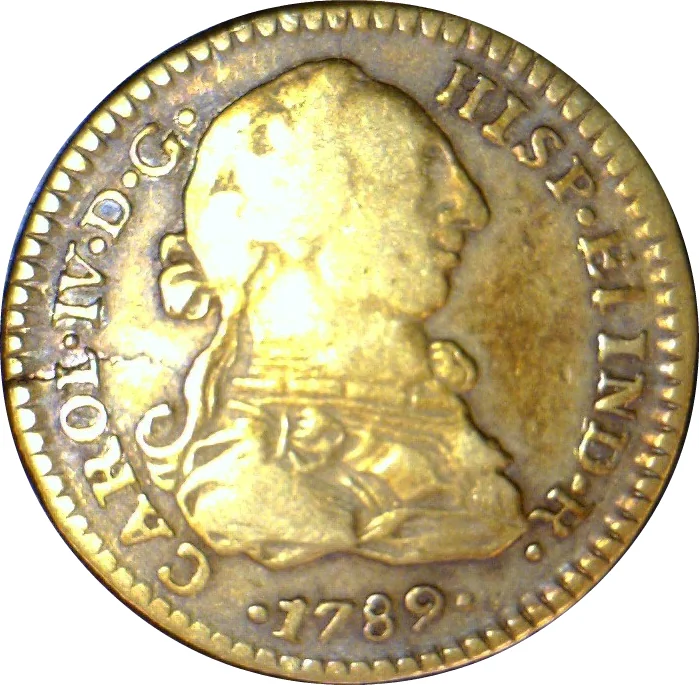
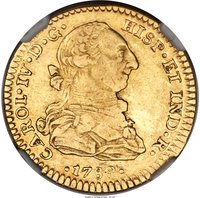
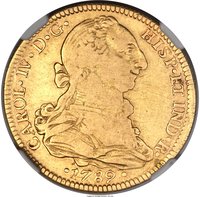
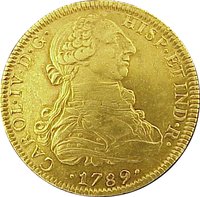
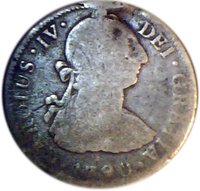
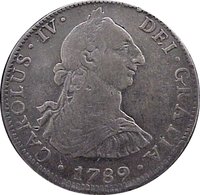
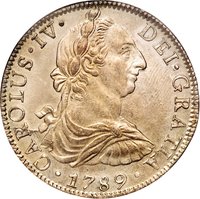
Armored bust of Carlos III facing right, with legend and date below. Note: Uses old die.
Inscription:
HISP * ET IND * R
CAROL * IV * D * G *
CAROL * IV * D * G *
Script: Latin
Reverse
Description:
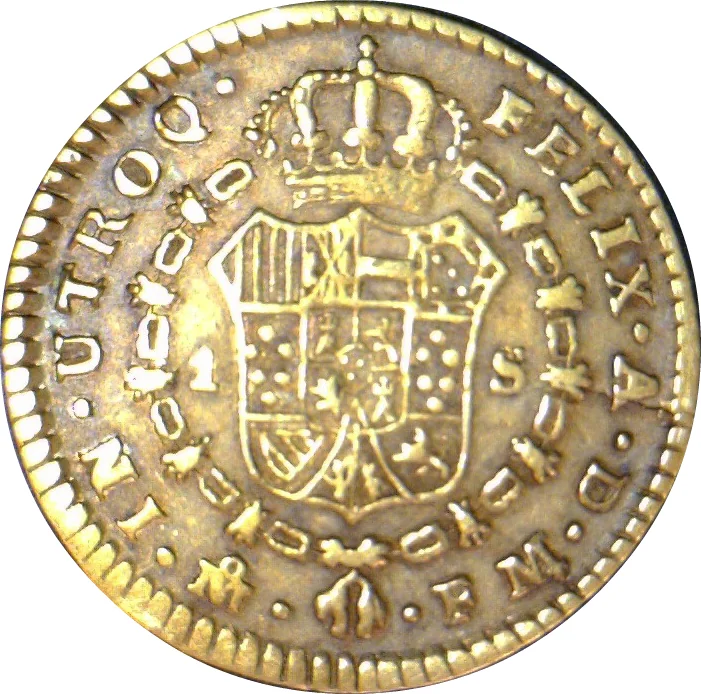
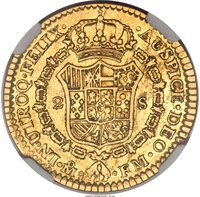
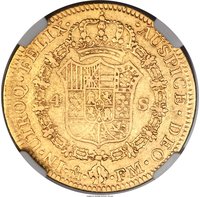
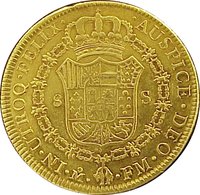
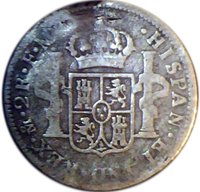
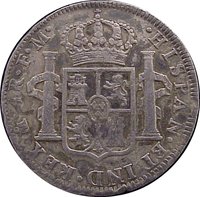
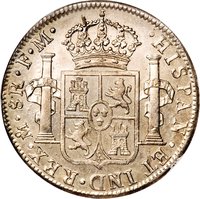
Shield with crown, encircled by chain; outer ring bears legend, upright mint mark and assayer's initials.
Inscription:
IN UTROQ FELIX * A * D
Script: Latin
Edge
Mintings
| Year | Mint Mark | Mintage | Quality | Collection |
|---|---|---|---|---|
| 1789 | FM | — | ||
| 1790 | FM | — |
Historical background
In 1789, the currency system of New Spain (modern-day Mexico and the southwestern United States) was a complex and often problematic bimetallic system inherited from Spain. The primary circulating coins were silver reales and gold escudos, minted at the Mexico City Mint—the oldest and most prolific mint in the Americas. The most famous and trusted coin was the silver peso de ocho (piece of eight), valued at 8 reales, which served as a de facto global currency for international trade. However, the system suffered from a chronic shortage of small-denomination coins for everyday transactions, leading to the widespread use of cut or "clipped" coins, crude tokens, and even cacao beans in local markets.
This scarcity was exacerbated by the Crown's monetary policies, which prioritized the extraction of silver bullion for Spain's benefit, often draining the colony of its circulating currency. Furthermore, the official fixed ratio between gold and silver values did not always reflect market realities, leading to the hoarding or export of one metal when it was undervalued. Counterfeiting was also a persistent issue, undermining public trust. While the Bourbon Reforms of the late 18th century aimed to modernize the empire's administration, tangible reforms to the coinage system in New Spain were still incremental by 1789.
The year 1789 itself fell within a period of transition. It was the year following the promulgation of the Real Ordenanza de Intendentes (1788), which aimed to centralize fiscal management, including mint operations. However, the fundamental structural issues remained. The colony's economy was booming due to silver mining, yet its currency circulation was inefficient and fragmented. This unstable foundation would contribute to the financial strains that, alongside other factors, fueled the movements for independence in the early 19th century.
This scarcity was exacerbated by the Crown's monetary policies, which prioritized the extraction of silver bullion for Spain's benefit, often draining the colony of its circulating currency. Furthermore, the official fixed ratio between gold and silver values did not always reflect market realities, leading to the hoarding or export of one metal when it was undervalued. Counterfeiting was also a persistent issue, undermining public trust. While the Bourbon Reforms of the late 18th century aimed to modernize the empire's administration, tangible reforms to the coinage system in New Spain were still incremental by 1789.
The year 1789 itself fell within a period of transition. It was the year following the promulgation of the Real Ordenanza de Intendentes (1788), which aimed to centralize fiscal management, including mint operations. However, the fundamental structural issues remained. The colony's economy was booming due to silver mining, yet its currency circulation was inefficient and fragmented. This unstable foundation would contribute to the financial strains that, alongside other factors, fueled the movements for independence in the early 19th century.
Series: 1789 New Spain circulation coins
✨ Legendary