

4 reales – New Spain
Add to wishlist
Mexico
Context
Years: 1792–1808
Country: Mexico
Issuer: New Spain
Ruler: Charles IV
Currency:
(1535—1897)
Demonetized: Yes
Material
References
KM: #
Numista: #53713
Value
Bullion value: $29.50
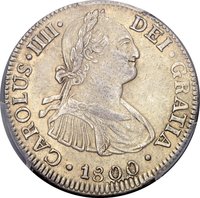
Obverse
Description:
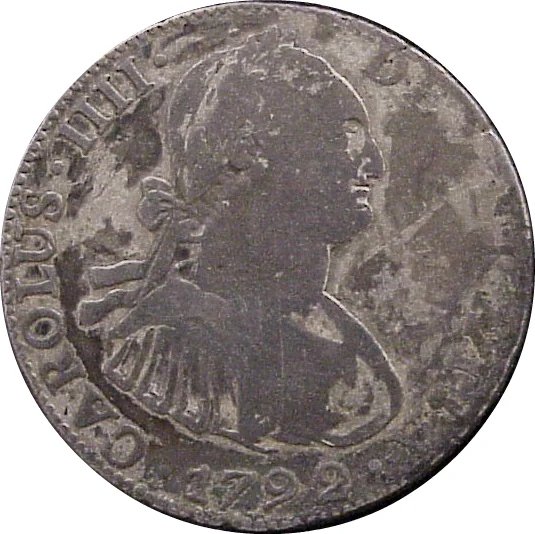
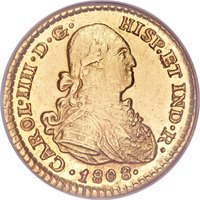
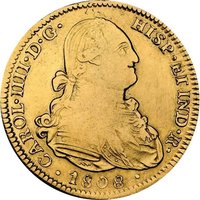
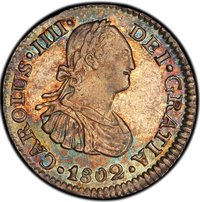
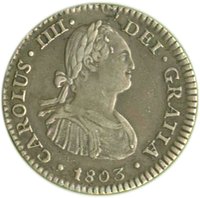
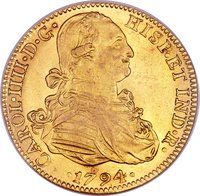
Carlos IV armored bust, facing right. Legend and date below.
Inscription:
DEI * GRATIA * CAROLUS * IIII
Script: Latin
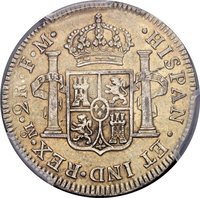
Reverse
Description:
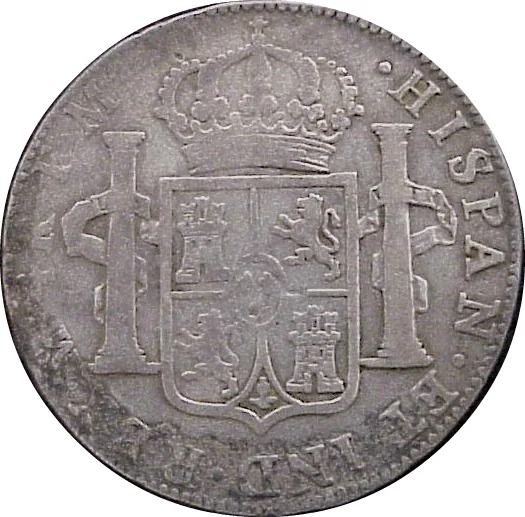
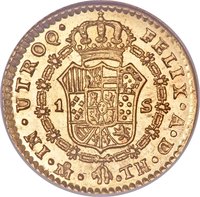
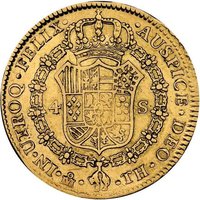
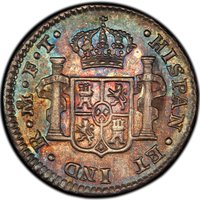
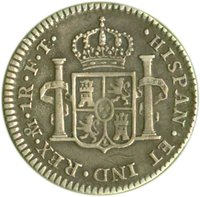
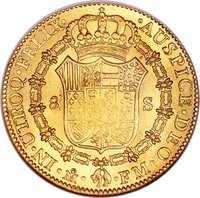
Shield between pillars, banner above. Encircled by text, value, mint mark, and initials.
Inscription:
* HISPAN * ET IND * REX * Mo * 4R * F * M
Script: Latin
Edge
Mints
| Name | Mark |
|---|---|
| Mexican Mint | — |
Mintings
| Year | Mint Mark | Mintage | Quality | Collection |
|---|---|---|---|---|
| 1792 | FM | — | ||
| 1793 | FM | — | ||
| 1794 | FM | — | ||
| 1795 | FM | — | ||
| 1796 | FM | — | ||
| 1797 | FM | — | ||
| 1798 | FM | — | ||
| 1799 | FM | — | ||
| 1800 | FM | — | ||
| 1801 | FM | — | ||
| 1801 | FT | — | ||
| 1802 | FT | — | ||
| 1803 | FM | — | ||
| 1803 | FT | — | ||
| 1804 | TH | — | ||
| 1805 | TH | — | ||
| 1806 | TH | — | ||
| 1807 | TH | — | ||
| 1808 | TH | — |
Historical background
In 1792, the currency system of New Spain (modern-day Mexico and the southwestern United States) was a complex and often problematic bimetallic system based on the Spanish colonial real. The primary circulating coins were silver reales, with the famous "piece of eight" (8 reales) serving as the cornerstone of both local and international trade. Gold escudos were also minted but were less common in everyday transactions. A significant challenge was the chronic shortage of small-denomination coinage (tlacos and pilones), which led to a reliance on unofficial tokens and credit notes issued by merchants and hacienda owners, creating a fragmented and inefficient local economy.
This monetary landscape existed under the direct control of the Spanish Crown through the Mexico City Mint, the oldest and most prolific mint in the Americas. The mint operated under a royal monopoly, and its substantial output of silver coins, sourced from rich mines like those in Zacatecas and Guanajuato, was crucial for financing the Spanish Empire. However, the system was strained by counterfeiting, the clipping and debasement of coins, and the constant outward flow of silver to Spain and the broader Atlantic world to pay for imports and imperial obligations, which drained the colony of its circulating medium.
The year 1792 itself was not one of major monetary reform but represented the tense calm before a storm. The Bourbon Reforms had aimed to increase fiscal efficiency, but the currency system's inherent weaknesses persisted. Within a few years, the outbreak of the Napoleonic Wars in Europe (1793) would severely disrupt Atlantic shipping and finance, exacerbating New Spain's coin shortages. Furthermore, the 1792 establishment of the First Bank of the United States and the Coinage Act adopting the dollar underscored a shift in the Atlantic economic order, foreshadowing the challenges to Spanish monetary dominance that would culminate in the independence era.
This monetary landscape existed under the direct control of the Spanish Crown through the Mexico City Mint, the oldest and most prolific mint in the Americas. The mint operated under a royal monopoly, and its substantial output of silver coins, sourced from rich mines like those in Zacatecas and Guanajuato, was crucial for financing the Spanish Empire. However, the system was strained by counterfeiting, the clipping and debasement of coins, and the constant outward flow of silver to Spain and the broader Atlantic world to pay for imports and imperial obligations, which drained the colony of its circulating medium.
The year 1792 itself was not one of major monetary reform but represented the tense calm before a storm. The Bourbon Reforms had aimed to increase fiscal efficiency, but the currency system's inherent weaknesses persisted. Within a few years, the outbreak of the Napoleonic Wars in Europe (1793) would severely disrupt Atlantic shipping and finance, exacerbating New Spain's coin shortages. Furthermore, the 1792 establishment of the First Bank of the United States and the Coinage Act adopting the dollar underscored a shift in the Atlantic economic order, foreshadowing the challenges to Spanish monetary dominance that would culminate in the independence era.
Series: 1792 New Spain circulation coins
💎 Very Rare