

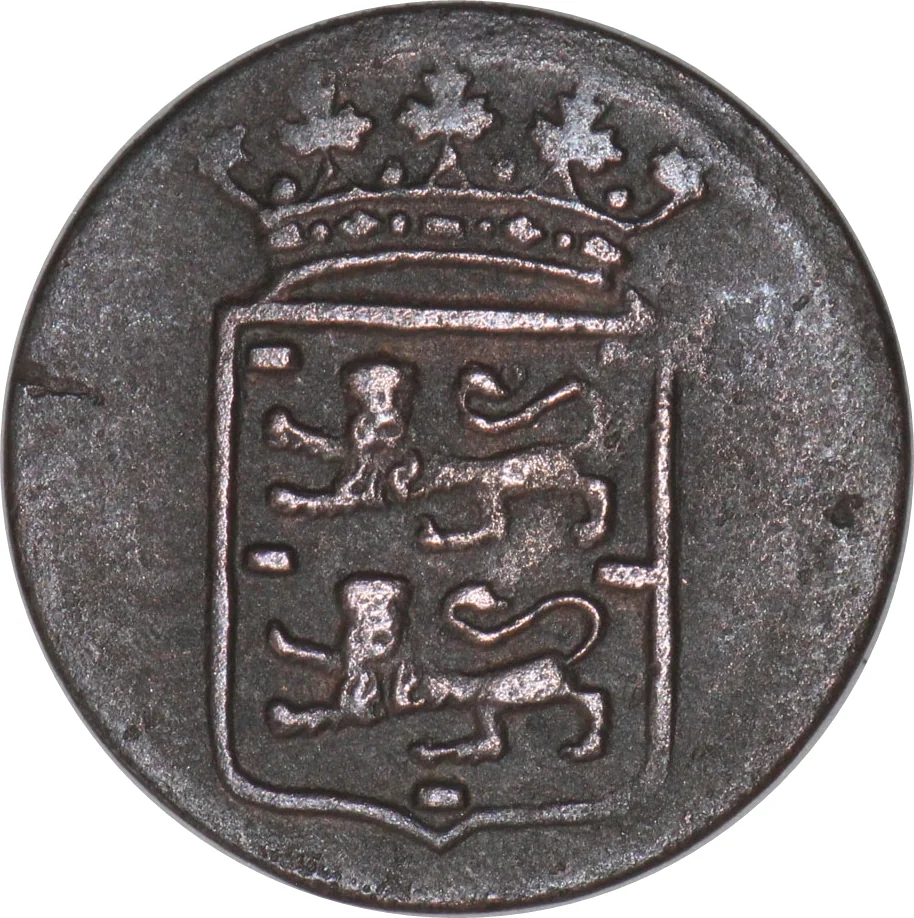
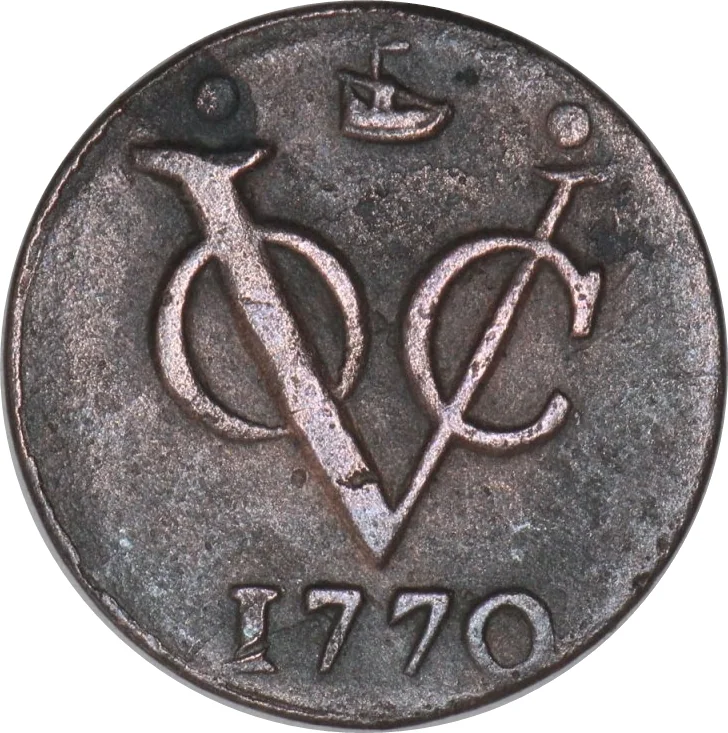
½ Duit – Netherlands East Indies
Indonesia
Context
Years: 1769–1770
Country: Indonesia 
Issuer: Netherlands East Indies
Period:
(1602—1800)
Currency:
(1726—1854)
Demonetized: Yes
Material
References
KM: #Click to copy to clipboard137
Numista: #53370
Obverse
Description:
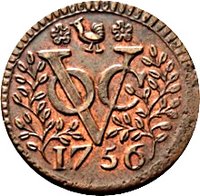
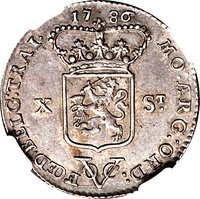
West Frisian coat of arms
Reverse
Edge
Plain
Mintings
| Year | Mint Mark | Mintage | Quality | Collection |
|---|---|---|---|---|
| 1769 | — | — | ||
| 1770 | — | — |
Historical background
In 1769, the currency system of the Netherlands East Indies (NEI) was a complex and problematic amalgamation of Dutch and Asian monetary traditions, dominated by the Vereenigde Oost-Indische Compagnie (VOC). The official currency was the Dutch guilder, but in practice, the most important circulating coin was the Dutch silver ducatoon, alongside a plethora of other foreign coins like Spanish American reales, Japanese koban, and various local tin and copper coins. This created a chaotic multi-currency environment where exchange rates fluctuated constantly, complicating both daily trade and the VOC's own accounting.
The core of the monetary crisis was a severe shortage of small-denomination coinage for everyday transactions. The VOC, focused on extracting wealth and financing its intra-Asian trade, consistently prioritized the import of high-value silver and gold while neglecting the supply of copper doits. This led to widespread use of fragmented coins, private token issues, and even commodity money at the local level. Furthermore, the VOC frequently debased its own coinage to generate short-term profit, eroding public trust and fueling inflation within the colony's trading hubs like Batavia.
Consequently, the year 1769 fell within a prolonged period of monetary instability that hampered economic development. The VOC's ineffective policies and the chronic small-change shortage created a disconnect between the high-finance of the Company and the real economy of the archipelago. This unresolved situation would persist for decades, ultimately requiring more systematic—though still imperfect—monetary reforms by the Dutch state in the early 19th century following the VOC's bankruptcy.
The core of the monetary crisis was a severe shortage of small-denomination coinage for everyday transactions. The VOC, focused on extracting wealth and financing its intra-Asian trade, consistently prioritized the import of high-value silver and gold while neglecting the supply of copper doits. This led to widespread use of fragmented coins, private token issues, and even commodity money at the local level. Furthermore, the VOC frequently debased its own coinage to generate short-term profit, eroding public trust and fueling inflation within the colony's trading hubs like Batavia.
Consequently, the year 1769 fell within a prolonged period of monetary instability that hampered economic development. The VOC's ineffective policies and the chronic small-change shortage created a disconnect between the high-finance of the Company and the real economy of the archipelago. This unresolved situation would persist for decades, ultimately requiring more systematic—though still imperfect—monetary reforms by the Dutch state in the early 19th century following the VOC's bankruptcy.
💎 Very Rare