

½ macuta – Angola
Add to wishlist
Angola
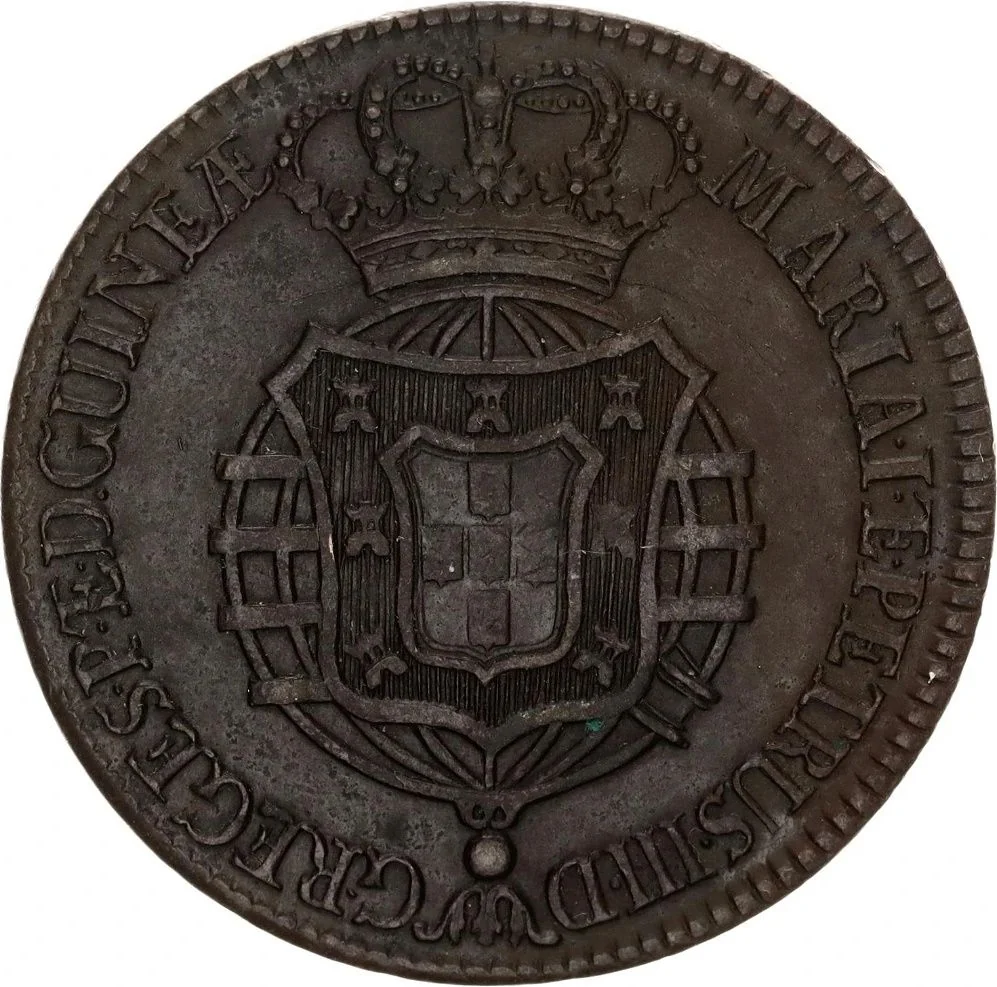
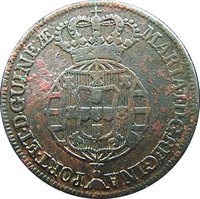
Obverse
Inscription:
MARIA·I·E·PETRUS·III·D·G·REGES··P·E·D·GUINEÆ·
Script: Latin
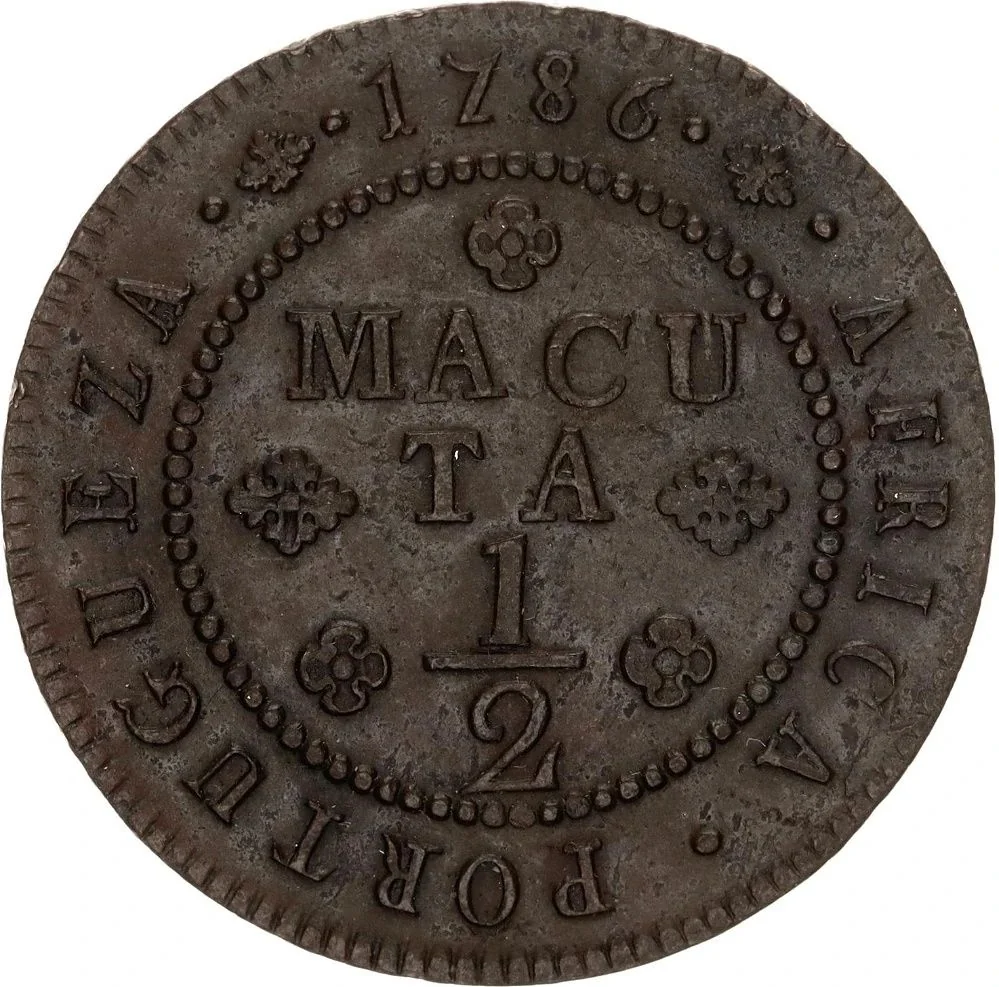
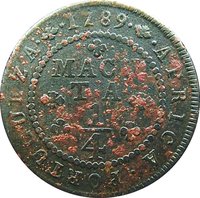
Reverse
Inscription:
AFRICA·PORTUGUEZA·1786
MACUTA
1/2
MACUTA
1/2
Script: Latin
Edge
Full
Mintings
| Year | Mint Mark | Mintage | Quality | Collection |
|---|---|---|---|---|
| 1785 | — | 154,186 | ||
| 1786 | — | 157,906 |
Historical background
In 1785, Angola was not a sovereign nation but a Portuguese colony, and its currency situation was fundamentally an extension of Portugal's mercantilist system. The primary economic driver was the transatlantic slave trade, with Luanda serving as a major port. Consequently, the most prevalent "currencies" were not official coins but trade goods used to acquire captives from interior networks. These included lengths of African and Indian textiles (like libongos and banzos), barrels of Brazilian rum (gerebita), guns, gunpowder, and shells (nzimbu). These commodities, with values set by Portuguese authorities and traders, formed the de facto medium of exchange for the colony's core business.
Official Portuguese currency did circulate but was scarce and concentrated in coastal urban centers. The most common coin was the Portuguese real, along with larger denominations like the cruzado. However, the colony suffered from a chronic shortage of specie, as much of the silver and gold was siphoned back to Lisbon or to Brazil. To facilitate smaller transactions, the real was often physically cut into pieces, creating literal "bits" of change. The limited official coinage was used primarily for trade within the Portuguese settlement, to pay soldiers and officials, and for some duties and taxes.
This dual system reflected Angola's role as an extractive outpost. The inland economies operated on a barter system centered on controlled trade goods, while the colonial administration struggled with a weak and inadequate monetary system. The currency landscape was therefore fragmented and inefficient, designed not for internal development but for the procurement and export of enslaved people. This economic structure would remain entrenched until the decline of the slave trade in the following century.
Official Portuguese currency did circulate but was scarce and concentrated in coastal urban centers. The most common coin was the Portuguese real, along with larger denominations like the cruzado. However, the colony suffered from a chronic shortage of specie, as much of the silver and gold was siphoned back to Lisbon or to Brazil. To facilitate smaller transactions, the real was often physically cut into pieces, creating literal "bits" of change. The limited official coinage was used primarily for trade within the Portuguese settlement, to pay soldiers and officials, and for some duties and taxes.
This dual system reflected Angola's role as an extractive outpost. The inland economies operated on a barter system centered on controlled trade goods, while the colonial administration struggled with a weak and inadequate monetary system. The currency landscape was therefore fragmented and inefficient, designed not for internal development but for the procurement and export of enslaved people. This economic structure would remain entrenched until the decline of the slave trade in the following century.
💎 Extremely Rare