

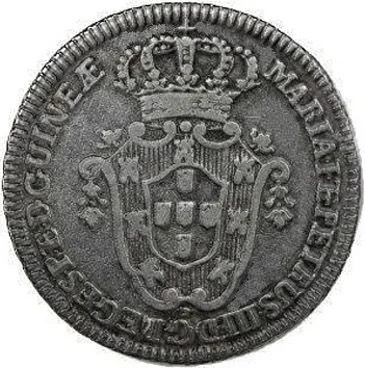
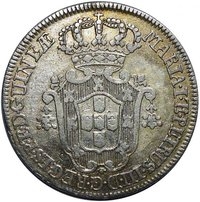
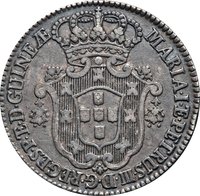
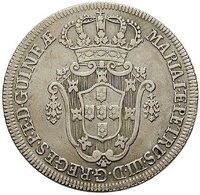
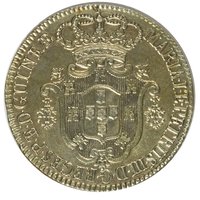
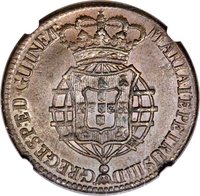
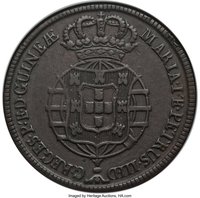
Obverse
Inscription:
MARIA·I·E·PETRUS·III·D·G·REGES·P·E·D·GUINEÆ·
Script: Latin
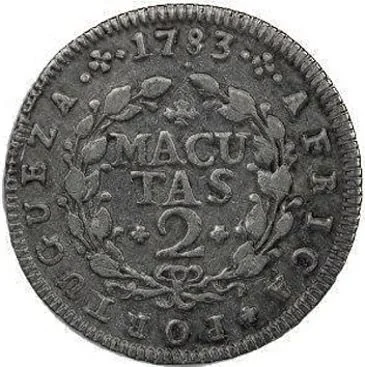
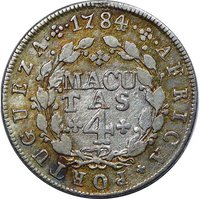
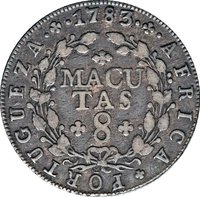
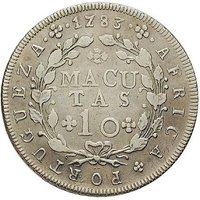
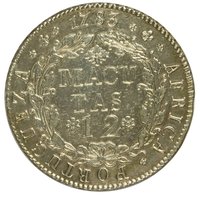
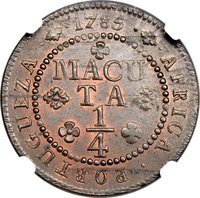
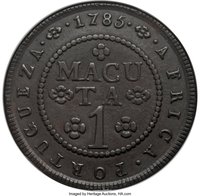
Reverse
Inscription:
AFRICA·PORTUGUEZA·1783
MACUTAS
2
MACUTAS
2
Script: Latin
Edge
Milled
Mintings
| Year | Mint Mark | Mintage | Quality | Collection |
|---|---|---|---|---|
| 1783 | — | 10,000 |
Historical background
In 1783, Angola was not a sovereign nation issuing its own currency but a Portuguese colony, primarily serving as a source of enslaved people for Brazil. The economic system was therefore integrated into the Portuguese empire, and the currency situation was complex and fragmented. The official Portuguese currency, the real (plural: réis), served as the accounting unit, but its physical circulation in Angola was limited. The colony suffered from a chronic shortage of coined money, leading to a heavy reliance on commodity currencies and various foreign coins.
The most prevalent medium of exchange was not minted metal but trade goods, particularly lengths of African cloth known as libongos and, most infamously, enslaved people themselves. These commodities served as a de facto standard for valuing other goods and settling debts. Alongside this, a variety of foreign silver coins circulated, especially Spanish American pieces of eight (pesos or patacas) and Brazilian coins, which arrived via the transatlantic slave trade. These coins were often accepted by value and weight rather than face value, and their circulation was largely confined to coastal trading centers like Luanda.
This monetary environment reflected Angola's role in the 18th-century Atlantic world. The lack of a unified, state-issued currency underscored the extractive nature of the colony, where commerce was centered on the export of human captives and the import of goods for that trade. The use of commodities and disparate foreign coins created a precarious and localized economic system, one that prioritized facilitating the slave trade over developing internal markets or financial stability for the resident population.
The most prevalent medium of exchange was not minted metal but trade goods, particularly lengths of African cloth known as libongos and, most infamously, enslaved people themselves. These commodities served as a de facto standard for valuing other goods and settling debts. Alongside this, a variety of foreign silver coins circulated, especially Spanish American pieces of eight (pesos or patacas) and Brazilian coins, which arrived via the transatlantic slave trade. These coins were often accepted by value and weight rather than face value, and their circulation was largely confined to coastal trading centers like Luanda.
This monetary environment reflected Angola's role in the 18th-century Atlantic world. The lack of a unified, state-issued currency underscored the extractive nature of the colony, where commerce was centered on the export of human captives and the import of goods for that trade. The use of commodities and disparate foreign coins created a precarious and localized economic system, one that prioritized facilitating the slave trade over developing internal markets or financial stability for the resident population.
Series: 1783 Angola circulation coins
💎 Extremely Rare