

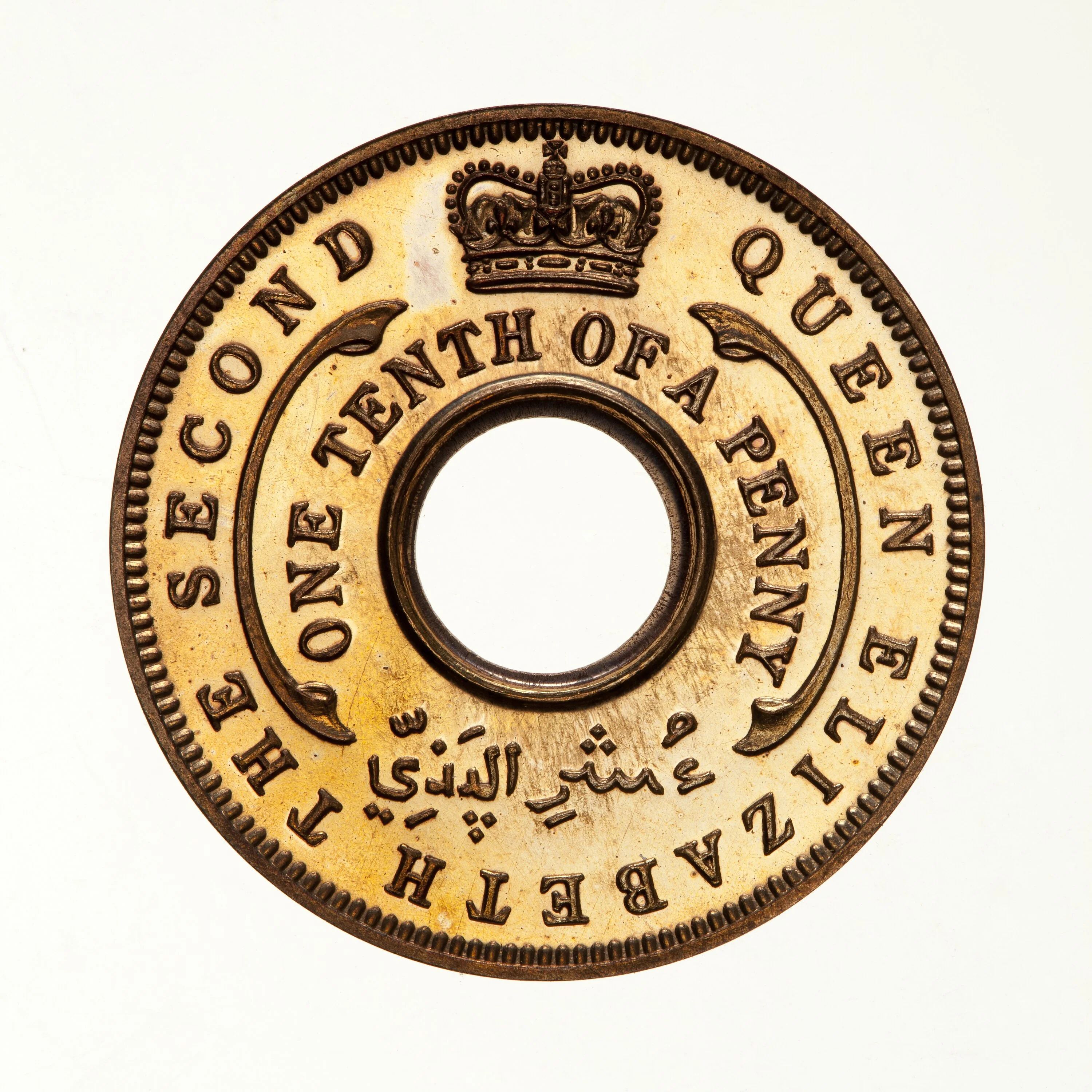
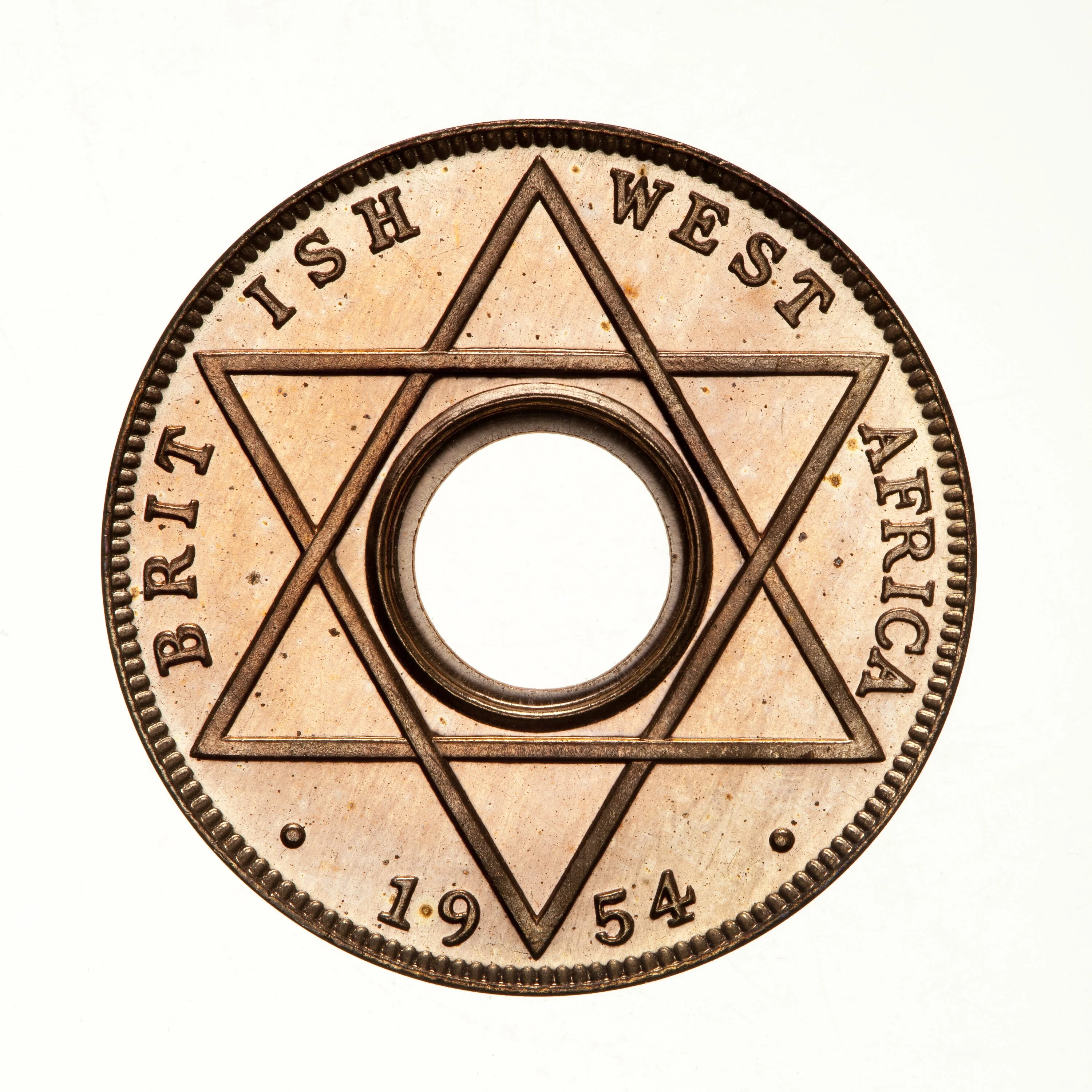
⅒ penny – British West Africa
Add to wishlist
Context
Years: 1954–1957
Country: Western African States
Issuer: British West Africa
Ruler: Elizabeth II
Currency:
(1907—1968)
Demonetized: Yes
Total mintage: 14,400,000
Material
References
KM: #
Numista: #11903
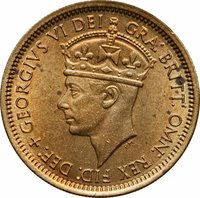
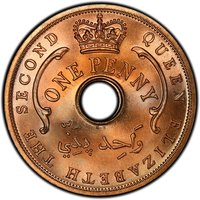
Obverse
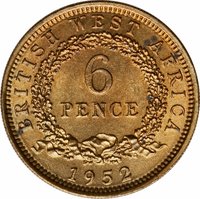
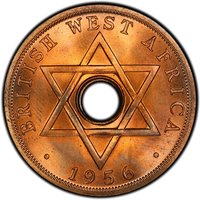
Reverse
Edge
Plain
Mints
| Name | Mark |
|---|---|
| Royal Mint (Tower Hill) | — |
Mintings
| Year | Mint Mark | Mintage | Quality | Collection |
|---|---|---|---|---|
| 1954 | — | 4,800,000 | ||
| 1954 | — | — | Proof | |
| 1956 | — | 2,400,000 | ||
| 1956 | — | — | Proof | |
| 1957 | — | 7,200,000 | ||
| 1957 | — | — | Proof |
Historical background
By 1954, the currency situation in British West Africa was defined by the West African Currency Board (WACB), established in 1912. This system ensured a strict sterling exchange standard, where the local currency, the West African pound, was fully backed by sterling reserves held in London and was directly convertible at a fixed parity. The primary function of the WACB was to provide a stable and uniform currency for the colonies of Nigeria, the Gold Coast (Ghana), Sierra Leone, and The Gambia, facilitating trade with Britain and within the region. This arrangement effectively ceded monetary policy control to the British Treasury, as the money supply was entirely dependent on the balance of payments and the flow of sterling.
The system was highly orthodox and successful in its primary aim of ensuring price and exchange rate stability, which benefited colonial export economies. However, it was also inherently restrictive. It provided no mechanism for discretionary monetary management to address local economic conditions, such as credit expansion for development or counter-cyclical measures. All surplus earnings were pooled in London, leading to criticisms that the colonies were, in effect, lending their reserves to Britain at low interest rates while having limited funds for their own infrastructure and development projects.
The year 1954 fell within a period of growing political change and nationalist sentiment, as the territories were moving steadily towards self-government. While the WACB system remained firmly in place, its limitations were becoming increasingly apparent to emerging local political leaders and economists. Discussions about the need for central banking institutions with note-issuing powers and monetary policy autonomy had begun, setting the stage for the eventual dissolution of the WACB in the years following independence, when Nigeria (1959) and Ghana (1957) would be the first to establish their own central banks.
The system was highly orthodox and successful in its primary aim of ensuring price and exchange rate stability, which benefited colonial export economies. However, it was also inherently restrictive. It provided no mechanism for discretionary monetary management to address local economic conditions, such as credit expansion for development or counter-cyclical measures. All surplus earnings were pooled in London, leading to criticisms that the colonies were, in effect, lending their reserves to Britain at low interest rates while having limited funds for their own infrastructure and development projects.
The year 1954 fell within a period of growing political change and nationalist sentiment, as the territories were moving steadily towards self-government. While the WACB system remained firmly in place, its limitations were becoming increasingly apparent to emerging local political leaders and economists. Discussions about the need for central banking institutions with note-issuing powers and monetary policy autonomy had begun, setting the stage for the eventual dissolution of the WACB in the years following independence, when Nigeria (1959) and Ghana (1957) would be the first to establish their own central banks.
🌟 Uncommon