

1 Rupee – Mughal Empire
India
Context
Years: 1662–1708
Country: India 
Issuer: Mughal Empire
Ruler: Aurangzeb
Currency:
(1540—1842)
Demonetized: Yes
Material
References
KM: #Click to copy to clipboard300.63
Numista: #53088
Value
Bullion value: $32.68
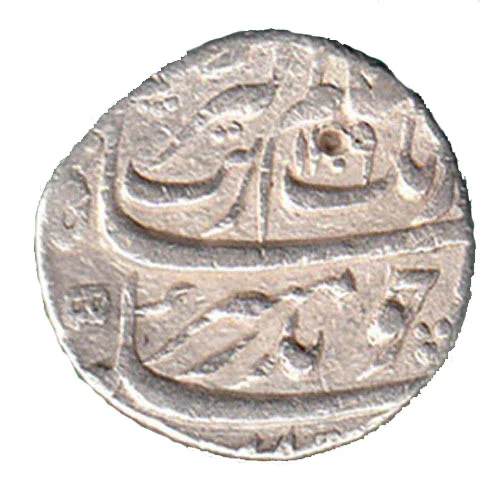
Obverse
Description:
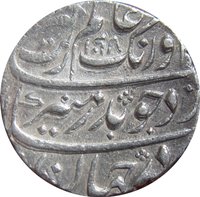
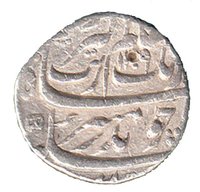
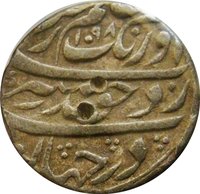
KM#300.63. Emperor and AH date.
Inscription:
۱۱۰۹
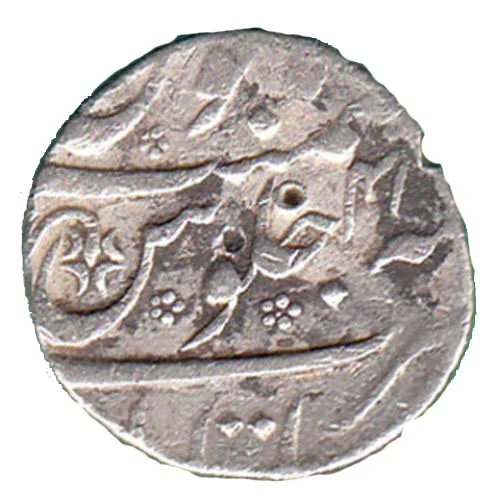
Reverse
Description:
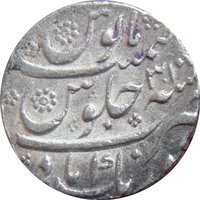
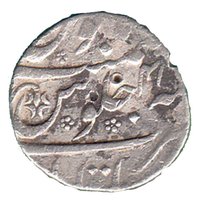
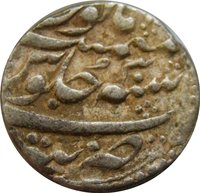
RY date, mint below.
Inscription:
۴۱
Edge
Plain
Mintings
| Year | Mint Mark | Mintage | Quality | Collection |
|---|---|---|---|---|
| 1662 | — | — | ||
| 1663 | — | — | ||
| 1664 | — | — | ||
| 1665 | — | — | ||
| 1666 | — | — | ||
| 1667 | — | — | ||
| 1668 | — | — | ||
| 1669 | — | — | ||
| 1670 | — | — | ||
| 1671 | — | — | ||
| 1672 | — | — | ||
| 1673 | — | — | ||
| 1674 | — | — | ||
| 1675 | — | — | ||
| 1676 | — | — | ||
| 1676 | — | — | ||
| 1677 | — | — | ||
| 1678 | — | — | ||
| 1679 | — | — | ||
| 1680 | — | — | ||
| 1681 | — | — | ||
| 1682 | — | — | ||
| 1683 | — | — | ||
| 1684 | — | — | ||
| 1685 | — | — | ||
| 1686 | — | — | ||
| 1687 | — | — | ||
| 1688 | — | — | ||
| 1689 | — | — | ||
| 1690 | — | — | ||
| 1691 | — | — | ||
| 1692 | — | — | ||
| 1693 | — | — | ||
| 1694 | — | — | ||
| 1695 | — | — | ||
| 1696 | — | — | ||
| 1697 | — | — | ||
| 1698 | — | — | ||
| 1699 | — | — | ||
| 1700 | — | — | ||
| 1701 | — | — | ||
| 1702 | — | — | ||
| 1703 | — | — | ||
| 1704 | — | — | ||
| 1705 | — | — | ||
| 1706 | — | — | ||
| 1707 | — | — | ||
| 1708 | — | — |
Historical background
In 1662, the Mughal Empire's currency system was a sophisticated and highly regulated bimetallic standard, centered on the silver rupee and the gold mohur. The reign of Emperor Aurangzeb Alamgir, who had recently consolidated power after a war of succession, saw a period of monetary stability and immense imperial revenue. The state exercised strict control over minting, with major dar al-zarbs (mints) in Surat, Ahmedabad, Delhi, and Lahore producing coins of remarkable purity and consistency. The standard silver rupee, notably the "Nisar" rupee introduced by Shah Jahan and continued by Aurangzeb, weighed approximately 11.5 grams and was nearly pure silver, making it a trusted and widely accepted currency across the vast empire and in international trade throughout the Indian Ocean.
The system, however, faced underlying pressures. A persistent challenge was the drain of silver bullion from the empire to pay for imports like horses, luxury goods, and later, bullion exports to the Ottoman Empire and Safavid Persia, which could create local shortages. Furthermore, while imperial coins were uniform, a plethora of older regional and local coins from previous reigns remained in circulation, requiring complex exchange calculations. The gold mohur, valued at roughly 14-16 silver rupees, was used for high-value transactions, hoarding, and gifts, but silver was the primary medium for taxation, trade, and daily economic life.
This currency stability was a direct pillar of imperial power, financing Aurangzeb's vast military and administrative machinery. Revenue from land taxes (zabt), customs, and trade was assessed and collected in silver rupees, underscoring the coin's role as the lifeblood of the state. The reliable rupee facilitated not only internal commerce but also attracted European trading companies like the English East India Company, which purchased Indian textiles and goods with imported New World silver, further injecting bullion into the Mughal economy and reinforcing the system's strength at this historical juncture.
The system, however, faced underlying pressures. A persistent challenge was the drain of silver bullion from the empire to pay for imports like horses, luxury goods, and later, bullion exports to the Ottoman Empire and Safavid Persia, which could create local shortages. Furthermore, while imperial coins were uniform, a plethora of older regional and local coins from previous reigns remained in circulation, requiring complex exchange calculations. The gold mohur, valued at roughly 14-16 silver rupees, was used for high-value transactions, hoarding, and gifts, but silver was the primary medium for taxation, trade, and daily economic life.
This currency stability was a direct pillar of imperial power, financing Aurangzeb's vast military and administrative machinery. Revenue from land taxes (zabt), customs, and trade was assessed and collected in silver rupees, underscoring the coin's role as the lifeblood of the state. The reliable rupee facilitated not only internal commerce but also attracted European trading companies like the English East India Company, which purchased Indian textiles and goods with imported New World silver, further injecting bullion into the Mughal economy and reinforcing the system's strength at this historical juncture.
💎 Extremely Rare